
The focus on precision medicine ensures that clinical trials are no longer derailed by non-responders who do not fit a drug’s specific biological mechanism. This paradigm shift characterizes the current state of the pharmaceutical industry in 2026, where the historical reliance on serendipity and trial-and-error has been replaced by a rigorous, predictive framework driven by computational intelligence. Traditionally, developing a single therapeutic agent required an investment of over $2.6 billion and more than a decade of labor, with an overwhelming majority of candidates failing during the transition from laboratories to human subjects. Today, the integration of high-performance computing and massive biological datasets allows researchers to bypass these systemic inefficiencies. By transforming drug discovery into a data-driven discipline, the sector is finally addressing the high attrition rates that have long stifled medical innovation. This evolution signifies a move from reactive experimentation to a proactive model where molecular behavior and patient outcomes are modeled with high accuracy before any physical synthesis occurs. As these technologies mature, they provide the necessary infrastructure to handle the increasing complexity of modern biology, ensuring that the next generation of medicines is both more effective and more accessible to those in need.
The Computational Foundations: Deep Learning and Neural Modeling
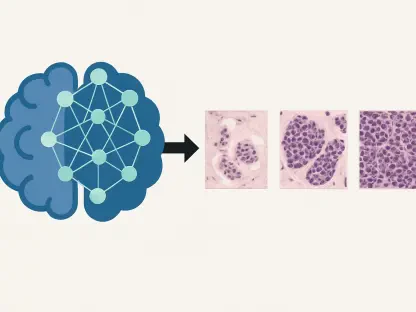
The efficacy of modern drug discovery is fundamentally rooted in advanced machine learning architectures that mimic the hierarchical processing of the human brain. Deep learning models, particularly multi-layered neural networks, have moved beyond simple data classification to perform complex predictive tasks that were previously impossible. For instance, Convolutional Neural Networks (CNNs) are now routinely employed to analyze the spatial arrangements of atoms within three-dimensional protein structures, allowing scientists to visualize how potential drugs might fit into biological “locks.” Meanwhile, Recurrent Neural Networks (RNNs) and Long Short-Term Memory (LSTM) networks excel at processing sequential data, such as genomic sequences and protein primary structures. These tools allow for the rapid identification of patterns across millions of data points, enabling a level of precision that human researchers could not achieve manually. By leveraging these architectures, pharmaceutical companies can simulate billions of molecular interactions in a virtual environment, drastically narrowing the field of candidates before a single chemical reaction is performed in a physical laboratory.
Beyond simple pattern recognition, these neural models are now capable of solving the “protein folding problem,” which has long been a bottleneck in biomedical research. Advanced platforms like AlphaFold 3 have reached a level of maturity where they can predict the structure of nearly all cataloged proteins with atomic accuracy. This capability is crucial because the function of a protein is dictated by its shape; knowing the structure allows researchers to design molecules that can specifically activate or inhibit those proteins to treat diseases. In 2026, the use of these structural predictions has become a standardized step in the discovery pipeline, allowing for the rapid design of ligands that are highly specific to their targets. This high-fidelity modeling reduces the risk of “off-target” effects, where a drug interacts with the wrong protein and causes adverse side effects. As a result, the transition from identifying a disease-causing protein to creating a viable lead compound has been compressed from years into a matter of months, representing a massive leap in research productivity and therapeutic potential.
Navigating the Chemical Space: Lead Discovery and Optimization
One of the most daunting challenges in pharmaceutical science is the sheer scale of the theoretical chemical space, which is estimated to contain more than 10 to the power of 60 potential drug-like molecules. Exploring this vast expanse through traditional high-throughput screening is both physically impossible and financially prohibitive. Artificial intelligence serves as a digital compass in this environment, searching through massive open-access repositories such as PubChem and DrugBank to prioritize the most promising chemical scaffolds. By using predictive filtering, AI algorithms can systematically evaluate the properties of millions of molecules, identifying those with the highest likelihood of biological activity. This approach allows researchers to focus their efforts on a narrow pool of high-potential candidates, ensuring that laboratory resources are allocated to the most promising leads. This strategic narrowing of focus is essential for maintaining the economic viability of modern research programs, particularly as the complexity of the diseases being targeted continues to increase.
In addition to searching existing libraries, AI is instrumental in the initial stage of target identification, which involves determining exactly which biological pathways are responsible for a specific disease. Modern algorithms analyze multi-omics data—including genomics, proteomics, and transcriptomics—to find correlations that point to novel therapeutic targets. Once a target is identified, the focus shifts to lead discovery, where AI frameworks like DeepChem prioritize compounds based on their predicted affinity and “drug-like” qualities. This systematic approach ensures that the discovery process is no longer a matter of luck but a calculated progression based on statistical probability and biological evidence. The ability to accurately predict how a lead compound will behave in a complex biological system allows for the early optimization of molecular structures, ensuring that they possess the necessary stability and potency to move forward. This predictive capability has effectively turned the early stages of drug discovery into an engineering problem, where molecules are designed to meet specific performance criteria with high degrees of accuracy.
Predictive Safety: Moving Toxicology to the In Silico Phase
A primary cause of failure for new drugs in the clinical phase is the emergence of unexpected toxicity or poor pharmacokinetics, often summarized by the acronym ADME/T, which stands for absorption, distribution, metabolism, excretion, and toxicity. Traditionally, these critical factors were only fully understood during animal testing or human trials, leading to devastating and expensive late-stage cancellations. In 2026, AI has successfully shifted this safety assessment to the very beginning of the development cycle through “in silico” or computer-based modeling. Tools such as DeepTox and advanced ADMET predictors allow researchers to evaluate the safety profile of a molecule before it is ever synthesized. These models can predict potential liver toxicity, cardiac risks, and intestinal permeability with accuracy levels that often surpass traditional animal models. By identifying toxic molecules early, companies can avoid investing millions of dollars in compounds that are fundamentally flawed, thereby streamlining the path to regulatory approval and ensuring higher safety standards for patients.
The current frontier of this technology involves “de novo” design, where generative AI models are used to create entirely new molecular structures from scratch. Rather than just screening what already exists, these models use chemical representations known as SMILES strings to create molecules that have never been seen before but are optimized for a specific therapeutic purpose. These generative frameworks can balance multiple conflicting variables simultaneously, such as ensuring high solubility while maintaining a low molecular weight and high synthetic accessibility. This means that the molecules produced are not only effective at treating a disease but are also practical to manufacture on an industrial scale. Recent applications of these generative systems have produced novel treatments for antibiotic-resistant bacteria and various forms of cancer, with several AI-designed entities already showing verified biological activity in live cell assays. This capability to design customized medicines tailored to specific biological needs is a cornerstone of the modern pharmaceutical industry, moving the sector closer to the ultimate goal of perfectly targeted therapy.
Clinical Efficiency: Enhancing Trials and Precision Delivery
Clinical trials represent the most expensive and time-consuming segment of drug development, yet the success rate for drugs entering these trials remains remarkably low. AI is addressing this by revolutionizing patient selection and monitoring, ensuring that the participants in a trial are the ones most likely to respond to the treatment. By analyzing vast amounts of genomic data and “exposome” profiles, AI can identify specific subgroups of patients who share the biological characteristics the drug is designed to target. This precision approach minimizes the “noise” in clinical data caused by non-responders, leading to clearer results and a higher probability of passing regulatory hurdles. Furthermore, digital monitoring solutions, such as mobile applications that use visual recognition to confirm medication adherence, have significantly improved the reliability of trial data. By ensuring that participants follow the prescribed regimen, AI reduces the variability in results, allowing for smaller, faster, and more effective clinical studies that can bring treatments to market much sooner.
The impact of AI also extends to how these drugs are delivered within the human body, particularly through the convergence with nanomedicine. AI is currently being used to design and control microscopic delivery systems, often referred to as nanorobots, which can navigate the bloodstream to deliver a therapeutic payload directly to a tumor or infection site. These systems are programmed to respond to specific environmental cues, such as the unique pH level of a cancer cell, ensuring that the medicine is only released where it is needed. This level of precision significantly reduces systemic side effects, which is a major concern for traditional treatments like chemotherapy. Additionally, AI algorithms are identifying synergistic drug cocktails by forecasting how different medications interact with one another. Testing every possible combination of drugs is mathematically impossible, but AI can quickly predict which pairings will work better together than they do individually. This ability to develop potent combination therapies is proving essential for treating complex, multi-faceted diseases like malaria and advanced-stage cancers, where a single drug is often insufficient to achieve a full cure.
Strategic Outlook: Integration and Regulatory Evolution
The integration of artificial intelligence into pharmaceutical research faced initial skepticism, particularly regarding the “black box” nature of complex algorithms. Scientists and regulatory bodies needed to understand not just that a model made a correct prediction, but why it reached that conclusion. To address this, the industry shifted toward “Explainable Artificial Intelligence” (XAI), which provided transparent rationales for molecular designs and patient selections. This move toward transparency facilitated a stronger partnership between technology developers and the Food and Drug Administration (FDA), establishing clear protocols for validating AI-generated data. By standardizing these computational methods, the industry ensured that digital discoveries adhered to the same rigorous safety and efficacy standards as traditional chemistry. This cultural and regulatory shift was necessary to move AI from an experimental tool to a central component of global health strategy, allowing for a more rapid response to emerging medical challenges and public health crises.
The financial and operational landscape of the sector underwent a complete transformation as organizations prioritized data-first strategies. Large-scale investments in AI-driven partnerships became the norm, reflecting a collective recognition that computational power is the primary driver of medical breakthroughs. Experts focused on building interdisciplinary teams where biologists, chemists, and data scientists collaborated in a unified workflow, breaking down the traditional silos that once slowed innovation. This collaborative environment allowed for the continuous refinement of predictive models, ensuring they remained accurate as new biological data became available. To continue this progress, the industry must remain committed to sharing high-quality datasets and expanding the use of open-source frameworks, which allow smaller research organizations to contribute to the global drug discovery effort. By democratizing access to these powerful tools, the scientific community can ensure that the benefits of AI-driven medicine reach a diverse global population, ultimately making personalized and effective healthcare a standard reality for everyone.