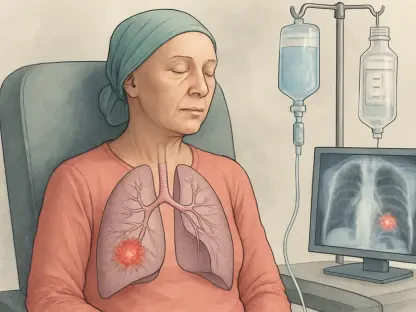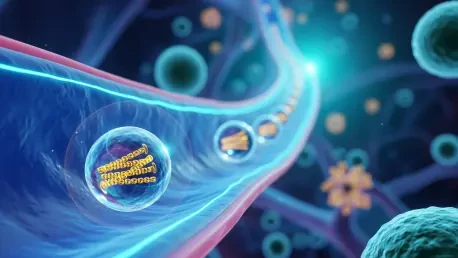

The landscape of modern oncology is currently witnessing a tectonic shift as clinical researchers increasingly abandon the cumbersome laboratory-based cell modification protocols that have defined the last decade. For several years, the medical community viewed Chimeric Antigen Receptor (CAR) T-cell therapy as the ultimate gold standard, despite the fact that the traditional “ex vivo” process requires extracting a patient’s immune cells and shipping them to a distant manufacturing facility for genetic reprogramming. This reliance on external infrastructure has created a significant barrier to entry for many healthcare systems, prompting a massive industry pivot toward “in vivo” delivery systems. By moving the genetic engineering phase directly into the patient’s own bloodstream, scientists are attempting to bypass the logistical nightmares associated with external cell expansion. This evolution essentially seeks to transform the human organism into a living bioreactor, where the necessary immune modifications occur naturally and rapidly within the native biological environment of the recipient.
The Economic and Logistical Drive for Innovation
The primary motivation for moving away from laboratory-based therapies is the overwhelming financial burden and logistical complexity inherent in the current administration of genetic medicine. Under the prevailing status quo, patients must endure a grueling multi-week journey that begins with leukapheresis and ends with the reinfusion of modified cells that have been cultured in highly specialized, multi-million dollar facilities. This process frequently costs in excess of $500,000 per patient, creating a fiscal bottleneck that effectively prevents widespread adoption across diverse socioeconomic groups and developing nations. Furthermore, the time-sensitive nature of aggressive cancers means that some patients simply do not survive the waiting period required for the manufacturing of their personalized cellular products. Transitioning to a direct delivery model would eliminate the need for these centralized hubs, allowing treatments to be administered with the same speed and efficiency as traditional biologics or small-molecule drugs.
Building on the need for increased accessibility, the industry has realized that even existing “off-the-shelf” allogeneic therapies have failed to provide a truly universal solution for genetic disorders. While these donor-derived treatments were designed to reduce the wait times associated with autologous cell manufacturing, they have introduced a new set of complications regarding batch consistency and the potential for severe host rejection. Allogeneic cells often lack the long-term persistence required to prevent cancer relapse, as the patient’s own immune system eventually identifies and eliminates the foreign donor cells. Consequently, the strategic focus of pharmaceutical development is shifting toward “in vivo” delivery because it offers a way to maintain the benefits of using a patient’s own native cells while avoiding the astronomical costs of custom laboratory work. This approach represents the most viable path to achieving true scalability, ensuring that life-saving genetic interventions can be deployed rapidly in any standard clinical setting.
Addressing the Technical Risks of Direct Delivery
While the concept of internal genetic modification solves numerous logistical hurdles, it simultaneously introduces a unique and formidable set of scientific challenges that must be overcome before widespread clinical use. Moving the entire engineering process into the human body means that clinicians lose the ability to characterize, verify, and quality-check the final cell product in a controlled laboratory environment before it is ever introduced to the patient. This lack of oversight raises significant safety concerns regarding accurate dosing and the potential for “off-target effects,” where genetic material might be accidentally delivered to non-target organs like the liver or the brain. Moreover, there is a substantial risk that the patient’s immune system will recognize the delivery vehicle—often a viral vector—as a foreign invader and neutralize it before it can reach the intended lymphocytes. Ensuring that the genetic instructions are delivered only to the specific subset of immune cells required for the therapy remains a top priority.
To mitigate these systemic risks, a new generation of viral and non-viral vectors is being engineered with unprecedented levels of precision and biological stealth. Innovations in vector design now allow these delivery vehicles to essentially disguise themselves from the circulating antibodies of the immune system, ensuring they can traverse the bloodstream and reach their targets without triggering a massive inflammatory response. Researchers are also focusing on refining the structural integrity of the genetic material itself to prevent “incorrect splicing” or premature gene activation during the delivery phase. By utilizing tissue-specific promoters and advanced lipid nanoparticle coatings, biotech companies are working to ensure that internal modification is not only faster than traditional laboratory methods but also consistently safe across diverse patient populations. These technological refinements are essential for maintaining the delicate balance between the potency of the therapy and the physiological safety of the individual receiving the treatment.
Exploring Hybrid Systems and the Future Landscape
Recognizing the inherent dangers associated with systemic injections of genetic material, some innovators are pursuing a strategic middle ground known as extracorporeal engineering. This hybrid approach utilizes a closed-loop, dialysis-like procedure that allows for the modification of a patient’s cells at the bedside without ever allowing the viral vectors or nanoparticles to circulate freely throughout the body’s internal organs. By incubating the blood briefly in an external chamber and then removing any unbound genetic particles before reinfusing the modified cells, this method provides the safety and control of a laboratory setting with the speed of a single-day procedure. This “bedside manufacturing” model effectively bridges the gap between the traditional ex vivo methods and the emerging in vivo systems, offering a localized solution that minimizes the risk of systemic toxicity while maximizing the efficiency of the genetic transfer.
The field of genetic medicine is currently navigating what experts call a “three-body problem,” as researchers balance the development of autologous, allogeneic, and in vivo therapies to see which will ultimately dominate the market. While no single method has claimed total victory yet, the overarching trend is a clear movement toward the decentralization and simplification of the entire medical workflow. The ultimate goal for the upcoming years is to move treatment away from specialized regional hubs and toward a standardized dosing model that can be easily administered in any community hospital. For this vision to become a reality, regulatory bodies and healthcare providers must collaborate to establish new safety standards that account for the unique dynamics of internal cell engineering. Success will require a shift in perspective, viewing the patient’s body not just as a recipient of medicine, but as an active partner in the therapeutic manufacturing process itself.
Establishing a New Paradigm for Clinical Implementation
The transition toward internal delivery systems necessitates a complete overhaul of current clinical protocols and a significant investment in specialized training for hospital staff. As the industry moves away from centralized manufacturing, the responsibility for maintaining the integrity of the genetic product will shift from the laboratory technician to the clinical pharmacist and the treating physician. This decentralization requires the development of robust, automated delivery systems that can be operated with minimal specialized knowledge, ensuring that the precision of the genetic engineering is not compromised by human error during the administration phase. Furthermore, healthcare systems must begin to integrate real-time monitoring technologies that can track the progress of the internal modification process, providing clinicians with immediate feedback on the efficacy and safety of the “in vivo” reaction as it unfolds within the patient.
Moving forward, the focus of genetic research should shift from basic vector design to the integration of these technologies into the broader healthcare infrastructure through standardized manufacturing and simplified regulatory pathways. Developers must prioritize the creation of stable, room-temperature delivery vehicles that can be easily transported and stored, eliminating the need for the complex cryogenic supply chains that currently plague the industry. Additionally, establishing a clear framework for the long-term monitoring of patients who have undergone internal genetic modification will be crucial for building public trust and ensuring that delayed adverse effects are identified early. By focusing on these practical implementation strategies, the medical community can move beyond the “last-resort” status of gene therapy and transform it into a widely available frontline treatment for a diverse range of genetic and oncological conditions. This proactive approach will ultimately determine whether the promise of the body as its own bioreactor can be successfully translated into a global clinical reality.