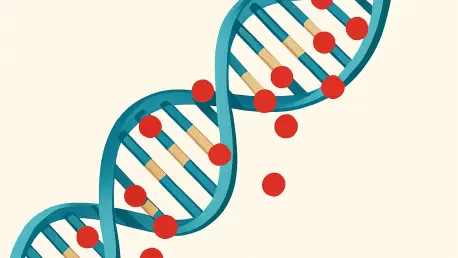

Across the human genome, a narrow slice at the very start of genes keeps leaving the same telltale mark—mutations that appear more often than expected and matter more than many once thought, compelling a rethink of how models, pipelines, and clinics treat these small but powerful stretches. Recent large-cohort and family-based analyses converge on a clear message: the first hundred base pairs after transcription start sites are mutation hotspots, many seeded during the earliest cell divisions and shaped by strong purifying selection.
Why transcription start sites matter and what this article will cover
Transcription start sites sit at the gate of gene expression, where polymerases initiate, pause, and restart. That dynamic choreography exposes DNA, invites transient single-stranded states, and, during rapid embryonic divisions, challenges repair systems. The result is a measurable uptick in mutations immediately downstream of these starts, a signal that is not confined to a handful of loci but distributed across the genome.
This guide lays out best practices for dealing with that reality. It explains how to recalibrate baseline models around TSSs, how to detect and interpret early parental mosaicism, and how to adjust research and clinical workflows so that regulatory variants receive the same methodological respect as coding changes. Along the way, it connects mechanism to method, showing how a better baseline and sharper detection improve discovery and reduce misclassification.
Why updating practices is essential for accuracy, discovery, and clinical impact
Standard mutation models treat most nearby noncoding sequence as a uniform backdrop. However, when TSSs carry a higher intrinsic mutability, a flat baseline inflates apparent burden and can obscure purifying selection. That distortion can make a risk gene look unremarkable or a neutral signal look enriched, steering studies away from genuine biology.
Clinical pipelines face a parallel problem. Variants near TSSs often tweak expression and can act like dosage-sensitive coding changes, particularly in genes tied to cancer, neurodevelopment, and limb formation. Moreover, early mosaic events in parents may be missed by routine filters, causing under-recognition of heritable risk. Updating models and detection practices prevents false negatives, clarifies recurrence patterns, and makes variant classification more consistent with observed human biology.
Best practices for modeling, detection, and interpretation around TSS hotspots
The core adjustment is straightforward in concept but powerful in impact: treat TSS-proximal sequence as a distinct mutational context and set expectations accordingly. Next comes systematic detection of early mosaicism so that inherited variants are not mislabeled or discarded. Finally, reinterpretation should give regulatory hotspots appropriate weight in burden tests, gene discovery, and diagnostics without overstating weak signals.
Embedding these steps into pipelines changes downstream behavior. Gene-level tests become less biased, de novo catalogs become more accurate, and pathogenicity assessments better reflect selection. In short, refined baselines and sensitive mosaic detection turn a noisy corner of the genome into a source of precise signal.
Recalibrate mutation models with region-aware baselines at TSS-proximal regions
Build region-aware baselines that explicitly model the first hundred base pairs downstream of annotated TSSs as higher-mutation zones. Use large population datasets to estimate context-specific rates, stratified by sequence features, expression, and chromatin marks, then validate with independent cohorts. When the baseline reflects true local mutability, burden tests stop overcalling enrichment and begin to reveal depletion, an indicator of selection against harmful changes.
A practical example comes from promoter burden analyses. After revising the baseline to account for elevated mutability near TSSs of cancer-relevant genes, apparent excesses shrank or flipped to deficits among ultra-rare variants, exposing purifying selection that flat models had hidden. That inversion matters: it points to functional importance, guides gene prioritization, and reduces false leads that drain study power.
Systematically detect and account for early parental mosaicism in research and diagnostics
Treat “absent in parents” as a starting hypothesis, not a conclusion. Re-examine putative de novo mutations near TSSs with deeper reads, orthogonal assays when feasible, and allele-fraction-aware calling that looks for low-level parental signals. Combine this with co-occurrence patterns of nearby variants and with tissue-aware sampling strategies, recognizing that mosaicism can be patchy.
In practice, several families once cataloged as carrying de novo TSS-proximal variants were reclassified when low-level parental reads revealed early mosaicism. That reclassification tightened recurrence risk estimates, connected variant clusters to embryonic timing, and, in clinics, altered counseling and surveillance. Importantly, this approach recovered disease-relevant signals that strict de novo filters had removed, particularly in genes where small expression shifts carry outsized consequences.
Who should act now, how to prioritize, and practical considerations before adoption
Genome analysts, statistical geneticists, and clinical laboratories stand to benefit immediately. Priority should go to pipelines that run promoter burden tests, studies of rare disease and developmental disorders, and cancer predisposition programs where TSS-proximal variation is common and consequential. Early wins typically come from re-baselining promoter regions, re-auditing filtered TSS-nearby variants, and upgrading mosaic detection thresholds in trio studies.
Adoption requires attention to pragmatics. Estimating region-aware baselines works best with large, diverse cohorts and careful control of coverage and mapping artifacts, particularly around GC-rich starts. Mosaic detection gains accuracy with higher depth and harmonized calling across family members; when depth cannot increase, post hoc aggregation of weak signals can still improve calls. Finally, interpretation teams should fold TSS context into classification frameworks so that regulatory hotspots neither inflate false positives nor hide true pathogenic variants.
Taken together, the practices outlined here align mutational models with observed biology, surface selection where it operates, and bring regulatory starts into the mainstream of discovery and care. With calibrated baselines and sensitive mosaic detection, research becomes more replicable and diagnostics more precise, moving the field toward results that reflect how the genome actually mutates and how those mutations shape health.