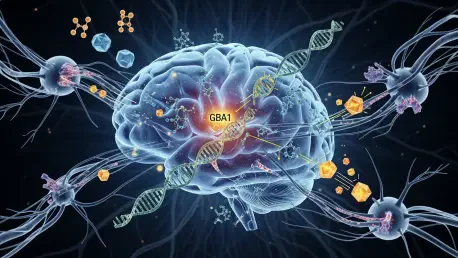

The long-standing medical consensus that Parkinson’s disease is a uniform disorder defined primarily by dopamine loss is currently being dismantled by genetic insights that reveal a complex array of molecularly distinct conditions. This shift in understanding has prompted a significant move toward precision medicine, where the focus is no longer just on managing outward symptoms but on correcting the specific biological failures that drive the disease. At the heart of this evolution is the GBA1 gene, which provides instructions for making an enzyme called glucocerebrosidase, or GCase. In a healthy system, this enzyme plays a crucial role in the lysosome, the cell’s recycling center, by breaking down fatty substances. However, when mutations occur in the GBA1 gene, the resulting enzyme deficiency leads to a toxic buildup of cellular waste. This breakdown in cellular maintenance is now recognized as a critical precursor to the neuronal death that characterizes the condition. By targeting these early genetic triggers, scientists are opening a new era of treatment.
The Path From Genetic Mutation to Neurodegeneration
Cellular Waste: The Mechanism of Neuronal Death
The progression from a single genetic alteration to neurodegeneration follows a traceable path that has become a primary focus for modern neurology. By identifying the exact moment when the lysosomal system begins to fail, researchers can map the transition from a healthy cellular environment to one that is predisposed to disease. This mapping reveals that the damage often starts decades before a patient notices a tremor or experiences difficulty with balance. In the context of GBA1-related Parkinson’s, the speed of this progression can be much faster than in cases without the mutation, highlighting the aggressive nature of this specific molecular subtype. Understanding this timeline is essential for the development of disease-modifying therapies, as it provides a window of opportunity to intervene while the neural circuitry is still largely intact. The ability to link a specific genetic cause to a clear biological outcome represents a fundamental breakthrough in moving beyond management.
When the GCase enzyme fails to function properly due to a GBA1 mutation, the resulting accumulation of lipids creates a ripple effect that destabilizes the entire neuron. Specifically, the buildup of glucosylceramide and other fatty molecules interferes with the natural degradation of alpha-synuclein, a protein prone to misfolding. In a healthy brain, these proteins are recycled, but in the presence of lysosomal dysfunction, they begin to clump together into toxic aggregates known as Lewy bodies. These structures are the physical markers of Parkinson’s and are associated with the destruction of dopamine-producing neurons. The relationship between enzyme deficiency and protein aggregation suggests that the pathology is not an isolated event but a continuous cycle of cellular stress. As the lysosomes become increasingly overwhelmed, the cell’s ability to maintain homeostasis vanishes, leading to the eventual death of the neuron and the subsequent onset of motor and cognitive impairments.
Clinical Variability: Navigating Patient Risk Profiles
Despite the clear biological link between the GBA1 gene and Parkinson’s, individuals carrying these mutations present a remarkably wide spectrum of clinical symptoms and progression rates. Some patients may develop the disease in their late forties with rapid cognitive decline, while others might reach their eighties without showing any significant neurological symptoms. This extreme variability suggests that GBA1 mutations do not act in isolation but are influenced by a complex interplay of other genetic factors and environmental exposures. Determining why some carriers are more resilient than others is a major priority, as it could reveal protective mechanisms that could be mimicked by new medications. The statistical risk is undeniable, but the lack of a guaranteed outcome emphasizes the need for sophisticated screening tools that go beyond simple genetic testing. Clinicians are now looking at lifestyle and secondary genetic markers to refine these risk assessments and provide clarity.
The diverse nature of GBA1-related cases underscores the fundamental limitations of the traditional, one-size-fits-all approach to neurological care. For instance, carriers of severe mutations are statistically more likely to experience early-onset symptoms and a faster decline in executive function compared to those with milder variants. This clinical diversity necessitates a move toward personalized trajectories, where a patient’s unique genetic profile is used to predict the most likely course of their disease. By grouping patients based on the specific type of GBA1 mutation they carry, medical professionals can design more effective monitoring schedules and early intervention plans. This strategy ensures that patients at higher risk for aggressive symptoms receive more intensive care, while those with more stable profiles can avoid unnecessary medicalization. Transitioning to this model of care requires a robust infrastructure for genetic counseling to ensure every patient receives an individualized plan.
A Proactive Approach to Targeted Interventions
Shifting Paradigms: From Symptoms to Triggers
Precision medicine represents a radical departure from conventional therapies that traditionally address Parkinson’s symptoms only after significant brain damage has occurred. In the past, the standard of care was almost entirely reactive, focusing on replacing lost dopamine to mask tremors and improve mobility. However, the contemporary approach is proactive, aiming to intervene at the source of the problem before neurons are permanently lost. For those with GBA1 mutations, this means targeting the lysosomal environment and stabilizing enzyme production as soon as a deficit is detected. By moving the point of clinical intervention to the very start of the biological breakdown, doctors hope to preserve the existing neural architecture and slow the disease’s overall velocity. This paradigm shift requires a deep understanding of the prodromal phase, where subtle changes in enzyme activity can serve as an early warning for potential future neurodegeneration and allow for much earlier treatment.
The goal of targeting upstream biological triggers is to transform Parkinson’s from a terminal neurodegenerative condition into a manageable chronic state. If the failure of the GCase enzyme is identified early enough, it may be possible to use targeted therapies to prevent the subsequent accumulation of alpha-synuclein altogether. This preventive logic is currently being applied in large-scale screening programs that identify high-risk individuals well before they require dopaminergic therapy. By focusing on the health of the lysosome, researchers are moving away from the end-stage logic that has dominated the field for decades. This approach not only holds promise for GBA1 carriers but also provides a framework for treating other forms of Parkinson’s that share similar lysosomal pathways. The success of these early interventions depends on the development of highly sensitive biomarkers that can accurately measure cellular health in real-time, ensuring therapy is delivered at the optimal biological moment.
Therapeutic Innovation: Restoring Cellular Health
One of the most promising avenues for treating GBA1-related Parkinson’s involves the use of pharmacological chaperones, which are small molecules designed to stabilize faulty enzymes. In many patients with GBA1 mutations, the body still produces the GCase enzyme, but the protein is misfolded and gets trapped within the cell’s internal transport system. Pharmacological chaperones bind to these misfolded proteins, helping them fold correctly and ensuring they reach the lysosome where they are needed. Once in the lysosome, these enzymes can resume their job of breaking down lipids, thereby reducing the cellular backlog that leads to protein clumping. This method is particularly attractive because it works with the body’s existing biological machinery rather than introducing foreign substances. Clinical trials for these chaperones have shown a consistent ability to increase enzyme activity levels in the brain, suggesting that this could become a primary pillar of precision therapy for affected individuals.
Medical professionals found that combining these diverse biological strategies created a comprehensive defense system that addressed the disease from multiple angles simultaneously. The shift toward genetic stratification and real-time biomarker tracking successfully redefined the standard of care for millions of patients. By prioritizing the biological triggers of neurodegeneration, the medical community established a sustainable roadmap for personalized, disease-modifying interventions. This progress demonstrated that the future of neurology lay in the precision of the present, where every patient’s genetic code informed their specific journey toward health. This approach eventually extended its benefits far beyond the GBA1 population, fundamentally changing how all forms of neurodegeneration were analyzed and treated. As research continued to evolve, the integration of genetic data into routine screenings became the primary tool for preventing the onset of symptoms before they could take a toll on the brain.