
In the relentless battle against the opioid epidemic, medical intervention has largely been a reactive measure, but a pioneering vaccine now entering its first human trials aims to fundamentally shift this paradigm from response to prevention. Developed by researchers at the University of Houston and licensed to biotech startup ARMR Sciences, this experimental vaccine represents a significant potential breakthrough. It is not a cure for addiction but a novel immunological tool designed to preemptively neutralize the lethal effects of fentanyl, the synthetic opioid driving a staggering number of overdose deaths. The approach moves beyond the post-overdose administration of reversal agents like naloxone, offering instead a proactive shield. Early in 2026, a Phase I clinical trial is launching in the Netherlands, a crucial first step to determine if the promising results seen in animal studies can be safely replicated in humans, potentially forging a new path in harm reduction and saving countless lives.
The Science Behind a Proactive Defense
A Novel Immunological Mechanism
The vaccine operates by ingeniously co-opting the body’s natural defense system to fight a synthetic threat. Its mechanism hinges on training the immune system to recognize and neutralize fentanyl molecules before they can wreak havoc on the central nervous system. To achieve this, the vaccine introduces a carefully engineered compound to the body. This compound links a synthetic, non-psychoactive fragment of the fentanyl molecule to a deactivated diphtheria toxin known as CRM197, which acts as a carrier protein, and an adjuvant called dmLT, which boosts the immune response. Neither CRM197 nor dmLT is toxic. Once administered, this complex prompts the immune system to generate a highly specific army of antibodies tailored to identify and attack fentanyl. When a vaccinated individual is subsequently exposed to the drug, these circulating antibodies rapidly bind to the fentanyl molecules in the bloodstream. This binding action creates a large molecular complex that is physically too big to cross the blood-brain barrier, effectively preventing fentanyl from reaching and activating the opioid receptors in the brain. As a result, the vaccine blocks both the euphoric high that drives use and the life-threatening respiratory depression that is the direct cause of fatal overdoses.
Distinctions from Existing Opioid Treatments
A critical feature of this vaccine is its remarkable specificity, which sets it apart from other interventions in the opioid crisis. Unlike broad-spectrum opioid antagonists, the antibodies generated by the vaccine are designed to target fentanyl and its closely related analogues exclusively. This means it does not block the effects of other medically important opioids, such as morphine, oxycodone, or methadone. This specificity is a significant advantage, as it ensures that vaccinated individuals can still receive pain relief from standard opioids if needed for surgery or injury. Furthermore, and perhaps most importantly, the vaccine does not interfere with the most common and effective medications used for treating opioid use disorder, such as buprenorphine. This compatibility allows the vaccine to be integrated into existing treatment plans as a complementary tool, providing an additional layer of protection against relapse without disrupting a patient’s established recovery regimen. It serves as a focused safety net, targeting the most lethal substance in the illicit drug supply while allowing other critical medical treatments to function as intended.
Navigating the Path to Approval and Application
The Rigorous Journey of Clinical Trials
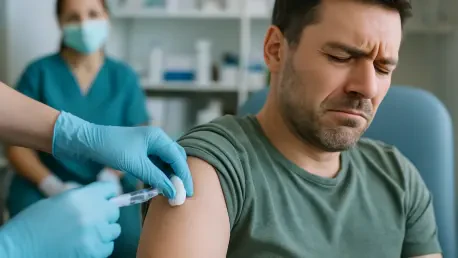
The transition from promising animal studies to a widely available medical tool is a long and meticulously regulated process, beginning with the initial Phase I human trial. This first stage, enrolling approximately 40 healthy adult volunteers, is singularly focused on establishing the vaccine’s safety profile. Participants will receive a series of injections and booster shots over a period of time, during which researchers will closely monitor them for any adverse side effects. Concurrently, blood tests will be conducted to confirm that the vaccine is performing its primary function: stimulating the immune system to produce anti-fentanyl antibodies. If this phase demonstrates an acceptable safety margin and a robust immune response, the research will advance to subsequent trials. A potential Phase II trial would shift focus from safety to efficacy, investigating whether the vaccine effectively protects against fentanyl’s effects. This could involve administering carefully controlled, medically supervised doses of fentanyl to vaccinated participants. It is crucial to note that even with successful outcomes in these early stages, the complete journey through clinical trials and toward final regulatory approval is expected to take several years of continued research and validation.
Identifying Potential Beneficiaries and Limitations
While the vaccine holds immense promise, its developers emphasize that it is intended as a specific tool for a specific purpose, not a panacea for the opioid crisis. The primary beneficiaries are envisioned as individuals actively engaged in treatment for opioid use disorder, for whom the vaccine would act as a crucial safety net against a fatal overdose during a potential relapse. Another key group includes people who use other illicit substances, such as cocaine or methamphetamine, which are increasingly and often unknowingly contaminated with deadly amounts of fentanyl. First responders and law enforcement, who face risks of accidental occupational exposure, could also benefit from this prophylactic protection. However, the vaccine possesses clear limitations. Its protection is finite; the antibodies can be overwhelmed by an extremely high dose of fentanyl, meaning it does not make fentanyl use “safe.” Researchers stress that the vaccine is a tool for those who want to quit, not one that enables continued use. The duration of protection is also not permanent, with animal studies suggesting efficacy for up to six months, likely requiring booster shots to maintain immunity.
A Potential Turning Point in Public Health
The initiation of human trials for this innovative vaccine marked a pivotal moment in the ongoing public health response to the opioid crisis. For years, the primary medical tool available at the point of crisis was reactive, used only after an overdose had already occurred. The development and clinical evaluation of this vaccine represented a fundamental shift in strategy, introducing the possibility of proactive, long-term biological protection. It offered a new form of harm reduction that, if proven successful, could provide a vital shield for vulnerable populations. The journey ahead remained long and filled with scientific and regulatory hurdles, yet the successful translation of this concept from the laboratory to human trials provided a tangible source of hope. It signaled a new frontier where immunology could be leveraged to prevent the deadliest consequences of the drug epidemic, potentially changing the future for individuals in recovery, their families, and the communities striving to support them.