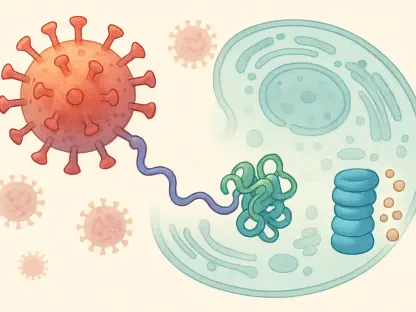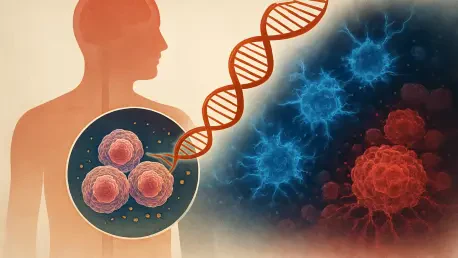

The human body possesses a hidden archival system that documents every trauma, infection, and inflammatory surge at a molecular level, far below the reach of standard clinical imaging. While a patient might receive a clean bill of health after a bout of chronic inflammation, their cellular “hard drive” often tells a different story. This physiological record, known as epigenetic stem cell memory, represents a profound shift in our understanding of how past illnesses dictate future cancer risks. It addresses the clinical paradox where tissues that appear perfectly healed under a microscope continue to exhibit a significantly higher susceptibility to malignancy. This technology review examines the molecular mechanisms of this memory and its transformative potential for oncology.
The Foundations: Cellular Memory and Epigenetic Priming
The emergence of epigenetic memory research marks a departure from the traditional mutation-centric view of cancer. For decades, oncologists believed that chronic inflammation merely increased the rate of random DNA damage. However, the discovery of epigenetic priming suggests that inflammation actually reconfigures the structural accessibility of the genome. In the context of the gastrointestinal tract, this means that even after the redness and swelling of colitis have vanished, the progenitor cells remain in a high-alert state. This transition from a transient response to a permanent structural shift explains why remission does not equate to a reset of the oncogenic clock.
This field has evolved to bridge the gap between immunology and molecular biology, focusing on how environmental stress is codified into the chromatin. By understanding that cells possess a “memory” of prior insults, researchers can now explain why certain tissues are more prone to rapid tumor expansion. The relevance of this technology lies in its ability to identify the invisible scars that traditional pathology misses. It provides a biological rationale for why “mucosal healing” is often an incomplete metric for long-term patient safety, as the underlying stem cell population remains fundamentally altered.
Mechanics: Memory Storage and Technical Detection
Persistent Chromatin Accessibility in Progenitor Cells
Colonic stem cells act as the primary carriers of this molecular history because of their unique role as the long-term architects of the intestinal lining. While functional cells are shed within days, these stem cells persist for years, acting as a living record of the tissue’s history. Technical investigations have revealed that while the transcriptome—the genes currently being expressed—can return to a baseline state after inflammation, the epigenome remains “scarred.” This means the physical packaging of the DNA stays open at specific regulatory sites, leaving the cell perpetually ready to activate aggressive growth programs.
The SHARE-TRACE Assay: Multi-omic Profiling
The ability to map these changes rests on the SHARE-TRACE assay, a cutting-edge evolution of SHARE-seq technology. This tool is unique because it integrates clonal lineage tracing with simultaneous transcriptomic and epigenomic profiling at the single-cell level. By using this method, scientists can observe how a single “primed” stem cell gives rise to a massive lineage of daughter cells that inherit the same dangerous epigenetic signature. This level of resolution is essential for distinguishing between a healthy cell and one that is structurally predisposed to cancer, a feat that traditional sequencing simply cannot achieve.
Recent Advances: Molecular Mapping and Transcription Drivers
Recent breakthroughs have identified the Activator Protein 1 (AP-1) transcription factor as the central architect of this epigenetic memory. During an inflammatory flare, AP-1 binds to previously inaccessible regions of the genome, effectively “propping open” the chromatin. Even after the initial trigger is removed, these regions do not close. This creates a state of permanent accessibility that lowers the activation energy required for a cell to become malignant. This insight shifts the focus from general inflammation to specific molecular gatekeepers that control the transition from healing to tumorigenesis.
Furthermore, the displacement of structural proteins like CTCF plays a critical role in stabilizing these shifts. CTCF normally acts as a genomic insulator, maintaining the three-dimensional loops that keep certain genes silent. When inflammation disrupts these loops, and transcription factors like FOX stabilize the new, open configuration, the genomic architecture is permanently rewritten. This permanent shift ensures that the memory is passed down through cellular divisions, creating a subpopulation of high-risk cells that are “pre-heated” for rapid clonal expansion should a driver mutation occur.
Real-World Applications: Clinical Oncology and IBD Management
The transition of this technology into clinical settings is most evident in the study of human organoids derived from patients with Inflammatory Bowel Disease (IBD). By culturing patient-specific tissue, clinicians can now identify the specific AP-1 signatures that signal an elevated cancer risk. This approach offers a far more granular assessment than traditional endoscopy. In practice, this means a patient in deep clinical remission could be flagged for more frequent screening based on their “epigenetic load,” effectively moving toward a more personalized model of preventative care.
These molecular signatures are particularly useful in cases where traditional “mucosal healing” provides a false sense of security. Because the epigenetic memory increases the fitness and growth rate of mutated cells rather than just the mutation count, profiling these markers allows doctors to predict which patients are at risk for “interval cancers”—tumors that appear rapidly between scheduled colonoscopies. This predictive power represents a significant leap forward in managing the long-term health of patients with chronic inflammatory conditions.
Challenges: Erasure and Therapeutic Limitations
Despite the diagnostic promise, the primary challenge remains the difficulty of “erasing” these established epigenetic marks without causing unintended cellular damage. Since these markers are deeply integrated into the chromatin structure, simply removing the initial inflammatory stimulus is insufficient. There is a delicate balance to strike; one must close the “scarred” regions of the genome without inadvertently silencing essential genes required for normal tissue regeneration. Current therapeutic limitations stem from our still-evolving ability to target these specific epigenetic sites with high precision.
Ongoing development efforts are focusing on small-molecule inhibitors, such as T-5224, which specifically target the AP-1 pathway. Early results suggest that blocking this pathway during the initial stages of tumor formation can significantly limit the size and aggressiveness of subsequent growths. However, the long-term effects of such “memory-erasing” drugs on healthy tissue homeostasis are still under investigation. Mitigating these risks requires a sophisticated understanding of the temporal window in which these interventions are most effective before the epigenetic state becomes irreversible.
Future Outlook: Preventive Epigenetic Therapy
The trajectory of this technology points toward a future where chronic disease management involves pharmacological “memory erasure.” Instead of merely managing symptoms, future therapies will likely focus on resetting the epigenetic clock of the stem cell population. This would involve a two-pronged approach: first, using high-resolution profiling to map the specific “scars” in a patient’s tissue, and second, applying targeted epigenetic modifiers to return the chromatin to its original, safe configuration. This shift from observation to active intervention could fundamentally alter the prognosis for millions of patients.
Long-term monitoring of high-risk cancer patients will also become more proactive. We may see the development of “epigenetic biopsies” as a standard part of IBD care, where the success of a treatment is measured not just by the lack of inflammation, but by the successful closure of oncogenic chromatin regions. This evolution will likely lead to a new class of preventative medicines that stop cancer long before a single tumor cell is ever formed, marking the beginning of a truly preemptive era in oncology.
Summary: Epigenetic Impact on Disease Progression
The realization that inflammation-induced “memory” increases the competitive fitness of mutated cells has redefined the link between chronic illness and malignancy. This review demonstrated that the risk of cancer is often structurally encoded within long-lived stem cells by transcription factors like AP-1. While the technology to detect these markers is rapidly maturing, the ability to safely erase them remains the final frontier. It was observed that precision medicine must now look beyond the DNA sequence to the very architecture of the genome to provide accurate risk assessments. Ultimately, the integration of epigenetic profiling into clinical workflows offered a path toward neutralizing the long-term threats posed by our body’s own biological archives.