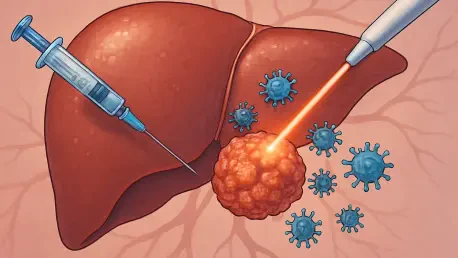

A groundbreaking therapeutic strategy that combines a systemic targeted drug with a standard locoregional treatment is showing unprecedented promise in preventing the recurrence of hepatocellular carcinoma (HCC) among high-risk patients who have undergone surgery. This comprehensive analysis of a new dual-action approach reveals a significant advancement in postoperative care, addressing the critical and persistent challenge of tumor relapse, which remains the primary driver of mortality for this aggressive form of liver cancer. The research evaluates the integration of the targeted drug lenvatinib with the established postoperative procedure, transarterial chemoembolization (TACE), aiming to eradicate the microscopic residual disease that frequently undermines the long-term success of surgical resection. The findings from a major multi-institutional study suggest that this combination therapy could fundamentally alter the landscape of postoperative management for HCC, offering a new standard of care that significantly extends the period of disease-free survival for a vulnerable patient population.
Addressing a Critical Unmet Need in HCC Treatment
The Persistent Challenge of Post-Surgical Relapse
The central problem that has long plagued the treatment of hepatocellular carcinoma is the exceptionally high rate of cancer recurrence, even following a surgical procedure deemed entirely successful in removing the primary tumor. This clinical paradox stems from the insidious nature of HCC, where microscopic residual disease and the early, undetected dissemination of cancer cells are common. These lingering malignant cells can lead to a relapse, which typically occurs within the first two years after the initial surgery. This reality creates a pressing and largely unmet need for effective postoperative, or adjuvant, strategies designed to eliminate any remaining cancer cells and prevent the formation of new tumors. The current standard of care to mitigate this risk often involves postoperative transarterial chemoembolization (TACE), a procedure that delivers chemotherapy directly to the liver while simultaneously blocking the tumor’s blood supply. However, the effectiveness of TACE as a standalone preventive measure is often limited, particularly for patients whose tumors exhibit aggressive biological features.
While locoregional treatments like TACE form one part of the postoperative strategy, their inability to address systemic disease leaves a substantial gap in care. Concurrently, systemic therapies such as the targeted drug lenvatinib have demonstrated considerable antitumor activity in patients with advanced, inoperable HCC, yet their specific role in the postoperative adjuvant setting has remained largely unexplored. This gap in clinical practice has fueled an urgent search for more innovative and effective combination strategies that can improve long-term outcomes for HCC patients following surgery. The challenge lies in developing a regimen that is powerful enough to eradicate both local and systemic micrometastases without introducing prohibitive toxicity. The integration of a proven systemic agent with a standard locoregional therapy represents a logical and promising path forward to address this complex clinical dilemma and enhance the durability of surgical cures.
A Landmark Study Reveals a Superior Strategy
To confront this clinical challenge head-on, a major multi-institutional study, spearheaded by researchers from Huashan Hospital of Fudan University in collaboration with several other prominent hepatobiliary centers in China, was meticulously designed. As detailed in a March 2025 report in Hepatobiliary & Pancreatic Diseases International, the research team conducted a prospective multicenter cohort study to investigate whether augmenting the standard postoperative TACE with systemic targeted therapy could more effectively prevent cancer relapse. The central finding of this landmark investigation provided a clear and statistically significant advantage for the combination therapy. Patients who received both postoperative TACE and the oral targeted drug lenvatinib experienced a substantially prolonged median disease-free survival when compared to the cohort of patients who received TACE alone. This key outcome strongly suggests that the dual-action approach is superior to the current single-modality standard of care.
The superiority of the combination therapy rests on its two-pronged mechanism of action. By simultaneously targeting potential residual disease both locoregionally with TACE and systemically with lenvatinib, the treatment addresses the multifaceted nature of cancer recurrence. TACE works to destroy any remaining cancer cells in the liver bed, while lenvatinib circulates throughout the body to eliminate any cancer cells that may have escaped into the bloodstream before or during surgery. This comprehensive strategy is designed to close the therapeutic gaps left by either treatment when used in isolation. The study’s results provide compelling evidence that this integrated approach is not just theoretically sound but practically effective, offering a more robust defense against the return of a highly aggressive cancer and potentially setting a new benchmark for adjuvant therapy in high-risk HCC.
Redefining the Future of Liver Cancer Care
Robust Methodology and Patient Safety
The methodological rigor of the study was a key factor in the strength of its conclusions, involving 297 patients who had undergone complete surgical resection for HCC. All participants were prospectively identified and classified as being at high risk for postoperative recurrence based on a well-established combination of clinical and pathological features, ensuring the study population was representative of the clinical challenge. These patients were then carefully allocated to one of two treatment arms: the control group, which received postoperative TACE alone, and the experimental group, which received TACE combined with oral lenvatinib. To ensure the reliability of the findings, the researchers employed multiple statistical adjustments to mitigate potential baseline biases between the two groups. This meticulous approach strengthens the conclusion that the observed benefit was directly attributable to the addition of lenvatinib to the treatment regimen.
Furthermore, the study provided crucial insights into the safety and tolerability of this novel combination therapy. A critical aspect of any new cancer treatment strategy is whether its benefits outweigh its risks, and the findings in this area were highly encouraging. The safety profile of the TACE and lenvatinib combination was found to be acceptable and manageable within a clinical setting. The majority of treatment-related adverse events reported by patients were of mild to moderate severity and could be effectively handled through standard supportive care measures or by adjusting the dose of lenvatinib as needed. Severe adverse events were infrequent, occurring in only a minority of patients, and were consistent with the well-documented safety profile of lenvatinib from its extensive use in advanced HCC. This finding is pivotal, as it indicates that integrating this potent systemic therapy into the postoperative regimen does not introduce unexpected or unmanageable toxicity, making it a feasible and practical option for routine clinical practice.
Expert Validation and Clinical Implications
The profound significance of these findings was underscored by an independent expert in hepatobiliary oncology who was not involved in the research. This expert noted that preventing recurrence after surgery remains one of the foremost and most difficult challenges in the modern management of liver cancer. The research was praised for demonstrating a tangible and meaningful clinical benefit for high-risk patients by synergistically combining a locoregional treatment with a systemic one. The expert described the strategy as “biologically sound,” given that it logically targets the cancer on both a local and a body-wide level, and also “feasible in routine practice,” highlighting its potential for rapid adoption. While definitive confirmation from large-scale randomized controlled trials is still a necessary next step, the expert concluded that these findings provide compelling “real-world evidence” that can help inform and guide postoperative treatment decisions for this vulnerable patient population immediately.
The overarching implication of this study is its potential to fundamentally shift the paradigm of postoperative management for high-risk HCC. The results strongly support a more proactive, risk-adapted approach, moving away from a model of passive surveillance or “watchful waiting” after surgery towards one of active and aggressive recurrence prevention. For patients identified as having a high likelihood of relapse based on tumor characteristics, the combination of systemic targeted therapy with TACE may represent a new and more effective standard of care designed to extend the crucial period of recurrence-free survival. The study successfully illustrated that a multifaceted intervention, which coordinated the simultaneous address of both local and systemic disease reservoirs, was essential for achieving durable postoperative control, particularly in aggressive cancers. If these results are validated in future randomized trials, this dual-action approach could become a cornerstone of adjuvant therapy for HCC, marking a major milestone in the fight against liver cancer.