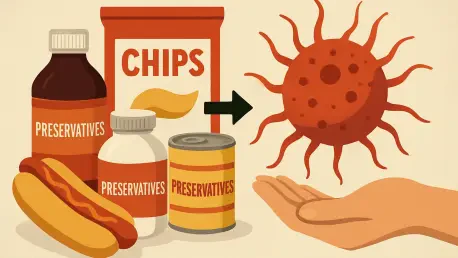

A landmark French study involving over 100,000 adults has brought renewed scrutiny to the grocery aisle, suggesting a significant association between higher dietary exposure to specific food preservatives and a modestly increased incidence of cancer. The research, published in The BMJ, leverages nearly a decade and a half of detailed health and dietary data to provide new evidence that prompts a call for re-evaluating the regulations governing these common additives. While the findings are observational and do not establish a direct cause-and-effect relationship, the sheer scale of the study and its consistency with previous experimental data highlight a potential public health concern. This comprehensive analysis signals that a more cautious approach from regulators, manufacturers, and consumers may be warranted when it comes to the long-term consumption of industrially processed foods and beverages.
A Comprehensive Investigation into Dietary Additives
The central objective of the investigation was to address a persistent knowledge gap concerning the relationship between preservative consumption and cancer development in a large adult population. Preservatives are substances widely employed by the food industry to extend the shelf life of packaged products, primarily by inhibiting microbial growth or preventing spoilage from chemical changes. Despite their ubiquitous presence in the modern food supply, definitive evidence linking their consumption to cancer risk in humans has remained limited, with most prior research being confined to experimental studies suggesting certain preservatives can inflict cellular and DNA damage. This study sought to move beyond the laboratory to understand real-world health outcomes associated with long-term dietary exposure to these additives, providing a more robust basis for public health guidance and regulatory oversight.
To achieve this, researchers meticulously analyzed a wealth of dietary and health data collected from 105,260 participants enrolled in the NutriNet-Santé cohort between 2009 and 2023. This cohort was predominantly female, with an average age of 42, and all participants were free of cancer at the study’s outset. Over an average follow-up period of 7.5 years, participants regularly submitted 24-hour dietary records that specified the exact brands of food consumed, a crucial detail that allowed for a precise estimation of their exposure to various additives. Cancer diagnoses were subsequently tracked through detailed health questionnaires and rigorously confirmed with official medical and death records through the end of 2023. During this extensive follow-up, 4,226 new cancer cases were diagnosed, providing a substantial dataset from which to draw statistical associations between additive intake and disease incidence.
Pinpointing Specific Risks Among Common Preservatives
A key finding that emerged from the extensive analysis is the nuanced nature of the associated risk. The researchers examined 17 individual preservatives, and the results clearly indicated that not all of these substances carry the same level of concern. In fact, 11 of the 17 additives studied were not associated with any discernible change in cancer incidence, challenging the notion that preservatives as a broad category are inherently harmful. Furthermore, the study found no significant link between the total intake of all preservatives combined and the overall risk of developing cancer. The concerning associations only became apparent when the analysis drilled down to the intake of specific additives, particularly those categorized as non-antioxidants, which function by directly inhibiting the growth of microbes like bacteria and fungi in food products. This specificity underscores the importance of evaluating each additive individually rather than making sweeping generalizations.
The study identified several specific preservatives that were linked to a higher risk of cancer when compared to individuals with lower or no consumption. A higher intake of potassium sorbate, for example, was associated with a 14% increased risk of overall cancer and a more pronounced 26% increased risk of breast cancer. Similarly, total sulfites were linked to a 12% higher risk of overall cancer. The intake of nitrites and nitrates, commonly used in processed meats, also showed significant associations; sodium nitrite was specifically associated with a 32% increased risk of prostate cancer, while potassium nitrate was linked to a 13% increased risk of overall cancer and a 22% increased risk of breast cancer. Additionally, total acetates were associated with a 15% increased risk of overall cancer and a 25% increased risk of breast cancer. While the study did not investigate the biological mechanisms, these findings align with existing experimental data suggesting that several of these compounds can adversely alter immune and inflammatory pathways.
Interpreting the Evidence and Charting a Path Forward
It is crucial to contextualize these findings within the study’s methodological framework. As an observational study, the research can only identify statistical associations and cannot definitively prove that these preservatives cause cancer. There remains a possibility that other unmeasured factors, such as overall dietary patterns or lifestyle choices commonly correlated with high processed food intake, may have influenced the results. However, the investigation’s significant strengths—its large size, the detailed and brand-specific dietary data, a long 14-year follow-up period, and its consistency with prior experimental research—lend substantial weight to its conclusions and elevate the findings beyond mere statistical noise. These factors collectively suggest that the observed associations are not coincidental and warrant serious consideration from the scientific and public health communities.
The consensus viewpoint that emerged from this research underscored the necessity of a more balanced and cautious approach to food preservatives. The study’s authors concluded that their findings provided new and valuable insights that should directly inform the future re-evaluation of these additives by regulatory health agencies worldwide. For the food industry, a clear message was sent, calling on manufacturers to actively limit the use of unnecessary preservatives and explore safer alternatives. For consumers, the study reinforced existing public health recommendations to favor fresh, minimally processed foods over industrially processed alternatives. This research ultimately framed the issue not as a cause for alarm, but as an evidence-based call for greater diligence and transparency in how the global food supply is managed and regulated to protect long-term health.