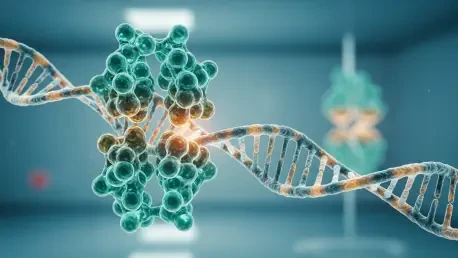

The long-held biological dogma that gene-editing machinery must rely on fragile RNA strands to find its target has finally been dismantled by a pioneering shift toward DNA-guided navigation. For years, the scientific community accepted the inherent instability of RNA as a necessary trade-off for the precision of the CRISPR-Cas12 system. However, the emergence of DNA-guided mechanisms represents more than just a material swap; it is a fundamental architectural upgrade. By utilizing a more robust molecule to steer molecular scissors, researchers have unlocked a level of control and durability that was previously unattainable, moving the industry away from permanent genomic “vandalism” toward a more sophisticated, tunable form of genetic management.
Introduction to DNA-Guided Gene Editing
The traditional CRISPR landscape has been dominated by RNA-guided methods, which serve as a bridge between the Cas enzyme and the target genetic sequence. While effective, RNA is notoriously delicate, often degrading before it can complete its mission or causing off-target mutations that linger in the genome. DNA-guided technology deviates from this path by leveraging the chemical resilience of deoxyribonucleic acid. This shift allows the Cas12 protein to navigate the cellular environment with greater persistence, ensuring that the editing tool reaches its destination without falling apart under physiological stress.
This evolution is particularly relevant because it addresses the core limitations of RNA stability that have hampered clinical scalability. In the broader technological landscape, the Cas12 system has emerged as a solution for those seeking a more precise and cost-effective alternative to established genome-editing tools. By moving away from RNA, the system becomes less of a blunt instrument and more of a surgical laser, capable of interacting with genetic material with a higher degree of discrimination. This transition marks the beginning of a new era where gene editing is defined by its modularity and its ability to operate effectively within the chaotic interior of a living cell.
Technical Architecture and Core Features
The DNA-Guided Cas12 Mechanism
At the heart of this innovation lies the reconfiguration of the Cas12 protein to accept DNA guides as its navigational compass. Unlike RNA guides, which are prone to mispairing and rapid enzymatic breakdown, DNA guides provide a rigid and predictable structure for identifying specific genetic sequences. This mechanism allows the system to target cellular instructions—the transient messages that tell a cell how to behave—rather than just the master DNA blueprint. This is a critical distinction; by managing gene expression rather than deleting or inserting permanent code, the system can “dial down” harmful protein production without making irreversible changes to the host’s heritage.
Molecular Stability and Economic Feasibility
The technical durability of DNA compared to the fragility of RNA offers a transformative performance profile in both laboratory and clinical environments. RNA requires specialized cold-chain logistics and careful handling to prevent degradation, whereas DNA remains stable at room temperature and is resistant to the common enzymes that typically destroy foreign genetic material. This physical robustness translates directly into real-world usage benefits, significantly reducing the overhead costs associated with manufacturing and storage. For global healthcare providers, this means that advanced gene-editing diagnostics and therapies could finally become accessible in resource-limited settings where expensive lab infrastructure is unavailable.
Recent Breakthroughs in CRISPR Guide Chemistry
The recent shift in scientific philosophy has enabled a move toward “tuning” genetic instructions in real-time. This breakthrough allows for a non-permanent intervention strategy, where the DNA-guided system can temporarily suppress a disease-causing gene and then be naturally cleared from the system. This trend is influencing industry behavior by prioritizing safety and precision over the traditional “cut-and-paste” philosophy. By focusing on transient modulation, developers are creating a safety net for patients, ensuring that any unintended side effects are temporary rather than a lifelong genetic burden.
Practical Applications in Modern Medicine
Advanced Diagnostic Systems
In the realm of diagnostics, DNA-guided CRISPR is proving to be a game-changer for detecting viral infections like HIV and Hepatitis C. These systems provide high-accuracy results by identifying viral signatures with a sensitivity that rivals more complex laboratory tests. Because the DNA guides are so stable, these diagnostic kits can be shipped and stored for long periods without losing their effectiveness. This reliability is essential for early clinical intervention, allowing healthcare workers to detect pathogens in the earliest stages of infection when they are most treatable.
Ex-Vivo Therapeutics and Organ Optimization
The technology also excels in specialized use cases like ex-vivo organ optimization. Surgeons can now use DNA-guided tools to treat donor organs outside the human body, repairing damaged tissue or adjusting the organ’s immune profile before transplantation. This implementation reduces the risk of organ rejection and improves the safety profile of the procedure. By treating the organ in isolation, the system avoids the risks associated with systemic gene editing, providing a controlled environment for genetic “cleanup” that was impossible with older, less stable RNA-based methods.
Challenges and Implementation Hurdles
Despite its potential, the technology faces significant technical hurdles, such as ensuring consistent performance across diverse cell types. Different biological environments can impact how the Cas12 protein interacts with the DNA guide, necessitating rigorous testing to ensure universal efficacy. Furthermore, regulatory agencies and market obstacles may slow the transition from research to widespread clinical adoption. Federal agencies are currently mitigating these risks through increased funding and the development of standardized testing protocols, but the path to full commercialization remains complex.
Future Outlook and Evolutionary Trajectory
The trajectory of DNA-guided CRISPR suggests it will become the gold standard for highly targeted, non-permanent genetic therapies. In the coming years, we can expect a surge in clinical trials focusing on complex diseases such as cancer, where the ability to modulate gene expression without permanent modification is highly desirable. Long-term, this technology could democratize biotechnology by making life-saving genetic tools affordable and accessible to a global population, fundamentally changing how society approaches chronic disease management.
Final Assessment and Industry Impact
The shift from RNA to DNA guides was a monumental advancement that redefined the boundaries of biotechnology. This innovation moved the industry toward a more mature phase of genetic engineering, characterized by enhanced stability, lower costs, and superior precision. The ability to distinguish between permanent genomic changes and temporary instructional tuning provided a new level of clinical safety. Ultimately, the successful implementation of DNA-guided systems demonstrated that the most effective way to rewrite the future of medicine was to first rethink the fundamental tools used to navigate the genetic landscape.