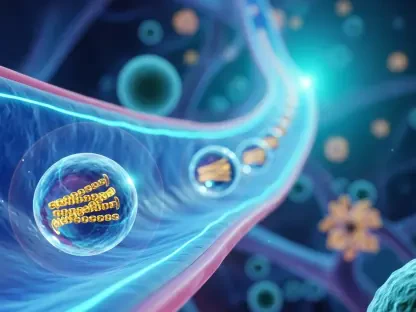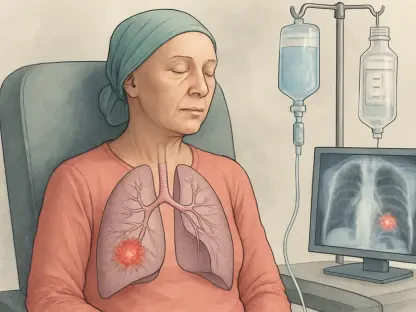

Inside the microscopic battlefield of a human tumor, the difference between a patient’s recovery and a lethal progression often hinges on the metabolic stamina of a single type of immune cell. In the high-stakes battle against malignancy, the CD8+ T cell acts as the body’s elite soldier, but even the strongest troops can run out of steam when faced with the oppressive environment of a growing cancer. Recent research from the Johns Hopkins Kimmel Cancer Center has pinpointed a single amino acid, cysteine, as the master regulator behind this cellular struggle. It turns out that a T cell’s ability to either multiply into an expansive army or strike with lethal force depends entirely on how it processes this specific nutrient. This discovery identifies a metabolic switch that determines whether the immune system succeeds or fails in eradicating a tumor.
The discovery highlights a delicate internal economy where resources must be spent wisely. When cysteine is abundant, the T cell thrives, yet the way it chooses to spend that cysteine dictates its ultimate destiny. Rather than being a simple fuel source, this amino acid acts as a signaling hub that directs the cell toward growth or aggression. By mapping this internal decision-making process, scientists have uncovered why some immune responses fizzle out while others persevere. This understanding provides a new lens through which to view immune failure, shifting the focus from external signals to the internal machinery that processes life-sustaining nutrients.
The Metabolic Crossroads of the Immune System
In the complex landscape of oncology, the metabolic health of an immune cell is often the deciding factor in patient outcomes. The Johns Hopkins team discovered that cysteine serves as a critical fork in the road for T-cell development. When these cells enter the fray, they must rapidly adapt to the nutrient-depleted environment of the tumor, and their ability to manage cysteine dictates their survival. This amino acid is not just a building block for proteins but a commander of cellular fate that governs whether a T cell stays in the fight or succumbs to the pressure of the environment.
Understanding this crossroads allows researchers to look at the immune system through a purely chemical lens. The research suggests that the metabolic state of a T cell is not just a byproduct of its activity but a prerequisite for it. By identifying cysteine as the central figure in this process, the study reframes the struggle between the immune system and cancer as a competition for limited resources. If the T cell cannot properly process its cysteine supply, it loses its edge, allowing the malignancy to bypass the body’s natural defenses and continue its unchecked growth.
Why the Cysteine Switch: Matters for Immunotherapy
Understanding T-cell metabolism is no longer just a laboratory curiosity; it has become a clinical necessity. Modern cancer treatments like CAR T-cell therapy often face a frustrating roadblock: the exhaustion of engineered cells. Many therapies fail because T cells either stop dividing or lose their ability to kill cancer cells once they enter the harsh environment of a tumor. By uncovering how cysteine governs these two conflicting functions, scientists are finding ways to prevent immune cell burnout, potentially making life-saving treatments more durable and effective for patients who currently have limited options.
The clinical implications of this switch are profound for the next generation of precision medicine. As researchers refine the process of engineering immune cells outside the body, they must now account for the metabolic instructions those cells carry. If a therapy can be designed to favor specific cysteine pathways, it might overcome the traditional barriers of the tumor microenvironment. This shift toward metabolic engineering represents a significant leap forward, moving beyond simple genetic modifications to create cells that are chemically optimized to survive the longest and hardest battles.
The Dual Pathways: Growth vs. Lethality
The research reveals that once cysteine enters a T cell, it is partitioned into two distinct internal pipelines that force the cell to make a strategic choice. One portion of the cysteine supply is processed by the enzyme NFS1 to create iron-sulfur (FeS) clusters. These clusters are the mechanical gears of the cell, essential for DNA synthesis and energy production. This pathway is what allows a handful of T cells to rapidly expand into a massive force capable of confronting a spreading malignancy. Without enough activity in this pathway, T-cell populations remain too small to be effective, regardless of how individually powerful the cells might be.
In contrast, the remaining cysteine is diverted to produce glutathione, a potent antioxidant. While glutathione protects the cell from oxidative stress and helps manage immune signaling, it also serves as a metabolic regulator. The study found that while this pathway supports the cell’s initial killing power, it can eventually act as a brake that prevents the cell from reaching its full aggressive potential. This creates a functional tension within the cell: it must balance the need to grow with the need to kill, often sacrificing one to prioritize the other based on the available chemical signals.
Insights from the Johns Hopkins Study
By utilizing melanoma models and sophisticated laboratory techniques, the research team identified several critical paradoxes in T-cell behavior. When researchers restricted cysteine availability, they observed a surprising result: the T cells became significantly more aggressive and produced more cancer-killing molecules. However, this boost in quality came at the expense of quantity. These aggressive cells lost the ability to divide, meaning the immune response could not be sustained long enough to eliminate the tumor completely. This finding highlighted the danger of pushing a T cell too hard without ensuring it had the metabolic foundation to replicate.
The impact of NFS1 modulation was equally revealing in mouse models. Cells lacking the NFS1 enzyme quickly became exhausted and failed to control tumor growth, as they could not maintain the energy required for a sustained offensive. Conversely, by artificially boosting NFS1 activity, the researchers were able to enhance T-cell expansion and significantly improve the suppression of tumors. This proved that metabolic engineering could directly dictate clinical outcomes, showing that the strength of an immune response is inherently linked to the efficiency of its internal iron-sulfur cluster production.
Strategies for Optimizing T-Cell Performance
The discovery of these pathways provides a practical framework for improving current cancer treatments through metabolic fine-tuning. To combat the issue of T-cell exhaustion in therapies like CAR T, clinicians may soon look to boost the NFS1 pathway. By ensuring a steady supply of iron-sulfur clusters, they can encourage T cells to remain in a proliferative state for longer periods. This approach ensures that the army stays replenished throughout the fight, preventing the premature depletion of immune resources that often leads to treatment failure in aggressive or late-stage cancers.
Another promising strategy involves the timed inhibition of glutathione. Rather than permanently blocking this antioxidant, a more effective strategy would involve releasing the metabolic brake only after the T cells have been activated and have begun to multiply. This allows the cells to unleash their maximum killing power exactly when the tumor is most vulnerable, without sacrificing the initial growth phase required for a robust response. Such precision timing in metabolic control could redefine the standard of care, turning the tide in favor of the patient’s own immune system.
The study clarified how metabolic partitioning served as a fundamental gatekeeper of immune efficacy. Researchers successfully mapped the sulfur distribution within CD8+ T cells, which paved the way for future interventions that might maximize both cellular longevity and lethality. These insights suggested that future clinical protocols should involve the careful monitoring of nutrient pathways to ensure that engineered cells do not reach metabolic dead ends. This work moved the field closer to a reality where the chemical limitations of the immune system were no longer a barrier to successful cancer eradication. Scientists and clinicians looked toward a new era of therapy where the metabolic destiny of a cell was intentionally shaped to ensure victory.