
As a leading expert in biopharmaceutical research and development, Ivan Kairatov has spent his career at the forefront of medical innovation. Today, he joins us to discuss a significant breakthrough in the fight against the Epstein-Barr virus—a pathogen that infects an estimated 95% of the world’s population and is linked to multiple cancers and other serious health conditions. We’ll explore the novel scientific approach that led to the discovery of powerful new antibodies, the specific challenges of targeting this uniquely evasive virus, and the profound hope this research offers to some of the most vulnerable patients, particularly those undergoing organ transplantation.
Epstein-Barr virus is known for its unique ability to bind to nearly every B cell, making it a notoriously difficult virus to neutralize. Could you describe the specific challenges this presented and how targeting the gp350 and gp42 antigens offered a new path forward?
It’s a challenge that has stumped researchers for years. Imagine trying to guard a fortress where the enemy has a key to almost every single door. That’s essentially what we face with Epstein-Barr virus; its ability to latch onto nearly all of our B cells makes a broad defensive strategy almost impossible. This widespread binding capacity has been a massive roadblock. We realized we had to stop trying to guard every door and instead focus on breaking the enemy’s keys. By targeting two specific proteins on the virus’s surface—gp350, which acts like a grappling hook to attach to cells, and gp42, the key that actually unlocks the cell for entry—we shifted from a defensive posture to a highly targeted offensive one. This precision approach was the critical step that finally allowed us to see a way to block the infection process at its source.
Your team utilized a specialized mouse model carrying human antibody genes. Can you walk us through why this specific approach was so crucial for developing these new monoclonal antibodies and what this innovative method could mean for discovering therapies against other challenging pathogens?
This was absolutely essential to our success. A common problem when developing antibody therapies is that if the antibodies are derived from an animal, the human body can recognize them as foreign and launch an immune attack against the very treatment meant to help. It’s a significant hurdle. To overcome this, we used a truly innovative mouse model whose immune system is engineered to produce fully human antibodies. Think of these mice as tiny, living bioreactors that create tools our bodies will accept without a fight. This approach not only yielded the eight antibodies against gp42 and two against gp350 but also gave us a powerful, validated blueprint. We’ve now demonstrated a method that can be applied to other elusive pathogens, potentially accelerating the discovery of protective antibodies for a whole range of diseases. It’s an exciting new chapter for a lot of us in the field.
The study highlighted one monoclonal antibody against gp42 that successfully blocked infection, while another against gp350 provided partial protection. Could you elaborate on the distinct roles these two antigens play in the infection process and what these findings reveal about potential sites of vulnerability for future vaccine development?
The results were incredibly revealing and speak to the virus’s two-step invasion process. The gp350 antigen is the virus’s first point of contact; it’s what allows EBV to initially bind to the outside of a B cell. Blocking it, as our antibody did, is like cutting the rope on a grappling hook—it provides partial protection because it makes it harder for the virus to get a foothold. However, the gp42 antigen is the real key to the kingdom. It is essential for the final step, fusing the virus with the cell membrane to inject its genetic material. By successfully blocking gp42, we essentially jammed the lock, completely preventing entry. Seeing one antibody achieve a complete blockade while the other offered partial defense gives us a crystal-clear picture of the virus’s critical vulnerabilities. It tells us that for a future vaccine to be truly effective, it must provoke a strong response against that gp42 fusion mechanism.
Post-transplant lymphoproliferative disorders are a serious, often life-threatening risk for transplant recipients. Can you detail how a therapy using these monoclonal antibodies might work to protect this vulnerable population, particularly children, and what are the key next steps to bring this potential therapy to patients?
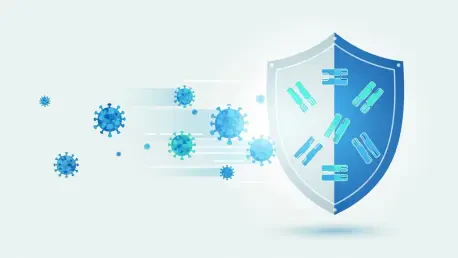
This is where the research has the most immediate potential to save lives. Over 128,000 people in the U.S. receive transplants annually, and the immunosuppressant drugs they need to prevent organ rejection leave them wide open to an unchecked EBV infection, which can lead to PTLD, a very aggressive lymphoma. A therapy using these antibodies would act as a preemptive shield. Patients would receive an infusion of these monoclonal antibodies, which would circulate in their bloodstream and intercept any EBV before it can infect their B cells. This is especially critical for children, many of whom have never been exposed to EBV and are thus even more susceptible after a transplant. The next steps are clear: we are working with partners to move this from the lab to the clinic. This involves first testing the therapy for safety in healthy volunteers, and if that goes well, we will proceed to clinical trials with transplant patients to prove its effectiveness in the real world.
What is your forecast for the development of therapies that can prevent or control Epstein-Barr virus-related complications in high-risk patients over the next decade?
I am more optimistic now than I have ever been. For years, this has been an unmet need in transplant medicine, but the momentum is shifting. I believe that within the next decade, we will see a monoclonal antibody therapy, much like the one we’ve developed, become a standard part of the care protocol for high-risk transplant recipients. The science is sound, and the technology to produce these therapies is mature. Beyond just prevention in transplant patients, this breakthrough opens the door to exploring similar strategies for other EBV-associated diseases, including certain cancers and autoimmune conditions. The progress we’re making is not just an incremental step; it’s a significant stride toward finally gaining control over a virus that has affected humanity for so long. We are on the cusp of being able to offer tangible protection to those who need it most.