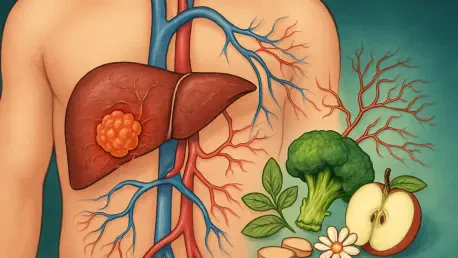

A comprehensive analysis of recent oncological research has illuminated a remarkably promising therapeutic strategy for hepatocellular carcinoma (HCC), a notoriously aggressive and increasingly prevalent form of liver cancer. This investigation centers on the synergistic application of two natural compounds, ginsenoside RG3 and cantharidin, which have demonstrated a profound ability to collectively inhibit the progression of HCC. The emerging research illuminates a novel mechanism of action that targets the fundamental metabolic machinery of cancer cells, thereby offering a new frontier in the development of effective treatments for this formidable disease. By striking at the tumor’s ability to fuel itself, this approach opens the door to a strategy that could effectively starve cancer cells, halting their relentless growth and offering renewed hope in a challenging therapeutic landscape.
The Dual Threat to Liver Cancer
The Problem and a Natural Solution
Hepatocellular carcinoma presents a profound and ongoing global health challenge, characterized by its often insidious onset and diagnosis at advanced stages, which significantly contributes to its high mortality rate and poor patient prognosis. For many years, the primary therapeutic options have been conventional pharmacological agents that, while beneficial for some, frequently come with substantial limitations in efficacy and can cause significant, debilitating side effects. This reality has catalyzed a significant paradigm shift within the scientific and medical communities, directing intensive research efforts toward the vast and largely untapped repository of natural products derived from traditional medicinal sources. This exploration seeks compounds that can offer more targeted action with fewer adverse effects, providing a more sustainable and tolerable treatment path for patients battling this aggressive cancer, thereby improving both survival rates and quality of life during and after treatment.
Within this burgeoning field of natural product research, ginsenoside RG3, a potent bioactive compound meticulously extracted from the revered ginseng plant, and cantharidin, a unique substance derived from blister beetles with a long history in traditional medicine, have emerged as agents of exceptional interest. These compounds are now being subjected to rigorous scientific investigation, not merely for their individual anti-cancer properties, which have been noted in previous studies, but more importantly, for their extraordinary potential to work in concert. The central hypothesis is that their combined application can produce a therapeutic effect far greater than the simple sum of their parts. This collaborative action suggests a multi-pronged attack on cancer cells, capable of overcoming the complex defense mechanisms that often render single-agent therapies ineffective, paving the way for a more robust and comprehensive treatment modality for hepatocellular carcinoma.
The Power of Synergy
The central and most compelling theme of this groundbreaking research is the powerful principle of biological synergy. The study conclusively demonstrates that when ginsenoside RG3 and cantharidin are administered together, they significantly amplify each other’s inherent anti-cancer effects. This collaboration mounts a more comprehensive, multi-faceted, and potent attack on hepatocellular carcinoma cells than either compound could achieve on its own. The intricate molecular mechanism that underpins this powerful synergy has been identified as a highly targeted disruption of lipid metabolism. This cellular process is critically important for normal cell function but is notoriously hijacked by malignant cells to fuel their rapid, uncontrolled growth, facilitate their proliferation into larger tumor masses, and ensure their long-term survival against the body’s natural defenses and external therapeutic pressures. By interfering with this hijacked pathway, the combination therapy strikes at the very heart of the cancer’s energy and structural supply chain.
Cancer’s dependence on altered lipid metabolism represents a key vulnerability that this dual-compound therapy expertly exploits. Malignant cells have an insatiable appetite for lipids, which they use as essential building blocks for constructing new cell membranes during their rapid division and as a dense source of energy to power their hyperactive state. This metabolic reprogramming is a hallmark of many aggressive cancers, including HCC. The combination of ginsenoside RG3 and cantharidin effectively throws a wrench into this metabolic engine. By disrupting the synthesis and utilization of crucial lipids like cholesterol and fatty acids, the treatment creates a state of metabolic crisis within the cancer cells. This deprives them of the fundamental resources required for their continued existence and expansion, leading to a cascade of cellular stress that ultimately halts their growth and compromises their viability, showcasing a brilliant strategy of turning the cancer’s own strength into a fatal weakness.
Unlocking the Mechanism of Action
Targeting the Master Switch
A decisive finding from this research has identified the PRMT1-SREBF1 axis as the primary molecular target of this innovative combination therapy, revealing the precise pathway through which the compounds exert their powerful effects. At the head of this axis is Protein Arginine Methyltransferase 1 (PRMT1), an enzyme that functions as a crucial regulator involved in a wide array of essential cellular functions, including the intricate control of gene expression and the management of various metabolic pathways. In the specific context of hepatocellular carcinoma, the aberrant or significantly heightened activity of PRMT1 is a key driver of the metabolic dysregulation that directly contributes to cancer initiation, progression, and metastasis. The research reveals that the combined action of ginsenoside RG3 and cantharidin effectively modulates and inhibits the activity of this enzyme, representing a highly strategic and impactful point of therapeutic intervention.
The inhibition of PRMT1 is a pivotal step because this enzyme acts as a master controller, influencing numerous downstream processes that are vital for the cancer cell’s survival. Its functions extend beyond metabolism to include DNA repair, RNA processing, and signal transduction, all of which are co-opted by tumors to sustain their growth and resist treatment. By successfully neutralizing the overactive PRMT1, the dual-compound therapy triggers a cascading series of events that dismantle the cellular machinery upon which the tumor depends. This targeted approach is profoundly different from broader, less specific chemotherapies, as it hones in on a specific molecular dependency of the cancer cells. This precision allows for a more potent effect on the tumor while potentially minimizing damage to healthy, non-cancerous tissues, a critical goal in the development of next-generation cancer treatments that aim for maximum efficacy with improved patient safety and tolerability.
Cutting the Fuel Line
The successful inhibition of PRMT1 initiates a critical downstream cascade that ultimately culminates in the significant downregulation of Sterol Regulatory Element-Binding Protein 1 (SREBF1). This protein is not just a minor player; it is a master transcription factor that orchestrates the entire program of lipid synthesis within the cell, controlling the genes responsible for producing essential lipids like cholesterol and fatty acids. In a cancerous state, SREBF1 is often highly overexpressed, a change that relentlessly drives rampant lipid biosynthesis. This overproduction provides malignant cells with the constant stream of necessary building blocks for creating new membranes and the vast amounts of energy required for their unchecked and rapid proliferation. By disrupting the PRMT1-SREBF1 signaling pathway, the dual-compound therapy effectively seizes control of this process and chokes off the cancer cells’ primary lipid supply line, creating a metabolic bottleneck.
The consequences of this metabolic strangulation are severe and multifaceted for the tumor. By dramatically reducing the synthesis of these vital biomolecules, the treatment effectively starves the tumor, severely impeding its ability to grow, divide, and spread to other parts of the body. Without an adequate supply of lipids, cancer cells cannot construct the membranes needed for cell division, nor can they generate the energy required to maintain their hyper-proliferative state. This induced state of resource deprivation creates an environment that is hostile to the tumor’s survival, pushing the cancer cells toward a state of crisis from which they cannot easily recover. This strategic disruption of a core metabolic dependency highlights a sophisticated therapeutic approach that moves beyond direct cellular poisoning and instead cripples the fundamental infrastructure that the cancer needs to thrive, representing a more elegant and targeted form of anti-cancer warfare.
From Starvation to Self-Destruction
One of the most vital findings of this research is that the therapeutic effect of this potent combination extends far beyond merely slowing down cancer growth, which is known as a cytostatic effect. The profound disruption of the PRMT1-SREBF1 axis, along with other critical pro-survival signaling pathways within the hepatocellular carcinoma cells, ultimately forces them to initiate and undergo apoptosis, more commonly known as programmed cell death. Apoptosis is the body’s natural, orderly, and controlled process for systematically eliminating damaged, dysfunctional, or unwanted cells without causing inflammation or damage to surrounding healthy tissue. By successfully triggering this intrinsic self-destruct mechanism in malignant cells, the ginsenoside RG3 and cantharidin combination acts as a direct agent of cancer cell elimination, a cytotoxic effect that is a highly desirable and definitive outcome in the field of oncology and cancer treatment.
This ability to induce apoptosis positions the combination therapy not just as a mere inhibitor that temporarily pauses tumor progression, but as a potential eradicator of the tumor cells themselves. This is a crucial distinction in cancer therapy, as treatments that only arrest cell growth often allow for the possibility of relapse once the treatment is stopped. In contrast, therapies that actively kill cancer cells offer a greater potential for achieving a complete and lasting remission. The induction of a clean, programmed cell death pathway ensures that the tumor is dismantled in a way that minimizes collateral damage and avoids triggering an inflammatory response that could inadvertently promote cancer recurrence or spread. This elegant mechanism of action, which turns the cancer cell’s own internal machinery against itself, represents a sophisticated and powerful strategy in the ongoing and relentless battle against liver cancer.
From the Lab to the Clinic
Future Research and Broader Potential
The promising and compelling results observed in laboratory studies, known as in vitro research, are now being rigorously corroborated by in vivo research that utilizes sophisticated animal models of hepatocellular carcinoma. These essential preclinical studies have indicated that treatment with the ginsenoside RG3 and cantharidin combination leads to a significant and measurable reduction in overall tumor burden and a marked decrease in the incidence of metastasis, which is the spread of cancer to other organs. These findings strongly reinforce the therapy’s potential for future clinical applications in human patients. However, the complex journey of translating these encouraging laboratory findings into a safe and viable clinical therapy requires extensive further investigation. Researchers are now focusing on the critical areas of pharmacokinetics and pharmacodynamics—that is, meticulously studying how these compounds are absorbed, distributed, metabolized, and ultimately excreted by the body.
A thorough and comprehensive understanding of these physiological processes is absolutely essential for optimizing dosing regimens, enhancing the bioavailability of the compounds to ensure they reach the tumor in effective concentrations, and maximizing their therapeutic efficacy while rigorously ensuring patient safety. Furthermore, the therapeutic potential of this powerful combination may prove to be even more multifaceted than currently understood. Beyond its direct cytotoxic effects on the cancer cells themselves, emerging evidence strongly suggests that both ginsenoside RG3 and cantharidin may also possess significant immunomodulatory properties. This implies they could potentially enhance and mobilize the body’s own immune system, orchestrating a more robust and sustained anti-tumor response. This potential dual action—directly killing cancer cells while simultaneously empowering the immune system to attack the tumor—aligns perfectly with the most advanced, multi-pronged treatment strategies in modern oncology, such as combination chemo-immunotherapy.
A New Era of Precision Medicine
This line of research aligns seamlessly with the rapidly advancing and highly personalized field of precision medicine. By targeting a very specific molecular pathway like the PRMT1-SREBF1 axis, this therapy could be meticulously tailored and personalized for individual patients whose tumors exhibit a particular dependence on this metabolic pathway for their survival and growth. Such a strategy would involve diagnostic testing to identify the molecular signature of a patient’s tumor, allowing clinicians to predict which individuals are most likely to respond favorably to the treatment. This allows for a more focused, and therefore potentially more effective, treatment paradigm compared to the traditional one-size-fits-all approaches that have long dominated oncology. This shift towards personalized care promises not only to improve treatment outcomes but also to spare patients from the toxicity of ineffective therapies.
The synergistic suppression of hepatocellular carcinoma by ginsenoside RG3 and cantharidin represented a landmark advancement in cancer research. By meticulously mapping out the treatment’s precise mechanism of action—specifically its targeting of the PRMT1-SREBF1 axis to disrupt lipid metabolism and subsequently induce apoptosis—researchers laid the critical groundwork for a potential new class of cancer therapies. This work underscored the profound and often-underestimated potential of natural compounds in the field of oncology and heralded a pivotal shift towards more targeted, effective, and synergistic strategies in the relentless battle against liver cancer. The scientific community stood on the cusp of revolutionary approaches, with future in-depth investigations poised to refine and ultimately translate these powerful findings into transformative and life-saving care for patients worldwide.