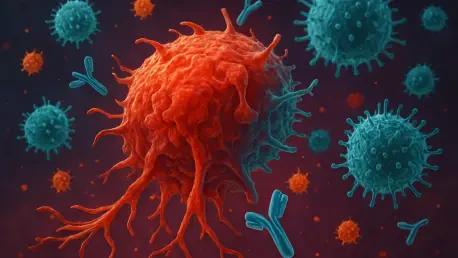

A groundbreaking study has unraveled a sophisticated deception used by aggressive breast cancer to build a fortress against the body’s immune system, but in doing so, the cancer inadvertently leaves the key to its own destruction lying in plain sight. Research from scientists at Sun Yat-Sen Memorial Hospital has identified a specific molecule, a long noncoding RNA called FAM83H-AS1, that masterfully orchestrates this immune evasion. This molecule acts as a saboteur, hijacking the body’s emergency signals to create a protective shield of inflammation around the tumor. Yet, this very act of self-preservation creates a critical vulnerability, making these highly aggressive cancers exceptionally susceptible to a powerful class of existing immunotherapy drugs. This discovery not only provides a new understanding of how tumors progress but also illuminates a clear and immediate strategy to turn a cancer’s greatest strength into its ultimate downfall, potentially transforming a marker for poor prognosis into a predictor of therapeutic success for patients.
The Double-Edged Sword of a Cancerous Gene
The Body’s Natural Alarm System
The human body is equipped with a vigilant and powerful surveillance network designed to detect and eliminate rogue cells before they can establish themselves as cancerous tumors. Central to this defense is the cGAS-STING pathway, an innate alarm system that recognizes signs of cellular distress. Cancer cells, by their very nature, are characterized by rampant genomic instability, a chaotic state that often results in fragments of their own DNA being damaged and misplaced. When these DNA fragments escape the cell’s nucleus and appear in the cytoplasm—the main cellular compartment—they act as a potent danger signal. The cGAS-STING pathway detects this out-of-place DNA and initiates a powerful defensive cascade. This sequence of events culminates in the production of interferons, which are crucial signaling proteins that act as a call to arms for the immune system. They recruit and activate specialized immune cells, such as T cells, priming them to launch a targeted and lethal anti-tumor assault. This process represents a fundamental and highly effective line of defense against cancer development and metastasis.
A Master of Cellular Sabotage
While the cGAS-STING pathway is a formidable defense, certain aggressive tumors have evolved ingenious counter-strategies to neutralize this threat. The new study pinpoints a key culprit in this cellular subversion: the long noncoding RNA molecule FAM83H-AS1. Researchers found that this molecule is not only amplified but also highly active within aggressive breast cancer tissues. Its high expression levels were directly and consistently correlated with poorer survival rates in patients and a significant reduction in the presence of anti-tumor immune cells within the tumor microenvironment. The investigation revealed the precise mechanism of this sabotage. FAM83H-AS1 functions as a molecular hijacker, intercepting the alarm signals as they travel through the cGAS-STING pathway. Instead of allowing the pathway to complete its intended mission of producing tumor-fighting interferons, elevated levels of FAM83H-AS1 divert the entire signaling cascade down an alternative route. This alternate pathway is driven by a protein complex known as NF-κB, which fundamentally alters the nature of the cellular response.
Crafting a Safe Haven for Cancer
The redirection of the immune alarm by FAM83H-AS1 has profound consequences for the tumor’s survival and growth. The NF-κB-driven pathway transforms what should have been an acute, destructive anti-tumor attack into a state of chronic, low-grade inflammation that paradoxically benefits the cancer. This pro-tumor inflammatory state is a perfect tool for constructing an immunosuppressive tumor microenvironment. This localized area surrounding the cancer cells becomes a hostile zone for incoming immune fighters, actively dampening their responses and neutralizing their ability to attack. It effectively disarms the body’s natural defenses, creating a secure fortress where the cancer can thrive, expand, and eventually metastasize without fear of immune-mediated destruction. In essence, the tumor co-opts the body’s own defense mechanisms, turning a system designed for its annihilation into one that fosters its protection and proliferation, explaining why tumors with high FAM83H-AS1 levels are so aggressive and difficult to treat.
Turning a Weakness into a Weapon
The Paradoxical Vulnerability
In a remarkable twist, the very mechanism that cancer uses to create its protective shield also forges its most significant and exploitable weakness. The elaborate act of immune evasion orchestrated by FAM83H-AS1 and the subsequent activation of the NF-κB pathway comes with a critical side effect for the tumor. This sustained, pro-tumor inflammation forces the cancer cells to produce high levels of a protein on their surface known as Programmed Death-Ligand 1, or PD-L1. This protein is a major player in immune regulation, functioning as an immune checkpoint. When PD-L1 on a cancer cell binds to its corresponding PD-1 receptor on an immune T cell, it transmits a powerful inhibitory signal—effectively acting as a “brake” that commands the T cell to stand down and cease its attack. This is a primary strategy that many cancers employ to render themselves invisible and invulnerable to the immune system. However, by coating themselves in this inhibitory protein, the tumors inadvertently paint a target on their own backs for a specific type of modern therapy.
A New Strategy for Immunotherapy
The overabundance of PD-L1 on these aggressive tumors makes them ideal candidates for a highly successful class of drugs known as checkpoint inhibitors. These immunotherapies are designed to do one thing: block the interaction between PD-L1 on cancer cells and PD-1 on T cells. By physically preventing this connection, the drugs effectively release the “brakes” on the immune system, restoring the T cells’ ability to recognize the cancer cells as a threat and mount a powerful, targeted attack. Consequently, the study’s findings present a clear and actionable therapeutic path. Tumors that overexpress FAM83H-AS1, while inherently aggressive, are also unintentionally “primed” to be highly susceptible to these existing treatments. This insight redefines FAM83H-AS1 from being solely a marker of poor prognosis to a valuable predictive biomarker. Clinicians could test for high levels of this lncRNA to identify patients who are most likely to have an excellent response to checkpoint blockade therapy, enabling a more personalized and effective approach to treatment.
Unlocking the Secrets of the “Gene Desert”
Redefining a Mysterious Chromosomal Region
Beyond its immediate clinical implications, the study’s findings contribute significantly to the broader understanding of cancer genomics, particularly concerning the vast, non-coding regions of the human genome. The gene for FAM83H-AS1 is located on chromosome 8q24, a chromosomal region that has long been a subject of intense interest and mystery in oncology. This region is frequently amplified in a wide variety of cancers and is strongly associated with an increased risk of developing the disease. Puzzlingly, however, it contains very few protein-coding genes, earning it the moniker of a “gene desert.” While the prominent MYC oncogene is located nearby, its expression levels alone do not fully account for the high cancer risk linked to the amplification of this entire region. This new research provides a crucial piece of the puzzle by establishing FAM83H-AS1 as a potent, functional oncogene residing within this supposed desert, validating the perspective that this region harbors critical, yet-to-be-discovered drivers of cancer.
Exploring the “Dark Forest” of the Genome
This discovery reinforces a paradigm shift in genomics, challenging the long-held notion that non-coding regions of the genome are merely “junk DNA.” It supports the growing consensus that areas once dismissed as “gene deserts” are, in fact, more akin to “dark forests”—dense and complex landscapes teeming with functional, non-coding elements like lncRNAs that play pivotal roles in both health and disease. This research helps illuminate the functional importance of this vast and largely unexplored territory. The non-coding genome vastly outnumbers the protein-coding genes, yet its functions have remained largely elusive. By demonstrating the critical role of FAM83H-AS1 in driving cancer progression and immune evasion, this work underscores the necessity of dedicating more research to these enigmatic regions. Uncovering the functions of other non-coding elements within these “dark forests” holds immense potential for identifying new diagnostic markers, therapeutic targets, and a deeper understanding of complex diseases like cancer.
Pioneering a New Path in Oncology
The research delivered a multi-faceted contribution to the field of oncology. It successfully deciphered a novel mechanism of immune evasion driven by the lncRNA FAM83H-AS1, which hijacked the cGAS-STING pathway to foster a pro-tumor inflammatory environment, thereby explaining a key driver of tumor aggression and poor patient prognosis. Simultaneously, the work identified a critical “Achilles’ heel” in these tumors—their high expression of the immune checkpoint protein PD-L1. This discovery made them exceptionally vulnerable to existing checkpoint inhibitor immunotherapies, which offered a clear, biomarker-driven strategy for patient selection in the clinic. Researchers posited that this dual mechanism of immune evasion and its corresponding therapeutic vulnerability could be a widespread phenomenon, as FAM83H-AS1 was known to be overexpressed in numerous other cancers. This insight opened promising new avenues for research and treatment development across a wide range of malignancies, setting the stage for future investigations into lncRNA-mediated immune modulation as a new frontier in cancer therapy.