
The perplexing and often heartbreaking phenomenon of cancer recurrence following initially successful treatment has long been a central challenge in oncology, driving a significant number of cancer-related fatalities worldwide. Patients and clinicians are frequently confronted with the reality that even when a therapy appears to be working, a small contingent of cancer cells can survive the onslaught, leading to a relapse that is often more aggressive and difficult to treat. For years, the primary explanation for this resistance has been genetic mutation—the slow evolution of cancer cells that acquire permanent DNA changes to evade treatment. However, recent groundbreaking research has illuminated an entirely different and far more immediate survival strategy, revealing that some cancer cells can cleverly co-opt the body’s own cell-death machinery not to die, but to endure. This non-genetic mechanism represents a fundamental paradigm shift in our understanding of tumor resilience, offering a new target in the quest to achieve lasting remission.
A New Paradigm in Cellular Resistance
The Role of Persister Cells
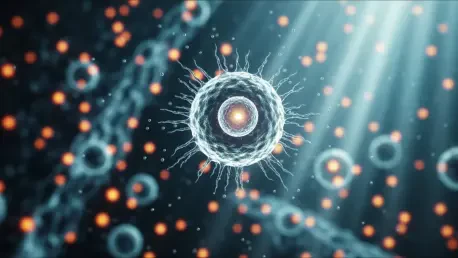
Central to this discovery is a subpopulation of cancer cells known as “persister” cells, which enter a unique state of tolerance to therapy almost immediately after treatment begins. Unlike cells that develop resistance through the gradual accumulation of genetic mutations over months or years, these persisters employ an adaptive, non-genetic strategy to weather the initial storm of anti-cancer drugs. This mechanism allows them to survive therapies designed to halt their growth or kill them directly. Once the treatment pressure subsides, these dormant but viable cells can reawaken and proliferate, driving tumor regrowth and patient relapse. In laboratory studies involving melanoma, lung, and breast cancer models, this behavior was consistently observed, suggesting it is a common survival tactic across various cancer types. The identification of this rapid, adaptive resistance mechanism provides a crucial explanation for why some cancers return so quickly after treatment, shifting focus from long-term genetic evolution to the immediate, dynamic responses of cells under therapeutic stress.
Hijacking the Death Signal
The survival of these persister cells hinges on a remarkable and paradoxical biological process: the hijacking of an enzyme whose primary job is to execute cell death. This enzyme, DNA fragmentation factor B (DFFB), is a key component of apoptosis, the body’s natural pathway for programmed cell death. When a cell is irreparably damaged, DFFB is typically activated at high levels, leading to the fragmentation of DNA and the cell’s ultimate destruction. However, researchers found that persister cells manage to maintain a persistent, low-level activation of DFFB. This “sublethal” signaling is carefully modulated to be insufficient to trigger the full apoptotic self-destruct sequence. Instead, this faint but constant signal fundamentally rewires the cell’s internal circuitry. It alters the cell’s response to growth-inhibiting therapies, effectively overriding the “stop growing” commands from the drugs. In a stunning display of biological ingenuity, the cancer cell turns a weapon intended for its own demise into a shield that ensures its survival and paves the way for future proliferation.
Targeting a Novel Vulnerability
A Promising Path Forward
The discovery of this hijacked pathway does more than just explain a long-standing mystery; it reveals a new and promising vulnerability that can be exploited for therapeutic benefit. Because the sublethal DFFB signaling appears to be a unique survival requirement for these persister cancer cells but is not essential for normal, healthy cells, it represents a highly specific and attractive drug target. This specificity is critical for developing treatments that are both effective and have minimal side effects. Experimental evidence strongly supports this approach. In laboratory models, when researchers used genetic techniques to eliminate DFFB in persister cells, the cells did not immediately die but instead entered a state of dormancy, ceasing all proliferation during treatment. This demonstrated that DFFB is the critical lynchpin enabling their regrowth. The clear implication is that a pharmacological intervention—a drug designed to inhibit this specific DFFB signaling—could be a powerful tool. When administered in combination with standard cancer therapies, such an inhibitor could selectively disarm the persister cells, preventing them from surviving the initial treatment and driving relapse.
Charting a Course Toward Durable Remission
This research marked a significant turning point in the understanding of therapeutic resistance in cancer. The investigation uncovered a sophisticated, non-genetic survival mechanism that cancer cells could deploy rapidly in response to treatment, a finding that challenged the long-held focus on slower, mutation-driven resistance. By identifying the paradoxical role of the DFFB enzyme, the study provided not just an explanation but a tangible molecular target for intervention. This work laid the essential groundwork for developing a new class of combination therapies aimed at a previously invisible enemy: the persister cell. The insights gained offered a clear strategy to potentially convert temporary therapeutic responses into durable, long-term remissions. Ultimately, this discovery illuminated a new path forward in the effort to overcome treatment failure and fundamentally improve outcomes for patients battling a wide range of cancers.