
Ivan Kairatov is a seasoned expert in biopharmaceutical research and development, possessing a profound understanding of the technological shifts currently reshaping oncology. With a career dedicated to navigating the complexities of drug innovation, he has a unique perspective on how precision medicine—specifically antibody-drug conjugates—is moving from theoretical promise to tangible clinical success. In this discussion, we explore the breakthrough results of the CLARITY-Gastric01 trial and what they signify for the future of gastrointestinal cancer treatment.
The conversation covers the strategic importance of overall survival as a primary endpoint and the technical nuances of targeting the CLDN18.2 protein. We examine the potential for Sonesitatug Vedotin to expand the treatable patient population by lowering expression thresholds and discuss how this novel therapy fits into a broader R&D pipeline that includes bispecific antibodies and immunotherapy combinations. The dialogue highlights the shifting demographics of gastric cancer, the limitations of current chemotherapy, and the logistical challenges of bringing high-tech precision treatments to a global market.
Overall survival remains the gold standard in oncology trials, yet the CLARITY-Gastric01 study showed a fascinating divergence between survival benefits and progression-free survival trends. From a research and development perspective, how do you interpret a result where patients live significantly longer despite the statistical nuances in their time to progression?
In the world of drug development, we often see a “trend” in progression-free survival that doesn’t quite cross the finish line of statistical significance, yet the overall survival data tells a much more powerful story. For patients in the second and later-line settings, where the median survival is a devastatingly short 5 to 9 months, any extension of life is a monumental victory. Achieving a statistically significant and highly clinically meaningful improvement in overall survival suggests that even if the tumor isn’t visibly shrinking on a scan for an extended period, the drug is fundamentally altering the biology of the disease or perhaps priming the body for a more durable response. You have to remember that less than 20% of these patients survive more than a year under current standard-of-care protocols, so seeing a clear survival benefit in the third line and beyond is a massive relief for clinicians. It validates the idea that we aren’t just slowing the clock; we are actually giving these people more meaningful time with their families, which is the ultimate goal of any therapeutic intervention.
The CLARITY-Gastric01 trial utilized a 25% expression threshold for CLDN18.2, which is a significant departure from more restrictive criteria used in the past. What does this broader inclusion mean for the roughly 183,500 patients across major global markets who are currently facing limited options?
Opening the doors to patients with a 25% expression level is a game-changer because it effectively means that approximately 60% of all gastric and gastroesophageal junction cancer patients could now be eligible for this targeted approach. Historically, we’ve been very conservative with biomarkers, often hunting for the “highest of the high” expressors, which left a huge portion of the population stuck with generic, toxic chemotherapies. By proving that Sonesitatug Vedotin works at this 25% threshold, we are moving away from a niche application toward a broad, precision-medicine standard. Imagine being one of the nearly one million people diagnosed with gastric cancer in 2024 and finally having a therapy that is tailored to your specific tumor profile rather than a one-size-fits-all poison. This expansion doesn’t just increase numbers; it provides a sense of hope for thousands of families who previously would have been told their “biomarker score” wasn’t high enough to qualify for the latest innovation.
Sonesitatug Vedotin is an antibody-drug conjugate, or ADC, which many are calling a “biological missile.” Could you explain the mechanism of the MMAE payload and why this specific technology is proving more effective than the classic chemotherapy it aims to replace?
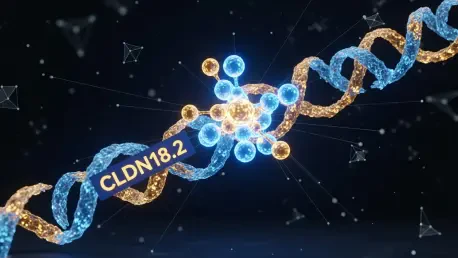
The beauty of an ADC like Sonesitatug Vedotin lies in its three-part architecture: a monoclonal antibody that seeks out CLDN18.2 like a homing beacon, a stable linker, and the potent MMAE cytotoxic payload. When this “missile” hits the cancer cell, it is internalized, and the linker is degraded by proteases, releasing the MMAE directly into the heart of the tumor. This allows us to use a payload that would be far too toxic to be given through a traditional IV drip, as it targets the cancer with surgical precision while sparing the healthy lining of the stomach and other organs. For a disease as aggressive as gastric cancer, which claimed roughly 650,000 lives globally last year, this level of specificity is the only way we can escalate the “dosage” of the kill without breaking the patient’s body in the process. It is a more humane and sophisticated way to treat cancer, replacing the blunt force of old-school chemo with a calculated, molecular strike that has shown a manageable safety profile in 175 centers across 19 countries.
With the incidence of gastrointestinal cancers rising in patients younger than 50, there is an urgent need for earlier intervention. How do you see the role of Sone-Ve evolving as it moves from late-stage rescue therapy into earlier lines of treatment and combinations?
The results we are seeing in the later-line settings are really just the foundation for a much larger strategy to move this therapy into the front-line setting, where it can do the most good before the cancer has a chance to mutate and build resistance. We are already looking at the CLARITY-Gastric02 trial, which combines Sone-Ve with capecitabine and potentially rilvegostomig, a PD-1/TIGIT bispecific antibody, to attack the tumor from multiple angles simultaneously. If we can successfully integrate these ADCs into the first line of treatment, we might finally be able to flip the script on those dismal 20% one-year survival rates. It’s a multi-pronged war involving T-cell engagers, bispecifics, and even CAR T-cell therapies like the Glypican 3 program, all designed to ensure that no matter how the cancer tries to hide, we have a mechanism to find it. The goal is to transform gastric cancer from a death sentence into a manageable, or even curable, chronic condition by hitting it hard and early with every technological tool in our R&D arsenal.
What is your forecast for the impact of CLDN18.2-targeted therapies on the global oncology market over the next five years?
My forecast is that CLDN18.2 will become as fundamental to the treatment of gastric and gastroesophageal cancers as HER2 is for breast cancer, fundamentally reordering how we sequence therapies for the 5 million new GI cancer cases diagnosed each year. We will likely see a shift where traditional chemotherapy is relegated to a supporting role, while ADCs and bispecific antibodies like Sone-Ve and rilvegostomig become the primary backbone of treatment. As the diagnostic assays become more widespread in regions like China, the EU, and North America, the identification of these 183,500 eligible patients will become a routine part of the initial biopsy, allowing for faster access to life-extending care. Furthermore, as we see these drugs tested in pancreatic and biliary tract cancers, the “pan-GI” potential of targeting CLDN18.2 will solidify it as a multi-billion dollar therapeutic pillar. We are at the beginning of a revolution where the “graveyard” of gastric cancer research is finally being replaced by a landscape of survival and long-term remission.