
The persistent challenge of treating advanced HPV16-positive malignancies has driven medical science toward a more personalized approach that prioritizes early detection of treatment efficacy through minimally invasive methods. In the current landscape of oncology, researchers are increasingly focused on identifying molecular signatures that can predict how a patient will respond to complex immunotherapy regimens before the full course of treatment is completed. A retrospective analysis involving thirty-eight participants in a specialized clinical trial has recently provided significant insights into the role of serum proteins as predictive biomarkers. By utilizing data from individuals who received a unique triple-drug combination, the study sought to distinguish those likely to achieve long-term clinical benefits from those requiring alternative interventions. This research underscores a pivotal shift toward precision medicine, where blood-based proteomic profiling offers a window into the body’s immune response, potentially streamlining the management of difficult-to-treat viral cancers.
Therapeutic Strategies: The Triple-Drug Immunotherapy Regimen
Mechanisms: Synergy Between PDS0101 and PDS01ADC
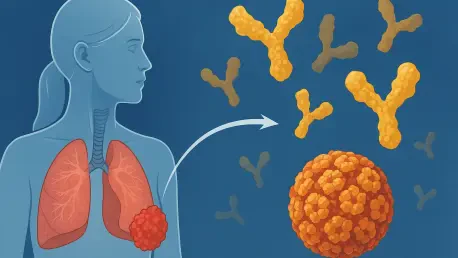
The investigated therapeutic protocol utilized a combination of three distinct agents designed to activate the immune system and overcome the suppressive environment often created by advanced tumors. At the heart of this regimen was PDS0101, a therapeutic peptide vaccine engineered to induce a robust targeted response against cells expressing the HPV16 E6 and E7 oncoproteins. This was paired with PDS01ADC, an innovative immunocytokine that delivers interleukin-12 directly to the tumor microenvironment to enhance the proliferation and activity of cytotoxic T cells. Together, these two components worked to prime the immune system, ensuring that a sufficient population of CD8-positive effector cells was available to recognize and attack malignant tissues. The integration of these biological agents represents a sophisticated attempt to leverage the natural defenses of the human body, specifically focusing on the high-risk HPV16 strain that is frequently associated with oropharyngeal and anogenital cancers.
Function: The Bifunctional Role of Bintrafusp Alfa
To further augment the effectiveness of the vaccine and cytokine duo, the study incorporated bintrafusp alfa, a bifunctional fusion protein that targets both the PD-L1 and TGF-beta pathways simultaneously. In many advanced cancers, these pathways act as significant barriers to immune success; PD-L1 allows tumors to evade T-cell detection, while TGF-beta promotes a fibrotic environment that physically and chemically excludes immune cells. By inhibiting both of these mechanisms, bintrafusp alfa effectively unlocked the tumor, allowing the T cells generated by the PDS0101 vaccine to penetrate more effectively and exert their killing potential. This triple-drug synergy was particularly crucial for patients with late-stage disease, where single-agent therapies often fail due to the multi-layered defense systems of established tumors. The researchers observed that this aggressive combination could generate a more favorable immunological landscape, which was then reflected in the specific protein concentrations.
Prognostic Models: Evaluating Proteomic and Cellular Data
Analysis: Baseline Biomarkers and Patient Survival
Through the application of machine-learning models to analyze serum samples, the investigators identified that baseline concentrations of interleukin-6 and heme oxygenase 1 were highly predictive of survival. Patients who started the trial with lower levels of these inhibitory and inflammatory markers tended to show significantly better outcomes, suggesting that the initial state of the systemic immune environment is a critical determinant of therapeutic success. Furthermore, the study noted that early increases in granzyme B, a protein released by activated T cells to induce apoptosis in target cells, served as a dynamic indicator of positive response. When these baseline markers were combined with the early-treatment shifts in granzyme B, the resulting proteomic signature allowed for the categorization of patients into distinct groups with varying levels of clinical benefit. This finding is significant because it provides a relatively simple, blood-based method to evaluate the trajectory of a patient.
Validation: Future Clinical and Diagnostic Steps
The investigation also mapped the broader peripheral immunome to confirm that these serum protein levels were accurate reflections of the underlying cellular interactions within the body. It was discovered that a higher ratio of CD8-positive T cells to myeloid cells was a hallmark of successful treatment, whereas elevated levels of myeloid-derived suppressor cells were linked to poor outcomes and higher inhibitory protein markers. While these results provided a compelling look at the potential of proteomic profiling, the exploratory nature of the retrospective cohort meant that the findings required further validation. Consequently, researchers initiated plans for prospective clinical trials to test these biomarkers in larger, more diverse populations to ensure their reliability in real-world settings. By establishing these predictive models, the medical community took a significant step toward developing minimally invasive tools that could guide clinical decision-making, optimize drug combinations, and ultimately improve survival rates.