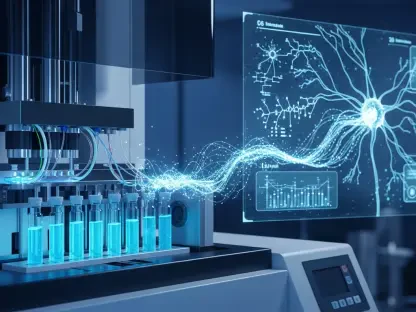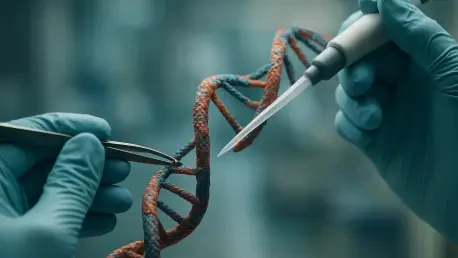

The remarkable success of mRNA technology has recently showcased how lipid nanoparticles can alter the trajectory of global health, yet these microscopic delivery systems often encounter a silent, biological wall when navigating the complexities of the human body. While these particles perform with surgical precision within the sterile environment of a laboratory petri dish, their efficiency frequently plummets the moment they enter a living organism. This “delivery gap” has remained one of the most frustrating bottlenecks in modern medicine, preventing revolutionary gene-editing tools like CRISPR from reaching their true potential in clinical settings. However, a recent breakthrough suggests that the key to unlocking these therapies is not a more complex synthetic machine, but a simple metabolic “key” found within our own biology.
The Invisible Barrier Holding Back a Genetic Revolution
The global success of lipid nanoparticles (LNPs) in vaccines provided a glimpse into a future where genetic medicine could address nearly any ailment, but moving from simple immunization to complex gene therapy has proven unexpectedly difficult. While these tiny fatty spheres operate effectively in controlled environments, their effectiveness frequently collapses when they are introduced into the bloodstream of a living patient. This persistent discrepancy represents a significant hurdle for the medical community, preventing high-stakes tools from reaching the specific tissues where they are needed most to treat chronic conditions.
The frustration stems from the fact that many therapies that look promising in the early stages of development fail to produce the same results during human trials. This lack of translation from the bench to the bedside has cost billions of dollars and delayed the arrival of life-saving treatments for decades. By identifying the specific biological barriers that cause this drop in performance, scientists are now able to rethink the entire architecture of genetic delivery. The focus is shifting toward understanding why a cell that is perfectly healthy in a dish becomes resistant to medicine when it is part of a functional organ system.
Bridging the Gap Between the Lab and the Living Organism
The discrepancy between success in the lab and performance in a living organism has long been blamed on the design of the nanoparticles themselves, leading to a frantic search for the “perfect” lipid molecule. Yet, research from the Biohub indicates that the problem may lie in the external environment rather than the vehicle. Standard laboratory cultures provide an artificial “metabolic buffet” of nutrients that human tissues simply do not possess in such high concentrations. In the leaner, more regulated environment of human plasma, cells often suppress the very pathways needed to absorb therapeutic cargo, effectively locking out the medicine.
Understanding this metabolic roadblock is essential for treating chronic inflammatory diseases, hereditary disorders, and aggressive cancers that currently remain out of reach for traditional delivery methods. When a cell is starved of the specific nutrients it expects in a lab setting, it prioritizes survival over the uptake of foreign material. This defensive posture is a natural biological response, but it inadvertently creates a shield against the very nanoparticles designed to save it. By recognizing this environmental mismatch, bioengineers can begin to develop strategies that “prime” the cellular environment to be more receptive to genetic instructions.
The Metabolic Bottleneck: Why Cells Close Their Doors
Traditional research methodologies often rely on growth media that fail to replicate human physiology, leading to an overestimation of how easily cells accept foreign genetic material. When LNPs are introduced into a medium that mimics the nutrient levels of human blood, uptake efficiency can drop by as much as 80 percent due to suppressed cellular pathways. Advanced profiling reveals that when amino acid processing is inhibited by a nutrient-lean state, the cell membrane effectively “locks,” preventing the fusion and entry of nanoparticles. This discovery moves the focus away from the chemical composition of the lipid and toward the “readiness” of the target cell’s metabolism.
This “gatekeeper mechanism” suggests that the cell is not rejecting the nanoparticle because it is toxic or poorly designed, but because the cell lacks the metabolic energy to process it. In a nutrient-poor environment, the machinery required for endocytosis—the process by which cells swallow external particles—is often dialed down to conserve resources. Consequently, even the most advanced delivery vehicles will bounce off the cell surface or remain trapped in internal compartments where they cannot function. Addressing this bottleneck requires a fundamental change in how clinicians view the relationship between a drug and the patient’s internal chemistry.
Expert Insights and Transformative Clinical Outcomes
Researchers led by Daniel Zongjie Wang and Shana O. Kelley have demonstrated that the cellular state is a critical, addressable variable in genetic medicine rather than a fixed limitation. By co-administering a specific cocktail of methionine, arginine, and serine, they observed a 5- to 20-fold increase in protein expression across various delivery methods. This simple addition acts as a signal to the cell, triggering the reopening of the pathways necessary for nanoparticle absorption. The results were not merely incremental; they represented a total transformation in how effectively genetic material could be utilized by the body.
In preclinical models of acute liver failure, the addition of these amino acids raised the survival rate from a dismal 33 percent to a perfect 100 percent. Furthermore, in lung-targeted CRISPR experiments, which typically peak at 30 percent efficiency, the amino acid supplement boosted editing success to a staggering 90 percent. These findings suggest that “systemic synchronization”—ensuring the host environment is receptive to the therapy—is the future of bioengineering. By aligning the treatment with the metabolic needs of the target organ, doctors can achieve results that were previously thought to be mathematically impossible with current lipid technology.
A Practical Framework for Enhanced Delivery
To move these discoveries into the clinic, researchers must first account for the “nutrient-lean” reality of the target tissue rather than relying on standard lab-grade cultures. A “prime and deliver” strategy involves using pharmaceutical-grade amino acids to activate cellular pathways shortly before or during the administration of LNPs. This method ensures that the “doors” of the cell are wide open when the therapeutic cargo arrives. Because these amino acids are already well-understood and safe for human use, they can be integrated into existing treatment protocols with minimal regulatory friction.
This approach also offers a seamless integration into the manufacturing process, as these amino acids can be incorporated directly into the injection buffer of existing formulations. Utilizing this metabolic approach boosts the efficacy of mRNA and CRISPR therapies without the need to re-engineer the underlying lipid technology, which often takes years of testing. By adopting these “plug-and-play” enhancements, the pharmaceutical industry can breathe new life into existing drug pipelines. This framework creates a more predictable path for drug delivery, ensuring that the promise of gene editing is finally realized in the complex environment of the human body.
The identification of a metabolic gatekeeper provided a clear roadmap for the future of genetic medicine and systemic synchronization. Clinical researchers began evaluating how individual patient diets and metabolic profiles influenced the success of gene therapies, suggesting that personalized nutrition could become a standard part of the treatment protocol. Regulatory agencies and pharmaceutical manufacturers shifted their focus toward validating these amino acid additives as safe and effective performance enhancers for a wide range of existing drugs. This transition toward working in harmony with human biology ensured that the most advanced medical tools reached their intended targets with unprecedented reliability and safety.