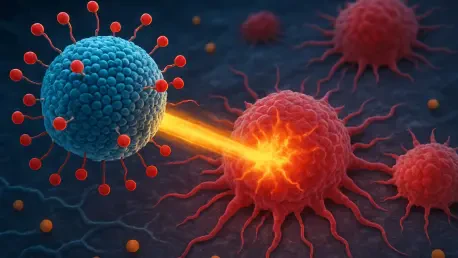

A significant new research initiative is confronting two of the most formidable and lethal malignancies, pancreatic and lung cancer, with a highly innovative therapeutic strategy. Led by Professor Wei Gao at the University of Houston College of Pharmacy, a groundbreaking project has secured a substantial $900,000 grant from the Cancer Prevention and Research Institute of Texas (CPRIT). This funding will accelerate the development of a novel, dual-function nanodrug designed to deliver a more potent and precisely targeted anti-tumor attack. The initiative aims to overcome the critical limitations that have long hindered the effectiveness of existing cancer treatments, offering a powerful new tool in a fight where new options are desperately needed. This advanced approach seeks not just to treat these cancers, but to fundamentally outsmart their complex defense mechanisms, potentially heralding a new era for patients facing these dire diagnoses.
Confronting Cancers Immune Fortress
The immense difficulty in treating pancreatic and lung cancers lies in their remarkable ability to build a localized, immune-suppressive environment that serves as an almost impenetrable fortress. This protective shield effectively cloaks the tumor, hiding it from the body’s immune system and allowing it to proliferate without restraint. A critical component of this defense is a specific type of immune cell known as the regulatory B cell, or Breg. In a perversion of their intended function, these Bregs actively sabotage the body’s natural cancer-fighting capabilities by suppressing the immune cells that would normally identify and destroy malignant tissue. The dense infiltration of Bregs within the tumor microenvironment is a primary reason why many immunotherapies fail, as they create a persistent barrier that neutralizes even the most advanced treatments, enabling unchecked tumor progression and spread.
This challenge is further compounded by the shortcomings of newer immunotherapeutic agents, particularly a class of drugs called STING agonists. These drugs are designed to activate the immune system, essentially sounding an alarm that alerts it to the presence of cancer cells. However, their clinical application has been hampered by a significant paradoxical effect: while stimulating certain immune pathways, they also unintentionally trigger an increase in the population of suppressive Bregs, thereby undermining their own therapeutic objective. Furthermore, these agonists often struggle with poor delivery, failing to reach the tumor site in sufficient concentrations to be effective. This lack of precise targeting can lead to systemic immune activation throughout the body, causing severe and often debilitating side effects that limit their use and compromise patient quality of life.
A Targeted Nanotechnology Assault
In response to these formidable obstacles, Professor Gao’s research team has engineered an ingenious solution named Nano-273. This sophisticated, dual-function nanodrug is meticulously packaged within a tiny, albumin-based nanoparticle, representing a significant leap forward from conventional STING agonists. The nanoparticle itself is far more than a simple container; it functions as a highly strategic delivery system designed to ferry its therapeutic cargo directly to immune cells located at the tumor site. This precision-targeting mechanism is the cornerstone of its design, ensuring that the drug’s potent effects are concentrated exactly where they are needed most. By maximizing efficacy within the tumor microenvironment and simultaneously minimizing exposure to healthy tissues, this approach dramatically reduces the potential for the widespread, off-target side effects that plague many existing cancer therapies.
The true innovation of Nano-273, however, is found in its dual-action mechanism, which launches a coordinated, two-pronged attack on the tumor’s defenses. First, it successfully activates the STING pathway, delivering the powerful immune-boosting effect intended by conventional agonists, which helps to rally and energize cancer-attacking immune cells. Critically, and what distinguishes it from all previous attempts, Nano-273 concurrently blocks PI3Kγ, a specific biochemical pathway known to be essential for the expansion and suppressive function of Bregs. By inhibiting this pathway, the nanodrug directly dismantles the tumor’s primary method of immune evasion. This integrated strategy solves the core paradox of older treatments by simultaneously reducing the population of harmful, suppressive Bregs while amplifying the activity of beneficial, cancer-fighting immune cells, resulting in a much stronger and more focused anti-tumor response.
Advancing from Promise to Potential Cure
The potential of this novel nanodrug has been substantiated by promising early-stage research that underscores its therapeutic power. In preliminary studies conducted on pancreatic and lung cancer models, Nano-273 demonstrated a potent capacity to shrink tumors, validating its core mechanism of action. Its efficacy was particularly pronounced when administered in combination with standard cancer treatments, including chemotherapy and other immunotherapies like immune checkpoint inhibitors. This suggests that Nano-273 could serve as a powerful synergistic agent, enhancing the effectiveness of existing therapeutic regimens and potentially overcoming treatment resistance. Furthermore, these initial investigations indicated that the nanodrug not only extended survival in the models but also exhibited a low toxicity profile, reinforcing its potential as a safer and more tolerable treatment option for patients who often endure harsh side effects from conventional therapies.
With the crucial support of the $900,000 CPRIT grant, the research team embarked on the critical preclinical steps needed to transition Nano-273 from a laboratory concept to a clinical reality. The project was structured around three primary objectives that laid the groundwork for future human trials. The first was to refine and scale up the production process for Nano-273, which ensured that the nanodrug could be manufactured consistently and at a high quality. Second, the team conducted comprehensive tests to rigorously evaluate how effectively Nano-273 worked in combination with standard-of-care treatments in advanced pancreatic and lung cancer models. Finally, the project included rigorous safety and toxicology studies designed to fully assess the drug’s safety profile. The overarching goal of this work was to pioneer a new type of immunotherapy that provided lasting tumor control and significantly improved survival outcomes for patients with these devastating diseases.