
The precision of oncological surgery has long been tethered to the visual limitations of the human eye and the relative imprecision of conventional chemical markers. Traditional surgical imaging often fails to distinguish between microscopic malignant tissues and healthy cells, resulting in either incomplete tumor removal or unnecessary damage to vital organs. While fluorescent dyes were developed to illuminate hidden malignancies, they often create a cluttered visual field by reacting with naturally occurring enzymes, a phenomenon known as background noise. To address this, researchers at the University of Tokyo have introduced a bioorthogonal system that operates on a separate chemical frequency from the human body. This review examines how this technology circumvents biological interference to provide high-definition surgical guidance.
Fundamental Principles: Bioorthogonal Fluorescence
Bioorthogonal fluorescence represents a paradigm shift because it fundamentally ignores the native biochemical environment of the patient. Traditional probes act like light bulbs that can be switched on by any common household key, leading to accidental activation in healthy organs like the liver or kidneys. In contrast, bioorthogonal systems utilize a lock-and-key architecture where the probe remains inert until it encounters a specific synthetic partner. This distinction is critical because it ensures that the fluorescence is a deliberate signal of disease rather than a byproduct of metabolic activity. By decoupling the imaging signal from endogenous biology, the system offers a level of specificity that competitors using broad-spectrum dyes cannot match.
Core Components: The Selective Imaging System
The Lock-and-Key Mechanism: Probe and Engineered Enzyme Pairing
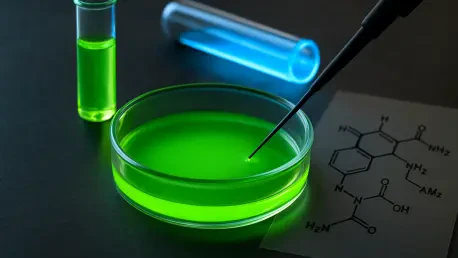
The efficacy of this system hinges on the creation of a reporter enzyme that does not exist in nature. By designing a probe that is structurally incompatible with human enzymes, the research team ensures that no signal is generated prematurely. Only when the engineered enzyme, delivered via a targeting vector, cleaves a specific chemical bond on the probe does the molecule become fluorescent. This unique implementation prevents the haze typically seen in intraoperative imaging, allowing for a crisp demarcation of tumor boundaries. This approach transforms the imaging process into a highly controlled chemical event rather than a reactive biological one.
Directed Evolution: Enhancing Reporter Activity
To maximize the signal intensity for deep-tissue visualization, the researchers employed directed evolution, a laboratory technique that mimics natural selection to optimize molecular performance. Through hundreds of iterations, the enzyme was refined to activate the probe with maximum speed and brightness. This matters because it allows for the detection of lesions that are only a few millimeters in diameter, which would otherwise be lost against the natural luminescence of biological tissues. The result is a high-contrast reporter system that provides clarity even in the complex, fluid-heavy environment of a surgical site.
Recent Advancements: High-Contrast Molecular Imaging
Recent breakthroughs have moved the technology from a conceptual curiosity to a viable clinical tool capable of real-time application. By utilizing bioorthogonal pairs that function independently of pH levels or local enzyme concentrations, the system provides a consistent and reliable visual map. This independence is what makes the technology unique; while other imaging agents might fluctuate in performance based on the patient’s unique physiology, this system remains stable. For a surgeon, this means the difference between guessing where a tumor ends and knowing exactly where to cut, which is a significant leap toward the goal of zero-margin cancer resection.
Real-World Applications: Oncology and Therapeutics
Precision Surgical Guidance: Lesion Detection
The most immediate application of this technology has been demonstrated in the treatment of peritoneal cancer, where tiny tumor seeds often hide within the abdominal cavity. By delivering the engineered enzyme directly to the tumor site followed by the inactive probe, surgeons can illuminate these microscopic threats with pinpoint accuracy. This level of precision is not just about visibility; it is about preservation. When a surgeon can clearly see the edges of a malignancy, they can remove the cancer while leaving healthy, functional tissue untouched, thereby significantly reducing the morbidity associated with aggressive surgeries.
Modular Targeted Drug Delivery: Systems and Versatility
Beyond imaging, the bioorthogonal framework serves as a versatile platform for drug delivery. Because the enzyme-probe pair is independent of internal chemistry, the targeting component can be swapped to seek out different antigens. This modularity means that the same core technology used for imaging could be adapted to trigger the release of toxic chemotherapy agents only at the tumor site. This would drastically minimize systemic side effects, as the drug would remain in its harmless, locked state until it interacts with the engineered enzyme localized at the cancer cell.
Implementation Barriers: Technical Hurdles
Despite the impressive performance in laboratory settings, several hurdles remain before the technology can be fully integrated into hospital workflows. A primary concern is immunogenicity, as the introduction of non-native, engineered enzymes could trigger a defensive response from the human immune system. Researchers must find ways to mask these enzymes or ensure they are cleared from the body safely after the procedure. Furthermore, the logistical complexity of a two-step delivery system requires careful coordination during surgery, which may present a learning curve for medical staff accustomed to single-injection dyes.
Future Directions: Long-Term Potential
The evolution of bioorthogonal systems is expected to move toward the development of smart probes that can respond to multiple metabolic signals at once. Future iterations may involve enzymes that only activate in the presence of specific genetic markers, adding another layer of security to the lock-and-key mechanism. As the field matures, these systems could become a standard component of personalized medicine, where probes are custom-designed to match the specific molecular profile of a patient’s tumor. This would allow for a level of diagnostic and therapeutic tailoring that was previously impossible with one-size-fits-all medical imaging.
Final Assessment: A Milestone in Precision Medicine
The bioorthogonal fluorescent probe system established a new standard for specificity in molecular imaging. By utilizing directed evolution and a unique lock-and-key mechanism, the technology provided surgeons with an unprecedented ability to detect microscopic lesions in real-time. Although challenges regarding immune responses remained, the system proved that moving beyond native biological chemistry was the key to eliminating background noise. This advancement marked a definitive shift toward more precise, modular, and effective oncological interventions, ultimately offering a promising path for improving long-term patient outcomes through highly localized medical care.