
In the complex landscape of global health, few challenges are as daunting as tackling late-stage cancer diagnoses in regions with limited resources. Ivan Kairatov, a biopharma expert whose work sits at the intersection of technological innovation and public health, has been at the forefront of a groundbreaking initiative in Nigeria. His team’s work has not only illuminated the path for early colorectal cancer detection but has also created a replicable model for saving lives. We explore the nuanced strategies behind their success, delving into the power of community-centric education, the indispensable role of patient navigators in bridging the gap between awareness and action, and the profound, life-altering impact of identifying cancer at its most curable stages.
Your campaign dramatically increased colorectal cancer awareness from 16.8% to 96.9% using methods like radio jingles and community events. Could you describe the process of developing these bilingual materials and share any anecdotes about which specific strategies were most impactful in engaging the community?
The process was deeply collaborative and centered on one core principle: the message has to resonate with the community in their own language and within their own trusted spaces. We knew from the start that a one-size-fits-all approach would fail. The jump from just under 17% awareness to nearly 97% wasn’t magic; it was the result of meticulous, on-the-ground work. We developed all our materials—flyers, posters, everything—bilingually, ensuring the language was not just translated, but culturally adapted. The radio jingles were particularly powerful. I remember hearing stories of people humming the tune at local markets; it was catchy, simple, and it stuck. That tune demystified the topic and made it okay to talk about. But the real connections happened at community events and through religious institutions. When a trusted local leader hands you a flyer after a service, it carries a weight that no billboard ever could. It transforms a clinical message into a community concern.
The program successfully guided 168 high-risk individuals to an Early Diagnosis Clinic. Can you walk us through the step-by-step role of your patient navigators in this process, detailing how they overcame common barriers to care in a low-resource setting like Nigeria?
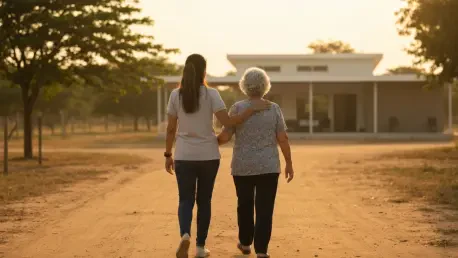
Our patient navigators are the absolute heart of this program. They are the human bridge between awareness and action. Their work begins the moment our outreach identifies someone with potential risk factors, like a family history or unexplained symptoms. First, they sit down and have a real conversation, listening to fears and concerns. In many low-resource settings, a hospital can be an intimidating place, and a procedure like a colonoscopy sounds terrifying. The navigators demystify the process, explaining what will happen in simple, respectful terms. They tackle logistical barriers head-on, whether it’s arranging transportation or helping schedule an appointment around work or family duties. They provide constant encouragement and follow-up, ensuring a person doesn’t fall through the cracks. Guiding 168 high-risk individuals to the clinic, and seeing 116 of them through to a completed colonoscopy, is a testament to their persistence. They don’t just give information; they walk the path alongside each person.
The colonoscopies identified not only four cancer cases, two at stage 0, but also precancerous polyps in 11% of patients. Please elaborate on the clinical significance of these findings and the long-term impact that removing these advanced adenomas has on cancer prevention in this population.
The clinical findings are where the true, life-altering impact of this work becomes clear. The victory here is twofold. First, diagnosing four cases of colorectal cancer is significant, but finding two of them at stage 0 is truly monumental. In a region where late-stage diagnosis is the norm, stage 0 is practically unheard of. This means we caught the disease at its very inception, offering these individuals a genuine chance for a cure with less invasive treatment. That is life-changing. But perhaps the even bigger story is the 11% of patients where we found and removed precancerous polyps, or advanced adenomas. For these individuals, we didn’t just treat cancer; we prevented it from ever starting. Each polyp removed is a potential future cancer diagnosis that has been erased. This shifts the entire paradigm from reactive treatment to proactive prevention, saving families from the immense physical, emotional, and financial toll of a future cancer battle.
As a first-of-its-kind program in sub-Saharan Africa, what were the primary operational challenges in combining community education with direct clinical navigation? Based on this experience, what are the most critical components another organization would need to replicate your model successfully?
Marrying a broad public awareness campaign with an intensive, personalized clinical navigation system was incredibly challenging. The biggest hurdle was ensuring a seamless handover. It’s one thing to make people aware, but it’s another to build a robust and reliable pathway for them to get care. We had to ensure our clinic was prepared for the influx of referrals and that our navigators were perfectly in sync with both the community teams and the clinical staff. Trust was another operational challenge; we had to build it from the ground up within communities that may be skeptical of medical initiatives. To replicate this, an organization absolutely needs three core components. First, authentic community partnership, not just outreach. You must co-create materials and strategies with community leaders. Second, a dedicated, well-trained team of patient navigators. This cannot be an add-on role; it is the essential engine of the model. Finally, a committed clinical partner with a clear, low-barrier pathway for diagnosis and follow-up. Without any one of those pillars, the entire structure will falter.
What is your forecast for the future of community-based early cancer detection programs in low-resource regions?
My forecast is one of cautious but determined optimism. I believe this integrated model of awareness-plus-navigation is the future and will become the gold standard. We’ve demonstrated a proof of concept that is not only effective but also adaptable. The next step is to see this expand beyond colorectal cancer to other screenable diseases like cervical and breast cancer, using the same foundational principles. I also foresee technology playing a bigger role, perhaps through mobile health apps that help navigators track their patients or deliver educational reminders via social media, which we already used. The challenges of funding and infrastructure are immense, and scaling these programs will require significant global commitment. However, this program proves that we can fundamentally change the narrative around cancer in low-resource regions from one of inevitable late-stage diagnosis to one of hope and early, curable detection. We now have a blueprint for saving lives, and the future lies in building upon it, one community at a time.