
The landscape of oncology is shifting as researchers uncover ways to bypass the treatment resistance that typically limits the life expectancy of patients with advanced non-small cell lung cancer. In a field where standard therapies often provide only a few months of additional survival for those in the later stages of the disease, new clinical data suggests a transformative shift in the management of aggressive malignancies. The recent presentation of findings from the THIO-101 clinical trial at the European Lung Cancer Congress has captured the attention of the medical community by demonstrating survival rates that far exceed historical benchmarks. These results indicate that by targeting the fundamental biological processes of cancer cells, specifically telomere maintenance, it may be possible to re-engage the immune system even after it has failed to respond to conventional checkpoint inhibitors. This development offers a potential path forward for those who have exhausted traditional options and are seeking a more durable treatment response.
Clinical Outcomes and Survival Benchmarks
Breakthroughs: Patient Longevity
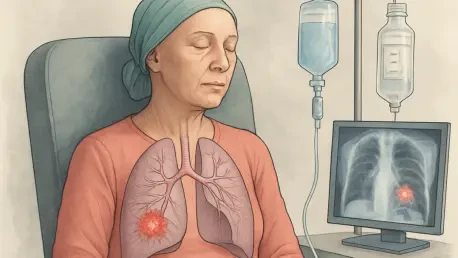
The clinical data released during the European Lung Cancer Congress provides a compelling argument for the efficacy of ateganosine when used in a sequenced regimen with immunotherapy. Specifically, the trial observed that eight patients with advanced non-small cell lung cancer who received the compound followed by cemiplimab survived for more than two years. This achievement is particularly noteworthy because these individuals were heavily pre-treated, meaning their cancer had already shown resistance to standard medical interventions. For instance, a patient receiving the treatment as a third-line therapy reached a survival milestone of 33 months, which stands in stark contrast to the historical benchmark of approximately 5.8 months for this specific stage of the disease. Such a significant extension of life suggests that the therapy is capable of fundamentally altering the trajectory of the illness, providing patients with a level of durability that was previously deemed unattainable.
Beyond the individual cases of long-term survival, the broader patient cohort in the second-line treatment setting also demonstrated outcomes that were significantly better than the current standard of care. Four patients in this group surpassed the 30-month survival mark, effectively tripling the expected 10.5-month survival period typically associated with existing protocols. The fact that five of the eight long-term survivors are still being monitored suggests that the final survival data could improve even further as the study continues. Most of these participants achieved these results without needing additional lines of therapy after completing the trial protocol, which implies that the treatment may induce a lasting immune memory or a structural change in how the tumor interacts with the host’s body. This reduction in the need for subsequent interventions could also alleviate the physical and financial burdens that many patients face during their ongoing battle.
The Standard: Redefining Expectations for Late-Stage Therapy
The implications of these survival metrics extend beyond simple statistics, as they represent a potential paradigm shift in how oncologists approach the treatment of refractory lung cancer. Historically, patients who failed initial checkpoint inhibitor therapy were left with limited choices, often resulting in poor quality of life and rapid disease progression. However, the success of the sequenced regimen involving ateganosine highlights the possibility of reversing immunotherapy resistance through strategic molecular targeting. By priming the tumor microenvironment with a telomere-targeting agent, the subsequent administration of a checkpoint inhibitor appears to be more effective than when used alone or in traditional combinations. This methodology provides a roadmap for future clinical investigations, suggesting that the timing and sequence of drug delivery are just as critical as the choice of the drugs themselves in overcoming the sophisticated defense mechanisms employed by advanced tumors.
Maintaining a manageable safety profile is another critical component of the recent findings, as therapies that offer high efficacy often come at the cost of severe toxicity. In the THIO-101 trial, the transition through Part A and Part B, which included 79 patients, demonstrated that the combination of ateganosine and cemiplimab was generally well-tolerated by the participants. This balance between survival benefit and patient safety is essential for any drug aiming to become a standard second-line or later treatment option. As the study expands into Part C, which includes sites across Asia and Europe, the focus will remain on validating these outcomes in a more diverse patient population. The consistent safety data observed so far suggests that the drug could be integrated into existing clinical workflows without requiring specialized facilities or excessively complex monitoring protocols. This accessibility is vital for ensuring that breakthroughs in biotechnology reach a broad range of patients across different regions and healthcare systems.
Mechanisms of Action and Future Directions
Biology: Telomere Targeting and Immune Activation
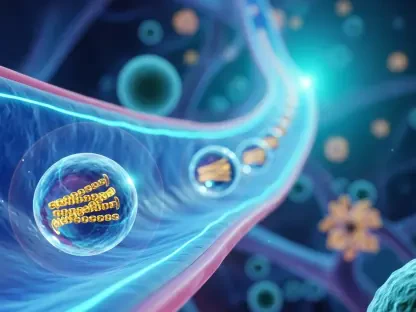
At the heart of ateganosine’s success is its status as a first-in-class agent that specifically targets telomeres, the protective caps at the end of chromosomes. Most cancer cells rely on the enzyme telomerase to maintain these caps, allowing them to divide indefinitely and escape natural cell death. Ateganosine works by inducing telomerase-dependent DNA damage, which essentially poisons the cancer cell’s ability to replicate while simultaneously signaling the immune system that something is wrong. This process triggers the cGAS/STING pathway, a critical component of the body’s innate immune response that detects cytosolic DNA and initiates a robust inflammatory reaction. By activating this pathway, the drug helps to recruit and prime T-cells, turning “cold” tumors that the immune system previously ignored into “hot” tumors that are susceptible to attack. This dual mechanism of direct cellular damage and immune stimulation is what sets this therapeutic approach apart from earlier attempts at targeting telomerase.
Furthermore, the activation of both innate and adaptive immune systems creates a multifaceted attack on the tumor that is difficult for cancer cells to evade through single-point mutations. The adaptive immune response, driven by the specific recognition of tumor antigens released during the DNA damage phase, ensures that the body can continue to fight the cancer even after the primary treatment phase has concluded. This explains why many of the trial participants did not require further therapy to maintain their survival status for several years. The ongoing research into the molecular interactions between ateganosine and the immune microenvironment is expected to provide deeper insights into which patients are most likely to benefit from this approach. As biomarkers for response are identified, the delivery of this treatment could become even more precise, allowing clinicians to tailor the dosage and timing to the specific biological signature of each individual patient’s cancer, thereby maximizing the chances of achieving a durable remission.
Logistics: Scaling Production and Market Integration
As the clinical trial progresses toward a pivotal Phase 3 study, the focus is increasingly turning toward the logistics of bringing ateganosine to the global market. The immunotherapy sector is currently valued at approximately $50 billion, and a successful launch in the non-small cell lung cancer space would likely capture a significant portion of this investment. Expanding the trial into international markets such as Asia and Europe is a strategic move designed to ensure that the drug meets the regulatory requirements of multiple jurisdictions simultaneously. This proactive approach to international expansion reflects a commitment to making the therapy available to the largest possible number of patients as quickly as possible. The manufacturing processes for the compound are also being optimized to ensure that the supply can meet the expected high demand following regulatory approval. By streamlining production early, the developers aim to avoid the bottlenecks that have delayed the rollout of other innovative oncology treatments in the past.
The recent clinical milestones established a clear pathway for integrating ateganosine into the broader oncology landscape as a transformative option for advanced disease. Medical professionals recognized that the triple survival rates observed in the trial represented more than just a statistical anomaly; they indicated a fundamental change in the potential for long-term recovery in late-stage lung cancer. Moving forward, health systems prioritized the evaluation of sequenced therapies to determine how these protocols could be implemented on a wider scale across various hospital networks. Future considerations included the development of comprehensive training programs for oncologists to ensure the precise administration of the drug within the recommended sequencing windows. The successful navigation of the Phase 2 trial served as a catalyst for a series of new investigations into telomere-targeting agents for other types of solid tumors. These collective efforts ensured that the insights gained from this study led to actionable improvements in patient care and established a new standard for clinical excellence in the current year.