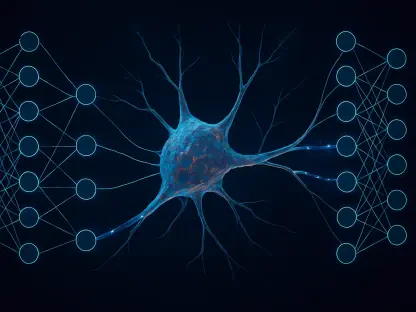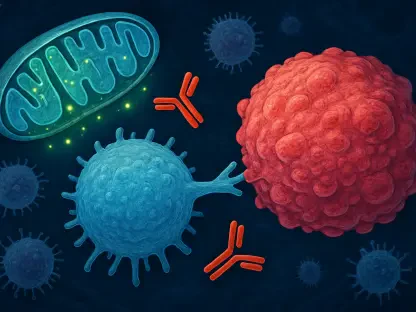

The landscape of therapeutic discovery is undergoing a seismic shift as artificial intelligence moves from being a mere digital assistant to becoming the very architecture upon which modern biology is built. Anthropic has recently solidified this transition by announcing the acquisition of Coefficient Bio, a stealth-mode biotechnology startup, in an all-stock transaction valued at approximately $400 million. This strategic move signals a fundamental pivot for major artificial intelligence laboratories, which are now looking beyond general-purpose large language models in favor of deeply integrated, biology-native systems. By internalizing this highly specialized expertise, Anthropic is positioning its technology to transition from a sophisticated research aid into a core, active participant in the complex drug discovery process. This acquisition represents more than just a talent grab; it is a calculated effort to define the next frontier of computational science by embedding biological reasoning directly into the heart of AI model development.
Founded in late 2025 by former leaders from Genentech’s prestigious Prescient Design unit, Coefficient Bio quickly gained prominence within the industry for its focus on biological foundation models. The founders, Nathan Frey and Samuel Stanton, brought extensive experience in developing advanced deep learning architectures specifically designed for molecular representation and drug development. Their vision centered on creating a platform capable of managing the entire research and development lifecycle, ranging from initial research planning to navigating the intricate maze of clinical regulatory strategies. During their tenure at Genentech, they were instrumental in creating modular frameworks like “Cortex” and open-source standards such as “Beignet,” which established a baseline for how AI interprets molecular behavior. By bringing these innovators into the fold, Anthropic gains immediate access to a “biology-native” philosophy where models are trained to understand the laws of physics and chemistry rather than just predicting the next word in a scientific paper.
Shifting Strategies in AI Development
Transitioning from Adaptation to Native Integration
Prior to this acquisition, Anthropic’s footprint in the life sciences was primarily defined by the “Claude for Life Sciences” initiative, which focused on creating specialized connectors for its general-purpose models. This approach allowed the Claude model to interface with external scientific databases like PubMed, Benchling, and ClinicalTrials.gov, providing researchers with a powerful tool for data retrieval and document summarization. However, while these integrations were highly effective for speeding up literature reviews and organizing vast amounts of information, they remained external layers adapted for scientific use. The AI was essentially a generalist trying to speak a specialized language through a translator, rather than a native speaker of biological code. This traditional method of adaptation often hit performance ceilings when dealing with the high-dimensional data and non-linear complexities inherent in molecular biology and protein folding, which require a more fundamental understanding.
The acquisition of Coefficient Bio marks a definitive pivot toward building AI infrastructure that is inherently biological from the initial training phase. Instead of wrapping a general model in scientific plugins, Anthropic is now focused on developing foundation models that understand molecular behavior and cellular interactions at an architectural level. This transition means that the AI will not just search for existing data but will be capable of simulating biological outcomes and proposing novel molecular structures with a high degree of confidence. By integrating Frey and Stanton’s expertise in modular deep learning, the company aims to move toward a “white-box” approach where the AI can provide reasoning for its biological predictions. Such a shift is essential for high-stakes drug discovery, where understanding the “why” behind a specific molecular interaction is just as important as the interaction itself, ultimately leading to more predictable and safer therapeutic candidates.
Responding to Competitive Pressures in Science
The timing of this acquisition is a strategic response to the intensifying competition among frontier AI laboratories, most notably the push by OpenAI toward developing fully automated researchers. As competitors move to shorten the timeline for scientific breakthroughs using agentic AI, Anthropic recognized that it could no longer rely on incremental improvements to its general-purpose software to maintain its competitive edge. To secure its standing as a leader in the field, the firm needed a team capable of building specialized modeling systems that go beyond mere text generation. The presence of a “biology-native” internal unit allows Anthropic to offer a level of scientific credibility that generic AI providers cannot match. This move ensures that the company remains at the forefront of the rapidly evolving computational biology sector, where the ability to automate complex R&D tasks is becoming a standard requirement for market relevance and leadership.
By establishing an in-house biotechnology division, Anthropic is effectively building a moat around its scientific capabilities that prevents it from being commoditized by other large-scale model providers. The goal is to move from “assisted research” to “agentic discovery,” where AI systems function as autonomous partners capable of planning experiments and identifying promising therapeutic targets. This evolution is particularly crucial as the industry moves toward a future where the most valuable scientific assets are no longer just the data points themselves, but the sophisticated models that can interpret and act upon that data. Through the integration of Coefficient Bio, Anthropic is positioning itself to be the primary provider of the underlying scientific modeling layer for the next decade. This strategic foresight allows the company to set the standards for how AI-driven research is conducted, ensuring that its models are indispensable to the global biotechnology and pharmaceutical ecosystems.
Market Implications and the Future of Biotech
Financial Logic and Investment Trends
Financing the $400 million deal through an all-stock transaction represents a remarkably efficient move for Anthropic, resulting in a minimal dilution of approximately 0.1% given its massive valuation following the Series G funding round. This calculated investment allows the company to secure a high-ambition team and a strategic foothold in a domain with immense long-term platform potential without exhausting its cash reserves. From a financial perspective, the acquisition is priced not on the startup’s current revenue, which was non-existent in its stealth phase, but on the “strategic premium” of its founders’ unique expertise. For a company of Anthropic’s scale, the ability to internalize the architects of Genentech’s most advanced deep learning tools is a bargain that could yield multi-billion dollar returns if it leads to even a single successful drug candidate or a widely adopted R&D platform for the broader pharmaceutical industry.
This trend is mirrored in the broader venture capital landscape, where investors are increasingly prioritizing “AI-native” biotech ventures over traditional companies that simply use AI as a peripheral tool. For instance, specialized healthcare venture firms are currently raising massive funds, some reaching $700 million, to specifically target startups where computer science and biology are treated as inseparable, foundational disciplines. This shift in investment philosophy suggests a market-wide conviction that the next generation of life sciences breakthroughs will be driven by firms that own their computational stack. The Anthropic deal serves as a bellwether for the industry, signaling to both startups and investors that the most valuable exit strategies are no longer just about developing a single drug, but about building the intelligent infrastructure that makes the entire discovery process faster, cheaper, and more reliable for everyone involved.
Revolutionizing Oncology and Automated R&D
The integration of Coefficient Bio’s advanced capabilities is expected to have an immediate and profound impact on oncology, a field historically plagued by immense biological complexity and high clinical trial failure rates. Cancer research generates staggering volumes of genomic and proteomic data that often overwhelm traditional analysis methods, leading to delays in identifying effective treatments. By automating R&D planning and regulatory strategy, Anthropic’s new infrastructure aims to accurately identify therapeutic targets and streamline the convoluted path to market. The specialized models are designed to predict how different cancer types will react to specific molecular interventions, potentially allowing for the design of personalized treatments at a fraction of the current cost. This capability transforms the AI from a search engine for oncologists into a predictive engine that can simulate various trial scenarios before a single patient is ever enrolled.
Furthermore, this evolution positions Anthropic as the primary infrastructure provider for the next generation of biotech firms, ushering in an era of truly agentic scientific discovery. As these AI models become more autonomous, the role of the traditional laboratory will shift toward a model where human scientists provide high-level guidance while the AI handles the heavy lifting of experimental design and data interpretation. This development will likely lead to a consolidation of the biotech industry, where smaller firms increasingly rely on the scientific modeling layers provided by giants like Anthropic to compete. Moving forward, the focus will shift toward “closed-loop” discovery systems, where AI-planned experiments are executed by robotic labs and the results are instantly fed back into the model to refine its understanding. This virtuous cycle of automated learning promises to break the decades-long stagnation in drug development productivity, offering new hope for treating previously incurable diseases.
Biological discovery was once a manual, trial-and-error process that took decades to produce results, but the integration of foundation models into the laboratory workflow has permanently altered that trajectory. Organizations should now prioritize the adoption of “biology-native” AI frameworks that can simulate complex molecular interactions rather than relying on legacy systems that treat data as static entries. To remain competitive, biotechnology firms must shift their investment toward building internal computational expertise or partnering with infrastructure providers that offer deep, domain-specific scientific models. The next logical step for the industry involves the creation of standardized, agentic R&D pipelines where AI manages the transition from target identification to clinical trial design autonomously. By embracing this shift toward automated discovery, the scientific community can move closer to a future where life-saving therapies are developed with unprecedented speed and precision. This era of intelligent drug discovery was defined by the transition of AI from an observer to the central architect of the modern lab.