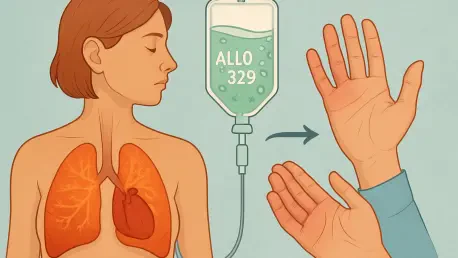

ALLO-329 Shows Rapid Benefits for Systemic Sclerosis, an experimental therapy that utilizes healthy donor cells to create an available, pre-manufactured product designed to address the high cost and logistical hurdles of cell therapy. Systemic sclerosis, a devastating autoimmune condition often referred to as scleroderma, has long been a therapeutic enigma for the medical community due to its complex pathology. Patients suffering from this disorder experience a progressive and often painful hardening of the skin and connective tissues, which can ultimately lead to irreversible internal organ damage and severe physical disability. While traditional treatments have largely focused on managing symptoms or broadly suppressing the immune system, they frequently fall short of providing lasting relief or halting disease progression. The introduction of ALLO-329 into clinical trials marks a pivotal shift toward precision medicine, offering hope for those who have exhausted standard options. By utilizing sophisticated cellular engineering, this therapy seeks to reset the immune system rather than just temporarily dampening its activity.
Engineering a Dual-Target Approach: Innovation in Allogeneic Therapy
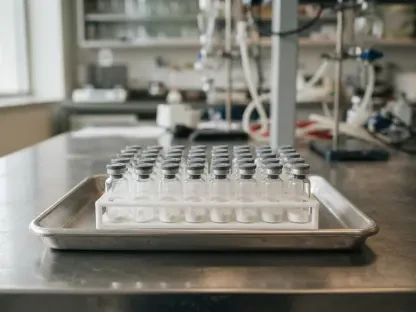
The innovation of ALLO-329 lies in its allogeneic design, which stands in stark contrast to the autologous CAR T-cell therapies that have dominated the oncology landscape for years. In autologous treatments, a patient’s own cells are harvested and modified, a process that is not only expensive but can take weeks to complete, often leaving patients in a vulnerable state. Because ALLO-329 is derived from healthy donor cells, it can be manufactured in large batches and kept ready for immediate clinical use. This “off-the-shelf” accessibility ensures that patients with rapidly advancing systemic sclerosis can receive treatment without the dangerous delays associated with personalized cell manufacturing. This logistical efficiency is paired with genomic editing technologies that remove the TCR gene to prevent graft-versus-host disease, ensuring the donor cells do not attack the recipient’s healthy tissues. This structural foundation is essential for moving cell therapy into the realm of mainstream autoimmune care.
Beyond its manufacturing advantages, the therapy features a unique dual-targeting mechanism designed to tackle the underlying causes of scleroderma more effectively. The CAR T cells are engineered to recognize and bind to two specific markers: CD19 and CD70. CD19 is a hallmark of B cells, which are responsible for producing the autoantibodies that drive the chronic inflammation and tissue scarring characteristic of systemic sclerosis. Simultaneously, the therapy targets CD70, a protein expressed on activated T cells. By eliminating these specific T-cell populations, the therapy not only reduces the overall inflammatory burden but also prevents the patient’s own immune system from identifying and rejecting the donor CAR T cells. This strategy creates a protected window for the therapy to operate, potentially extending its presence in the body long enough to achieve a deep and durable “immune reset.” This dual-action approach represents a significant evolution in how researchers view the durability of allogeneic cell products.
Redefining Conditioning Regimens: Prioritizing Safety and Accessibility
One of the most ambitious aspects of the RESOLUTION trial is its attempt to minimize or even eliminate the need for intensive lymphodepletion protocols. Historically, CAR T-cell therapies have required high-dose chemotherapy regimens, such as fludarabine and cyclophosphamide, to clear out the patient’s existing immune cells and make space for the new therapeutic cells. For individuals with systemic sclerosis, who may already have compromised organ function, these toxic pre-treatments can pose life-threatening risks. The trial investigators explored three distinct conditioning strategies, ranging from traditional chemotherapy to a complete absence of lymphodepletion. Preliminary data indicated that ALLO-329 could maintain its clinical efficacy even when the pre-conditioning burden was significantly reduced. This finding challenges the established consensus in cellular therapy and suggests a future where treatment can be delivered with far less physiological strain, making it a viable option for a broader range of medically fragile patients.
Safety remains a paramount concern in the development of any novel immunotherapy, particularly regarding cytokine release syndrome and neurotoxicity, which have historically plagued CAR T-cell applications. However, the data update from the RESOLUTION trial presented a remarkably clean safety profile that has caught the attention of rheumatologists worldwide. Among the initial cohort of 18 treated patients, there were no reported instances of severe cytokine release syndrome or immune effector cell-associated neurotoxicity syndrome. Furthermore, researchers noted an absence of dose-limiting toxicities and severe infections, which are common hurdles in immunosuppressed populations. This lack of severe adverse events suggests that the molecular engineering of ALLO-329 successfully balances potency with patient safety. By reducing the intensity of the immune reaction while maintaining targeted efficacy, the therapy appears to offer a more manageable clinical path than previous generations of cell-based interventions for autoimmune disorders.
Clinical Outcomes: Driving Rapid Remission and Future Care Standards
The clinical impact of ALLO-329 on systemic sclerosis has been characterized by both its depth and its speed of onset. Researchers utilized the modified Rodnan Skin Score, a standardized metric for assessing skin thickness and disease severity, to track patient progress throughout the trial. The results were striking, with 80% of the skin-predominant systemic sclerosis patients achieving a clinically meaningful reduction in their scores. Remarkably, some patients began to see improvements as early as 14 days after receiving a single infusion. This rapid response is nearly unheard of in traditional scleroderma treatments, where improvements typically take months or even years to manifest, if they happen at all. For patients whose skin had become so tight that basic movement was difficult, the softening of tissue within weeks of treatment was described by clinical investigators as a life-changing event. These results suggest that the therapy can halt and even reverse skin fibrosis far faster than conventional medications.
The progress observed in the ALLO-329 trial highlighted a clear path forward for the integration of allogeneic therapies into the treatment of autoimmune diseases. Stakeholders in the healthcare industry prioritized the development of robust monitoring protocols to track long-term B-cell recovery and the durability of the immune reset. Moving forward, the focus was placed on optimizing the lowest effective dose of conditioning to further enhance the patient experience and safety profile. The medical community also evaluated how these “off-the-shelf” products could be deployed in outpatient settings, potentially decentralizing high-tech care and making it available in regional clinics. As the RESOLUTION trial moved into its next phase, the emphasis shifted toward ensuring that manufacturing scales to meet the significant unmet need among patients. These advancements suggested that the era of accessible, rapid-acting cellular medicine had finally arrived, offering a concrete solution for those with refractory systemic sclerosis.