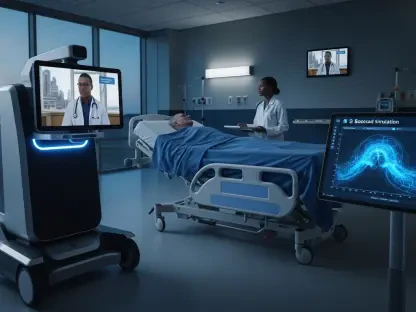

The traditional landscape of drug discovery has long been characterized by grueling years of manual experimentation where researchers meticulously test one compound at a time in hopes of finding a medical miracle. In a significant departure from this slow-moving heritage, a new era has arrived where autonomous systems navigate the complexities of molecular biology with a level of speed and precision previously considered impossible. This transformation is best exemplified by the recent breakthrough from a self-driving laboratory that has successfully identified a new class of molecules designed to revolutionize how genetic medicines reach their target cells.
Redefining the Speed of Pharmaceutical Innovation
The global success of mRNA vaccines depended on a single, fragile component known as the lipid nanoparticle, which acts as a protective vehicle for delicate genetic material. Despite the transformative potential of these medicines, the pharmaceutical industry has remained stalled by a staggering technical bottleneck, evidenced by the fact that only three lipid delivery systems have received FDA approval to date. This scarcity of approved delivery methods has left many promising therapies for cancer and rare diseases stuck in the developmental phase, unable to reach the patients who need them most.
LUMI-lab, an innovative self-driving laboratory, represents a fundamental shift from this incremental progress toward a future of accelerated, AI-led discovery. By replacing human-led trial-and-error with an autonomous system capable of evaluating millions of molecular possibilities in a fraction of the time, the platform identifies life-saving molecules without direct human intervention. This transition marks a pivotal moment where the bottleneck of physical experimentation is finally being widened by the sheer processing power and logic of advanced machine learning.
The Critical Bottleneck in mRNA Therapeutics
While mRNA technology provides a versatile blueprint for treating diverse conditions, its primary weakness remains the delivery process. Molecules are notoriously unstable and require a specific lipid “envelope” to enter human cells effectively without being destroyed by the body’s natural defenses. Historically, discovering these lipids was a slow process hampered by a lack of diverse data, as researchers often relied on minor variations of existing, proven structures rather than exploring entirely new chemical territories.
This reliance on a narrow range of chemical designs has limited the reach of mRNA treatments, leaving numerous tissues and complex diseases beyond the current capabilities of pharmaceutical science. The urgency for a more expansive and efficient way to navigate the vast “chemical space” of lipid design has never been greater. Without a way to rapidly prototype and test diverse delivery vehicles, the full promise of precision medicine remains anchored to a small handful of decades-old molecular templates.
The Architecture of an Autonomous Molecular Factory
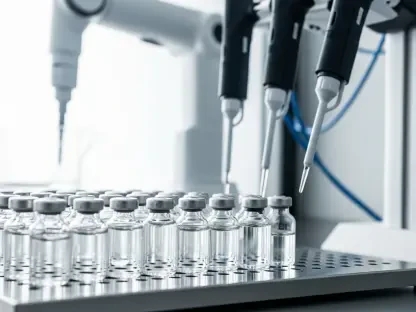
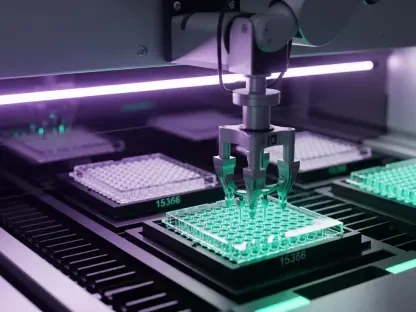
LUMI-lab operates as a sophisticated closed-loop system that integrates high-throughput robotics with a complex molecular foundation model. To overcome the industry-wide problem of data scarcity, the AI was pretrained on a massive dataset of 28 million molecular structures. This allowed the system to internalize the fundamental laws of chemistry and structural relationships before it ever began its specific search for delivery vehicles. This foundational knowledge gave the AI a “gut feeling” for chemistry that manual testing could never replicate.
Through ten iterative cycles of active learning, the platform autonomously synthesized and evaluated more than 1,700 new lipid nanoparticles. The system learned from each failed or successful experiment in real-time, refining its search parameters to hone in on the most promising candidates with surgical precision. This iterative nature ensures that the laboratory does not just generate random data but actually evolves its understanding of what makes a lipid effective as it progresses through the library.
The Bromination Breakthrough: Finding the Unobvious
The most significant discovery of the project was the identification of brominated lipid tails as a superior driver for mRNA delivery. Researchers revealed that these brominated compounds—which had been largely overlooked by human scientists for this specific application—significantly outperformed existing industry benchmarks. This included the lipids currently used in the most widely distributed mRNA vaccines. The discovery was a classic example of “unobvious” science that human intuition likely would have missed.
Despite making up a tiny fraction of the initial chemical library, these brominated lipids accounted for over half of the top-performing candidates identified by the autonomous system. Preclinical testing in human lung cells confirmed that these new lipids are not only more effective at delivery but also maintain the high safety and tolerability standards required for clinical use. This validated that AI can find high-performing solutions in corners of the chemical map that traditional research teams had deemed unpromising.
Strategies for Integrating Closed-Loop Discovery in Biotechnology
The success of the LUMI-lab platform provided a clear framework for the future of drug development by demonstrating that autonomous discovery can compress years of design work into months. Future applications of this technology are expected to focus on “multiobjective optimization,” where the AI simultaneously solves for delivery efficiency, tissue-specific targeting, and long-term safety. This approach moved the industry away from hypothesis-driven manual testing and toward an evidence-driven, AI-managed exploration of chemical space.
As these systems become more integrated into the global biotech infrastructure, the focus shifted toward expanding the diversity of molecules that can be synthesized on the fly. Stakeholders began prioritizing the development of even larger foundation models that can predict the behavior of these particles in complex biological environments. The path forward involved scaling these autonomous factories to tackle a broader range of diseases, ensuring that the next generation of precision medicine was limited only by the speed of computation rather than the pace of manual labor.