
In a world where humanity faces pressing challenges like sustainable energy and life-threatening diseases, the emergence of artificial intelligence as a collaborative partner in scientific discovery offers a beacon of hope. Imagine a future where complex experiments that once took decades are completed in mere months, or where tailored medical treatments are designed with unprecedented precision. This is no longer a distant dream but a tangible reality, thanks to groundbreaking partnerships between leading technology innovators and research institutions. AI co-scientists—specialized systems designed to assist researchers—are revolutionizing how science tackles grand challenges. By blending human expertise with the computational prowess of AI, these tools are accelerating progress in critical fields, reshaping the boundaries of what’s possible. The impact of this synergy is already evident in domains as diverse as energy production and healthcare, setting the stage for transformative breakthroughs.
Advancing Energy Solutions with AI
Harnessing Fusion Power through Intelligent Systems
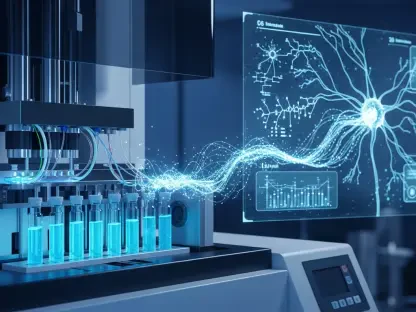
The quest for sustainable energy has long centered on inertial confinement fusion (ICF), a process that mimics the energy production of stars by compressing and heating fuel pellets with powerful lasers. However, the unpredictable nature of these experiments, driven by intricate physical interactions, has historically slowed progress. AI co-scientists are changing this landscape by enhancing the predictability and efficiency of ICF experiments. Through advanced data curation and reinforcement learning, these systems analyze vast datasets to refine experimental designs. Major facilities have seen marked improvements in performance as AI models simulate countless scenarios, identifying optimal conditions that human researchers might overlook. This technology not only speeds up the trial-and-error process but also brings scientists closer to achieving a viable, clean energy source that could power the world without environmental drawbacks.
Overcoming Experimental Challenges with Precision
Beyond simulation, AI co-scientists are proving invaluable in addressing the specific hurdles of fusion research, such as inconsistencies in laser targeting and fuel compression. By processing real-time data during experiments, these intelligent systems can adjust parameters on the fly, ensuring greater accuracy in outcomes. This adaptability reduces the margin of error that often plagues high-stakes tests, where even minor deviations can lead to failure. Moreover, AI-driven insights are helping researchers understand the complex interplay of forces at work, offering a deeper grasp of phenomena that were previously too chaotic to predict. The result is a more streamlined approach to experimentation, where each test builds on the last with informed precision. As these tools continue to evolve, they promise to unlock new methodologies that could finally tip the balance toward practical fusion energy, transforming how energy challenges are met on a global scale.
Revolutionizing Healthcare through AI Innovation
Enhancing Cancer Treatment with Targeted Solutions
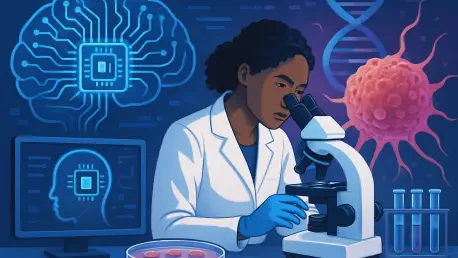
In the realm of healthcare, AI co-scientists are making significant strides in the development of targeted alpha therapy (TAT), a cutting-edge treatment that uses radioactive atoms to attack cancer cells while sparing healthy tissue. The precision required for TAT is immense, as the therapy hinges on delivering these atoms exactly where they’re needed. AI systems are stepping in to design chelator molecules—specialized compounds that bind to radioactive elements and guide them to tumor sites. By leveraging generative AI and high-performance simulations, these tools hypothesize and test countless molecular structures, identifying those with the best binding properties. This accelerated process is shaving years off traditional drug development timelines, offering hope to patients who need innovative treatments now rather than later.
Streamlining Drug Design for Better Outcomes
The impact of AI in cancer research extends beyond molecule design to the broader framework of therapy development. These co-scientists predict chemical interactions and potential side effects before physical testing even begins, allowing researchers to focus on the most promising candidates. This predictive capability minimizes costly dead ends and ensures resources are allocated efficiently. Additionally, AI systems integrate data from diverse sources, such as patient profiles and clinical trial results, to tailor therapies to specific cancer types or individual needs. Such customization marks a shift toward personalized medicine, where treatments are as unique as the patients receiving them. As AI continues to refine its algorithms, the potential for faster, safer, and more effective cancer therapies grows, paving the way for a future where the disease could be managed with far greater success and fewer risks to patient health.
Reflecting on a New Era of Discovery
Looking back, the collaboration between human ingenuity and AI co-scientists marked a pivotal shift in scientific exploration. The strides made in inertial confinement fusion illuminated a path toward sustainable energy, while advancements in targeted alpha therapy offered renewed hope in the fight against cancer. These achievements underscored the power of AI as more than just a tool, but as a true partner in problem-solving. Moving forward, the focus should be on expanding access to these technologies, ensuring that smaller research institutions and global communities can benefit from AI-driven insights. Investment in cross-disciplinary training will also be crucial, equipping scientists with the skills to harness AI effectively. As new challenges emerge, fostering international cooperation to share data and resources could amplify the impact of these innovations, driving solutions that address humanity’s most urgent needs with speed and precision.