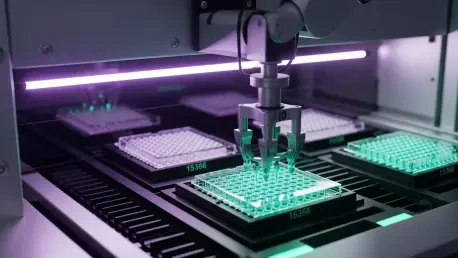

The pharmaceutical industry is currently witnessing a profound shift as researchers move away from traditional two-dimensional cell cultures toward complex three-dimensional architectures that more accurately reflect the intricate physiological environment of the human body. This transition is driven by the urgent need to reduce the high attrition rates seen in clinical trials, where many promising candidates fail because preclinical models do not mimic human biology. By integrating New Approach Methodologies, scientists are now able to utilize patient-derived organoids and sophisticated barrier-tissue models to predict drug responses with unprecedented precision. These models serve as a bridge between laboratory benchwork and clinical reality, offering a robust alternative to animal testing which often lacks the nuances of human genetic diversity. The systematic adoption of these technologies marks a new era in biomedical research where the focus shifts toward human-centric data. This evolution is supported by the rapid maturation of high-throughput technologies that allow for the detailed analysis of complex biological systems at a scale that was previously unattainable.
Transitioning To Advanced Physiological Models
The Rise Of New Approach Methodologies
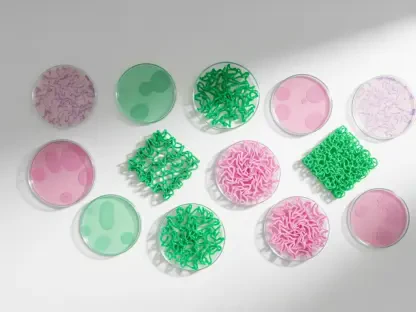
New Approach Methodologies represent a fundamental departure from legacy testing frameworks by emphasizing the use of human cells in structured, three-dimensional environments. Central to this evolution is the application of bioprinting and bioreactors, which allow for the creation of tissue constructs that possess realistic metabolic and structural properties. These systems enable researchers to study complex cellular interactions, such as those found in the tumor microenvironment or across the blood-brain barrier, in ways that were previously impossible with flat Petri dishes. By utilizing automation and artificial intelligence to monitor these cultures, laboratories can maintain high levels of consistency and reproducibility across large-scale studies. This level of control is essential for validating new drug targets and ensuring that the data generated is both reliable and scalable for industrial use. As these methodologies become more standardized, they are increasingly being integrated into the early phases of the drug development pipeline to filter out ineffective compounds.
The implementation of bioprinting technology has specifically enabled the precise spatial arrangement of multiple cell types to mimic the native architecture of human organs. This capability is vital for developing organ-on-a-chip platforms that can simulate the systemic effects of pharmaceutical compounds on different biological systems simultaneously. For instance, linking a liver-on-a-chip with a kidney-on-a-chip allows for the observation of drug metabolism and subsequent excretion in a single integrated setup. These sophisticated models provide deeper insights into the toxicity profiles of experimental drugs, potentially identifying harmful side effects long before a compound reaches human subjects. Furthermore, the use of patient-specific cells in these printed models facilitates the growth of personalized medicine, where treatments can be tested on a digital or physical twin of a patient’s own tissue. This level of biological fidelity is transforming how scientists approach the challenge of finding effective therapies, making the entire research process more efficient.
Engineering Complexity Through Bioreactors
Building on these structural advancements, the use of sophisticated bioreactors has allowed for the maintenance of 3D tissues over extended periods, providing a window into the long-term effects of chronic drug exposure. These bioreactors simulate the mechanical stresses and fluid dynamics present in the human body, such as blood flow and interstitial pressure, which significantly influence how cells respond to biochemical signals. By recreating these physical cues, researchers can observe the maturation of tissues and the development of pathological states in a controlled setting. This approach is particularly valuable for studying degenerative diseases and metabolic disorders where the timing of drug intervention is critical. The data gathered from these dynamic environments offers a more holistic view of drug efficacy, moving beyond simple cell death assays to understand how a compound affects overall tissue function. Consequently, the integration of bioreactor technology is becoming a prerequisite for developing the next generation of sophisticated preclinical models.
The synergy between automated platforms and bioreactor systems has also paved the way for more rigorous target validation processes. Scientists can now manipulate gene expression within 3D models using CRISPR-based tools to observe the functional consequences of specific molecular changes in a tissue-like context. This level of functional genomics provides a much clearer picture of whether a protein is a viable drug target or merely a bystander in a disease pathway. Moreover, the ability to collect real-time data from these systems through integrated sensors allows for the continuous monitoring of physiological parameters like oxygen levels and pH. This continuous feedback loop ensures that experimental conditions remain within physiological ranges, further enhancing the translation of laboratory findings to clinical outcomes. As these tools become more accessible, they are setting a new standard for rigor and reproducibility in the life sciences, ensuring that only the most robust therapeutic concepts move forward to human testing.
Enhancing Screening Through High-Throughput Innovation
Scaling Biophysical Analysis With UHTS Platforms
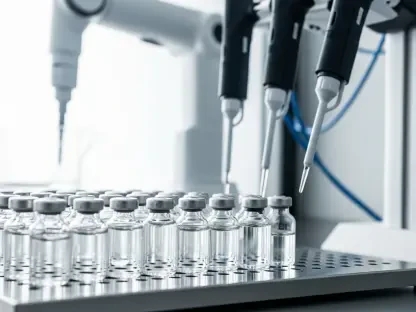
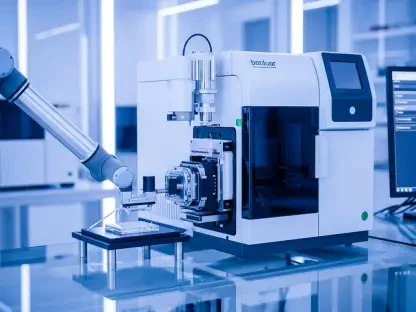
Achieving the necessary scale for modern drug discovery requires the deployment of ultra-high throughput screening platforms that do not sacrifice data quality for speed. Recent advancements in the Cellular Thermal Shift Assay have introduced isothermal 1536-well formats and Gradient Peltier Devices, which effectively eliminate historical bottlenecks in scalability. These innovations allow researchers to assess drug-target engagement across thousands of samples simultaneously, providing a more comprehensive view of how a molecule interacts within a living cell. By transitioning these biophysical analyses into higher densities, the industry is moving toward a more efficient screening process that can handle the massive libraries of compounds currently under investigation. The integration of such high-density formats ensures that only the most promising candidates move forward, thereby optimizing resource allocation and shortening the time required to bring new therapies to the market. This technological leap is essential for maintaining a competitive edge in discovery.
The introduction of MICRO-TAG, a cutting-edge fluorescence-based method, has provided a more sensitive approach to quantifying drug-target engagement in a cellular context. This methodology allows for the real-time monitoring of molecular interactions, offering a more dynamic understanding of drug efficacy than traditional end-point assays. By leveraging high-resolution imaging and sophisticated tagging systems, scientists can visualize how small molecules or peptides bind to their intended receptors within the crowded environment of a cell. This precision is particularly important when evaluating extracellular degraders and oral peptides, which represent emerging modalities designed to reach targets that were once considered undruggable. The ability to precisely measure these interactions ensures that researchers can fine-tune the chemical properties of a drug to maximize its therapeutic impact while minimizing off-target effects. These sensitive biophysical tools are becoming indispensable for the characterization of next-generation pharmacological agents.
Navigating The Shift Toward Small-Molecule Antagonists
The landscape of pharmaceutical research is rapidly shifting from large biological drugs toward small-molecule cytokine receptor antagonists and other innovative modalities. This transition was facilitated by a deeper understanding of molecular structures and the development of versatile platforms like ELISA-based protein interaction inhibitors. In the recent past, the scientific community successfully identified several pathways where small molecules could replace more cumbersome biologics, offering better stability and easier administration for patients. These findings suggested that the future of drug design would increasingly rely on hybrid approaches that combine the specificity of biologics with the versatility of synthetic chemistry. Moving forward, stakeholders should focus on refining the integration of these molecular strategies with automated screening workflows to accelerate the discovery of novel therapeutic candidates. The industry adopted these sophisticated protocols to ensure that the next wave of medicines would be both more effective and more accessible to a global population.
To capitalize on these technological gains, organizations should prioritize the training of researchers in computational biology and data science to handle the vast amounts of information generated by these high-throughput systems. The integration of machine learning algorithms can help in identifying patterns within 3D imaging data that are invisible to the human eye, potentially uncovering new mechanisms of drug action. Furthermore, fostering collaborations between bioengineers and traditional pharmacologists will be essential for developing the next iteration of New Approach Methodologies. These multidisciplinary teams can design experiments that better reflect the complexity of human disease, leading to higher success rates in the clinic. Researchers also focused on the standardization of 3D protocols to ensure that results can be compared across different laboratories and regulatory jurisdictions. By establishing clear benchmarks for the performance of these models, the scientific community took a significant step toward making human-relevant testing the primary standard for pharmaceutical development worldwide.