
Theglobalbiopharmaceuticalmanufacturinglandscapeiscurrentlyundergoingitsmostprofoundtransformationastheindustrymovesawayfromtheinefficienciesofbatchprocessingtowardaninterconnectedandfullyautomatedcontinuousproductionmodelthatenablestheconstantflowofmaterials. This shift marks the end of fragmented production cycles where products were moved from one isolated station to another, often sitting idle for days or weeks in “hold steps.” Today, manufacturers are increasingly adopting fluid systems that operate without interruption, effectively turning drug production into a high-speed, synchronized operation. This transition is not merely a change in equipment but a fundamental reimagining of how complex biologics are synthesized and purified. By eliminating the pauses between stages, companies are seeing a drastic reduction in production timelines and a significant increase in the overall reliability of the manufacturing environment. As these integrated platforms become the global standard, they are expected to revolutionize the accessibility of life-saving medicines.
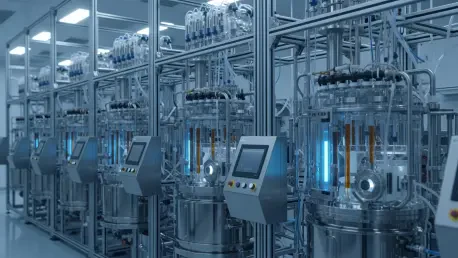
The operational landscape is evolving rapidly as facilities aim to shrink their physical footprint while simultaneously boosting their total output. In a traditional factory, massive stainless steel tanks take up thousands of square feet and require extensive cleaning protocols. In contrast, continuous bioprocessing utilizes smaller, modular systems that can produce the same volume of drug in a fraction of the space. This miniaturization allows for the placement of manufacturing sites closer to patient populations, reducing the logistical complexities of global distribution. Beyond the physical changes to the factory floor, the economic impact of this transformation is reshaping corporate strategies across the biotech sector. Between 2026 and 2036, the industry is poised to undergo a period of intense modernization, as companies move to meet the rising global demand for complex biologics through these highly efficient, integrated systems.
Market Projections: Economic Drivers of Change
The global market for continuous bioprocessing is on a clear upward trajectory, reflecting the deep confidence that pharmaceutical companies have placed in this technology as a cornerstone of their long-term growth strategies. In 2026, the market is valued at approximately $7.3 billion, and this figure is expected to more than double over the following decade as more facilities transition away from legacy batch systems. By 2036, the total market value is projected to reach $20.9 billion, representing a massive expansion of the biomanufacturing sector and a shift in how capital is allocated for research and development. This surge is supported by a steady compound annual growth rate of 11.1%, signaling that the adoption of continuous methods is a consistent trend rather than a temporary spike in interest. This financial growth represents far more than just the sale of new equipment; it reflects a fundamental change in the economics of drug delivery.
As the technology matures, it is moving from a niche application favored by a few innovators to a mainstream requirement for large-scale production across the globe. The total value added to the industry over this ten-year forecast period is estimated at $13.6 billion, highlighting the massive scale of the transition and the potential for increased profitability. This evolution is driven by the urgent need for more efficient facilities that can produce higher volumes of medication without the massive overhead costs and environmental footprints associated with traditional batch plants. The next decade will likely see continuous methods become the primary choice for any new manufacturing sites being constructed. Pharmaceutical leaders are recognizing that the ability to scale production quickly while maintaining low operating costs is the only way to remain competitive in an increasingly crowded and cost-sensitive global medicine market.
Connectivity and Efficiency: Redefining Manufacturing Speed
The primary motivation for adopting continuous systems is the pursuit of maximum operational efficiency through the removal of wasted time and resources. In a traditional batch setup, expensive equipment often sits idle for hours or even days while staff perform tasks like cleaning tanks, setting up new runs, or waiting for quality test results from a previous step. Continuous processing removes these bottlenecks by keeping material moving through the purification and filtration stages twenty-four hours a day. This non-stop operation ensures that the expensive biological assets, such as cell cultures, are utilized to their full potential without any downtime. By maintaining this steady state, manufacturers can achieve much higher productivity levels from smaller batches of raw materials, which significantly lowers the cost per gram of the final drug product.
Connectivity between different stages of production also helps to drastically reduce the risk of human error and potential contamination within the facility. By automating the transfer of materials between the upstream cell culture and the downstream purification phases, manufacturers can maintain a completely “closed” system that is shielded from the outside environment. This high level of integration ensures that the product is protected from airborne pathogens and operator interference, leading to a much more reliable and predictable manufacturing process. Real-time monitoring is another critical benefit of this connected approach, as integrated sensors provide constant streams of data on the health and purity of the production run. This allows operators to detect and fix minor issues instantly rather than waiting until the end of a weeks-long batch to discover a failure that could cost millions of dollars.
Engineering Frontiers: Upstream and Downstream Innovations
The upstream segment, which involves growing the biological cells that produce the medicine, currently holds the largest share of the market due to the advanced state of its core technologies. This dominance is largely credited to the maturity of perfusion technology, where cells are kept in a specialized bioreactor while fresh nutrients are added and waste products are simultaneously removed. This method allows for a much higher density of cells and a constant harvest of the desired protein, resulting in a significantly higher yield than traditional methods. Engineers have perfected the sensors required to balance the delicate chemical environment within these bioreactors, ensuring that cells remain healthy and productive for weeks at a time. This steady-state environment leads to a more uniform product, which is essential for meeting the strict safety standards of modern medicine.
While upstream processes are well-established, the downstream segment is where the most recent engineering breakthroughs are occurring as manufacturers look to solve the “purification bottleneck.” Downstream processing involves the complex tasks of filtering and purifying the drug to ensure it is safe for human use, a task that has traditionally been very slow and labor-intensive. New multi-column chromatography systems and continuous filtration units are being developed to keep pace with the constant flow of material coming from the high-yield bioreactors. There is also a growing trend toward using single-use technologies within these continuous systems to further streamline the process. Disposable bioreactors and plastic fluid paths eliminate the need for time-consuming cleaning and sterilization between different production campaigns, allowing manufacturers to pivot between different types of medicines more quickly than ever before.
Clinical Impact: Adapting to Modern Therapeutic Needs
Monoclonal antibodies remain the most common products made using continuous bioprocessing, accounting for a significant portion of the current market share. Because the production methods for these antibodies are so well-understood by researchers, they serve as the perfect testing ground for new intensification and automation techniques. Modular systems are now being sold that allow companies to expand their antibody production capacity without the need to build entirely new buildings or overhaul their existing infrastructure. This modularity means that a company can start with a small pilot program and scale up to full commercial production simply by adding more standardized units. This flexibility is vital for responding to shifts in patient demand or changes in clinical trial results, allowing firms to manage their resources with a level of precision that was previously impossible.
Vaccine manufacturing is another area where continuous processing is making a major impact, especially in the wake of lessons learned from past global health crises. The ability to scale up production rapidly is essential for responding to unexpected outbreaks or ensuring that developing nations have equitable access to life-saving immunization. Continuous methods allow for a faster response time and a more flexible manufacturing schedule compared to old-fashioned batch methods, which often struggled to meet sudden surges in demand. Advanced therapies, such as cell and gene treatments, represent the next frontier for this technology and offer some of the most promising applications for continuous flow. These treatments are incredibly complex to manufacture and require precise control over the environment in which the cells grow. Perfusion-based systems offer the high level of accuracy needed to produce these therapies at a lower cost, finally making them accessible to a broader range of patients.
Global Leadership: Regional Strategies and Specializations
The United States currently leads the world in the adoption of continuous bioprocessing, driven by a high concentration of research institutions and major biotech hubs in cities like Boston and San Francisco. The focus in the American market is heavily geared toward digital transformation and the use of advanced analytics to manage complex production lines. Government support through agencies like the FDA and significant private investment continue to fuel a rapid growth rate across the country. American firms are often the first to pilot new automation software and sensor technologies, setting the pace for the rest of the global industry. This leadership position is reinforced by a strong venture capital environment that is willing to fund the high initial costs of transitioning to continuous manufacturing platforms.
In Europe, nations like Germany and the United Kingdom are positioning themselves as leaders in pharmaceutical engineering and equipment validation. Germany, in particular, benefits from strong regional clusters that help bridge the gap between academic research and industrial application, creating a robust pipeline of new manufacturing tools. Meanwhile, France is using government-backed initiatives to help smaller biotech firms scale their manufacturing platforms into full industrial realities, ensuring the nation remains a key player in the biologic supply chain. The Asia-Pacific region is also seeing substantial growth, with Japan focusing heavily on regenerative medicine and specialized manufacturing services. Japanese firms are working closely with government agencies to create a coordinated network of production sites that can handle the unique requirements of cell therapies. Other nations, such as Australia and Canada, are investing in domestic manufacturing sovereignty to ensure they can produce their own essential medicines.
Data Stewardship: Digital Twins and Regulatory Evolution
The success of continuous manufacturing is becoming increasingly dependent on “digital twins” and advanced software systems that monitor every aspect of the production line. These digital tools create a virtual mirror of the physical factory, allowing engineers to simulate different scenarios and predict potential problems before they occur in the real world. This level of digital oversight is necessary to manage the vast amounts of data generated by a system that never stops running and requires constant adjustment. By using artificial intelligence to analyze this data, manufacturers can optimize their nutrient feeds and purification cycles in real-time, ensuring the highest possible quality. This digital-first approach reduces the reliance on manual testing and allows for a more proactive management of the entire biological production process.
Regulatory bodies like the FDA are updating their guidelines to keep up with these technological changes and provide a clear framework for companies to follow. New rules regarding the materials used in single-use systems ensure that prolonged contact between the drug and plastic components does not affect the safety or efficacy of the medicine. These evolving regulations provide a clearer path for companies to gain approval for their continuous manufacturing processes, reducing the perceived risk of moving away from traditional batch methods. Validation, which has historically been a slow and expensive process, is also being modernized through the use of “real-time release testing.” New techniques allow for safety and quality testing to happen during the actual production run rather than in separate, isolated studies after the batch is finished. This shift reduces the administrative burden on manufacturers and makes it easier to prove that the process is consistently producing high-quality medicine.
Strategic Risks: Addressing Operational and Human Barriers
Despite the many benefits, the transition to continuous manufacturing does come with specific risks that companies must carefully manage to avoid catastrophic failures. In a traditional batch system, a contamination event might only ruin one small portion of the total output, allowing the rest of the production schedule to continue. In a continuous system, an undetected problem could potentially impact an entire multi-week production campaign, leading to significant financial losses and a shortage of medication. This means that the stakes for quality control are much higher, requiring a more robust and redundant set of sensors and safety valves. Companies must invest heavily in fail-safe mechanisms that can automatically divert or stop the flow of material the moment a deviation from the standard operating procedure is detected.
There is also a pressing need for a more specialized workforce to manage these complex, automated factories and the data they produce. The industry is currently facing a shortage of engineers who understand both the biological side of drug making and the technical side of high-end automation and software. Training the next generation of technicians to troubleshoot integrated systems is a significant hurdle that requires collaboration between universities and private companies. Additionally, maintaining a perfect record of every material and chemical used throughout a long, continuous production cycle requires advanced tracking systems that are still being perfected. Managing the supply chain for a factory that never stops requires a different level of logistical precision, as even a small delay in the delivery of raw materials can cause a total system shutdown.
Ecosystem Integration: The Role of Platform Providers
The market for continuous bioprocessing equipment was led by a few large platform groups that offered complete, end-to-end solutions for pharmaceutical companies. These providers supplied everything from the initial bioreactors to the software that controlled the entire factory, creating a unified ecosystem for drug production. By offering integrated packages, they made it easier for drug companies to adopt continuous methods without having to piece together incompatible equipment from different vendors. This holistic approach reduced the technical hurdles for smaller firms and accelerated the adoption of the technology across the board. The success of these platform groups demonstrated that the future of biomanufacturing lay in the seamless integration of hardware and software into a single, cohesive unit.
Contract manufacturing organizations also played a vital role by providing continuous production services to smaller biotech firms that lacked the capital to build their own facilities. These service providers invested in the expensive infrastructure so that their clients could benefit from the efficiency and speed of continuous processing without the upfront financial risk. This collaborative model helped to spread the technology across the entire pharmaceutical industry, ensuring that even the smallest startups could bring their therapies to market efficiently. To remain competitive, organizations sought to standardize their workflows and invest in modular designs that allowed for rapid reconfiguration. The next steps for the industry involved deeper cross-sector partnerships and the continued refinement of automated quality control systems. This collective effort ensured that continuous bioprocessing moved from a conceptual advantage to a practical, life-saving reality for patients worldwide.