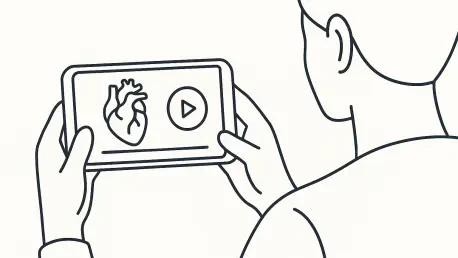

Short-form content on Bilibili frequently focuses on the underlying causes and symptoms of aortic disease, offering a more lecture-oriented approach than the high-impact style of TikTok. This divergence in presentation underscores a growing challenge for patients navigating the digital health landscape during life-threatening cardiovascular emergencies, such as Type A aortic dissection. In 2026, a comprehensive research report analyzed how this critical condition is represented across different digital environments. The researchers evaluated the integrity of health information on popular apps, discovering that while engagement is high, clinical accuracy often lags significantly behind. As individuals increasingly rely on these platforms for rapid medical guidance, the discrepancy between viral popularity and scientific reliability has become a pressing public health concern. This study serves as a critical audit of the current digital information ecosystem, revealing the strengths and deep-seated flaws in how experts and amateurs alike communicate complex medical crises to the general public.
Methodology: Behind the Digital Health Audit
To ensure a realistic assessment of what a typical user encounters, the research team performed a synchronized search using specific Chinese terminology to simulate an authentic browsing experience. This approach involved the use of entirely new accounts with no prior history, along with the clearing of browser caches and the disabling of location services to prevent algorithmic personalization from skewing the results. By creating a neutral digital environment, the study was able to capture the same content that a first-time seeker of information would see on their screen. The researchers targeted the top 250 results on both platforms to gather a representative sample of high-visibility content. This rigorous data collection process was essential for maintaining objectivity, as social media algorithms frequently prioritize past user behavior, which could have otherwise hidden certain types of low-quality or high-quality videos from the researchers’ view while they were conducting their extensive clinical evaluations.
The initial search yielded a vast array of content, which the researchers then meticulously filtered to remove irrelevant material. This process involved excluding paid advertisements, duplicate uploads, and videos that lacked substantial visual or educational content. Ultimately, the team identified 391 unique videos—193 from Bilibili and 198 from TikTok—that met the criteria for a detailed clinical evaluation. A critical step in the methodology was the decision to exclude any videos uploaded within the week prior to the data collection. This cooling-off period ensured that engagement metrics, including likes, shares, and comments, had stabilized over time. By focusing on established content rather than transiently viral clips, the study provided a more accurate reflection of the enduring digital library that remains accessible to patients long after the initial buzz of a video’s release has faded from the main feed. This ensured the data reflected the actual quality of the information being served to millions of users daily.
Validated Tools: Measuring Medical Reliability
The evaluation of these digital resources relied on four distinct, validated instruments designed to quantify the quality and reliability of medical information. Two independent medical students served as raters, achieving high inter-rater reliability scores to ensure the data remained objective and reproducible throughout the study. The Global Quality Score (GQS) was utilized to measure the general flow, usability, and visual clarity of the presentations, providing an overview of how easy the content was for a layperson to digest. Parallel to this, the modified DISCERN tool focused specifically on the reliability and traceability of the clinical claims made within each video. While many videos achieved an average rating for their general presentation, the scores for reliability were notably lower across the board. This disparity suggests that while creators are becoming more adept at producing visually engaging health content, they are often failing to provide the evidence-based foundation required for medical safety.
In addition to assessing flow and reliability, the study employed the JAMA Benchmark and the Video Information Quality Instrument (VIQI) to probe deeper into transparency and depth. The JAMA scale focused on critical accountability metrics, such as the clear attribution of authorship, the disclosure of potential conflicts of interest, and the timeliness of the information. Meanwhile, the VIQI offered a more granular 20-point analysis of information quality across multiple educational dimensions. The results revealed a significant lack of transparency; many uploaders neglected to provide their professional credentials or cite peer-reviewed sources, which left viewers unable to verify the authority behind the advice. The median VIQI scores indicated only moderate levels of detail, highlighting that while some videos offered a surface-level explanation, few provided the comprehensive depth necessary for a family dealing with a complex diagnosis like an aortic dissection during a high-stress medical emergency.
Clinical Focus: Acute Intervention over Prevention
A thematic analysis of the video content revealed a heavy bias toward the acute phases of Type A aortic dissection. Over 75% of the sampled videos focused on various surgical and medical treatment options, while approximately two-thirds centered on the diagnostic process within a hospital setting. This emphasis on the emergency aspect of the disease is understandable given the life-threatening nature of the condition, yet it highlights a skewed educational landscape. By prioritizing the dramatic moments of crisis and intervention, these platforms effectively function more as a digital emergency room guide than a holistic health resource. The focus on diagnosis and treatment often caters to the immediate fears of patients and their families, but it does so at the expense of other vital medical information that could be used to manage or even prevent the disease before it reaches a critical state in the operating room, where the stakes are at their highest for the patient and the surgical team.
Conversely, the research identified a glaring deficit in information related to disease prevention, epidemiology, and long-term prognosis. Only a small fraction of the videos—less than 16%—offered guidance on how to avoid aortic dissection through lifestyle changes or the management of underlying risk factors like hypertension. Furthermore, information regarding what a survivor might expect during their recovery or their long-term outlook was largely absent from the discourse. This imbalance suggests that social media creators are missing a critical opportunity to improve public health literacy on a broader scale. While the immediate mechanics of a surgery are visually compelling for a short video format, the absence of preventative education leaves a significant void. Users seeking to understand how to protect themselves or how to live with the condition after a successful surgery find themselves poorly served by the current distribution of digital medical content, which favors the theatrical over the practical.
Platform Disparities: Length Versus Viral Engagement
The study highlighted distinct functional roles for Bilibili and TikTok within the healthcare education ecosystem. Bilibili videos were characterized by their significantly longer durations, with a median length of 213 seconds, which facilitated a more detailed, lecture-style approach to explaining complex medical concepts. This format allowed creators to delve into the underlying causes and specific clinical symptoms of aortic disease with greater nuance than is typically possible in shorter clips. In contrast, TikTok content was much briefer, averaging only 77 seconds per video. These short-form clips were designed for high impact, favoring rapid-fire delivery that could quickly capture a viewer’s attention. However, this brevity often necessitated a reduction in complexity, leading to a focus on sensational aspects rather than detailed clinical explanations. The choice of platform thus dictates the level of detail a user is likely to encounter when searching for vital information.
Engagement metrics revealed a sharp contrast in how audiences interact with these platforms. TikTok was the undisputed leader in user participation, with its videos generating nearly 12 times the interaction volume of those on Bilibili in terms of comments and likes. This high level of engagement on TikTok occurred despite the fact that the majority of its content was produced by medical practitioners, who accounted for nearly 75% of the videos. On Bilibili, the demographic landscape was much more diverse, with individual users—many of whom lacked formal medical training—contributing nearly half of the content. This shift in authorship is a critical factor in determining overall quality, as the study found that the identity of the uploader was one of the strongest predictors of whether a video would meet clinical standards. While TikTok excelled at reaching a massive audience through professional accounts, Bilibili offered more space for individual voices, albeit at a cost to reliability and medical depth.
Professional Standards: The Engagement Gap
Content created by medical practitioners and established healthcare institutions consistently outperformed videos uploaded by individual users across several quality metrics. Institutional videos were particularly effective, showing a much higher likelihood of receiving superior marks for flow and usability. The research indicated that medical professionals were four times more likely to produce content that was well-organized and clinically relevant compared to their non-professional counterparts. This suggests that the presence of clinical expertise behind the camera is a primary driver of information quality. Professionals were also more likely to achieve higher transparency scores, as they were more open about their credentials and the source of their medical knowledge. This institutional advantage is vital for ensuring that health information remains grounded in reality, providing a necessary counterweight to the often-unverified claims made by individual creators who prioritize personal anecdotes over data.
A particularly troubling finding was the complete lack of correlation between a video’s viral success and its actual clinical value. The study proved that traditional engagement indicators—such as the number of likes, shares, and comments—were not reliable proxies for the accuracy or transparency of medical information. A video could garner thousands of interactions while simultaneously scoring poorly on the DISCERN and JAMA benchmarks. This engagement-quality gap presents a substantial risk to public health, as the average social media user often perceives high view counts as a sign of trustworthiness. Because platform algorithms are specifically designed to amplify content that generates high interaction rather than factual precision, misleading or incomplete videos can easily become the primary source of information for patients. This disconnect highlights the danger of relying on social proof when navigating complex cardiovascular health topics, where the most popular advice may not be the safest.
Strategic Pathways: Enhanced Medical Communication
The investigation into the digital landscape of aortic health revealed a critical need for a paradigm shift in how medical professionals utilize social media platforms. In 2026, the research established that while healthcare providers were active on apps like TikTok, the overall transparency and reliability of the shared content remained suboptimal. Moving forward, clinicians were encouraged to adopt more rigorous standards for citing evidence and disclosing potential biases within their short-form videos. This approach helped bridge the gap between high engagement and scientific integrity, ensuring that viral content was as accurate as it was popular. Furthermore, institutions recognized the importance of diversifying their educational output to include more information on prevention and long-term management. By moving beyond the dramatic imagery of the operating room, creators addressed the full spectrum of patient needs, transforming these platforms from mere entertainment hubs into credible tools for long-term health education.
To further safeguard public health, digital platforms began exploring new methods for verifying the credentials of medical uploaders and flagging content that lacked sufficient clinical backing. The study emphasized that users required better tools to distinguish between expert advice and anecdotal stories, especially when dealing with life-threatening conditions like Type A aortic dissection. Healthcare organizations responded by developing standardized templates for digital communication that prioritized the inclusion of peer-reviewed sources and clear prognostic data. These improvements empowered patients to take more informed actions during medical crises and fostered a more transparent relationship between the medical community and the public. As the reliance on digital information continued to grow, the commitment to aligning algorithmic visibility with clinical quality became the cornerstone of a safer online health environment. These steps ensured that the digital health revolution served the interests of patients by providing reliable knowledge.