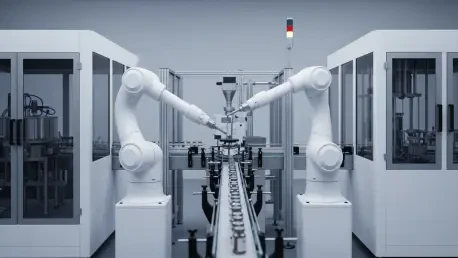

The sweeping steppes of Central Asia are witnessing a quiet but monumental shift as capital flows into medical manufacturing at a rate that has left regional competitors reconsidering their own industrial blueprints. Kazakhstan’s pharmaceutical and medical device manufacturing sector has entered a period of rapid expansion, with investment capital more than tripling over a three-year span. Gross investment inflows rose from $46.9 million recently to $142.8 million, marking a decisive pivot in the nation’s economic trajectory. This surge, highlighted by First Vice Minister Timur Sultangaziyev, underscores a growing international and domestic confidence in the nation’s industrial capacity. The primary drivers behind this trend are government-led initiatives focused on modernizing facilities and localizing the manufacturing of essential healthcare products.
A Threefold Leap: Evaluating Industrial Capital Growth
While global markets face significant volatility, the medical manufacturing sector in Kazakhstan achieved an unprecedented influx of capital. This development is not merely a statistical anomaly but a signal of a massive transition in how the nation prioritizes its industrial capacity. The rapid expansion highlights a growing trust among international stakeholders in the country’s ability to host complex manufacturing operations.
The industrial landscape transformed as investors pivoted toward stable markets with clear regulatory frameworks. This financial influx represented a strategic bet on the Central Asian corridor as a viable alternative for high-tech production. It served as a testament to the local workforce’s evolving capabilities and the government’s commitment to creating a friction-free environment for large-scale pharmaceutical production.
The Localization Imperative: Securing Global Supply Chains
The push for a robust domestic pharmaceutical industry stems from a critical need for national healthcare security and self-reliance. Government-led initiatives are currently focused on modernizing aging facilities and localizing the production of essential goods to shield the population from global supply chain disruptions. By prioritizing industrial sovereignty, the nation is moving away from a reliance on imported medical supplies.
This shift toward a self-sustaining ecosystem ensures that the healthcare system remains resilient even during international crises. Moreover, local manufacturing reduces the logistical costs associated with importing specialized medications, making essential treatments more accessible to the general public. The strategy effectively bridged the gap between domestic demand and regional production capabilities.
Analyzing the Shift: Domestic Market Dominance
The transformation is clearly visible in recent data, showing that local products now account for nearly 40% of the market by volume. This strong presence in high-turnover medical goods is bolstered by the state-run Unified Distributor, which now sources a third of its inventory from homegrown companies. These figures represent a significant departure from previous years when the market was heavily dominated by foreign entities.
Furthermore, the introduction of a mandatory pharmaceutical labeling and traceability system in 2024 provided the transparency necessary to refine these market strategies. This system ensured that every product in the supply chain was accounted for, reducing the prevalence of counterfeit goods. Such measures boosted consumer confidence and provided the government with high-quality data to guide industrial policy.
High-Tech Biopharmaceuticals: A New Industrial Milestone
A defining moment in this expansion is the $67 million agreement with Steppe Pharmaceuticals to develop a full-cycle complex in the Alatau Special Economic Zone. This project represents a shift toward specialized medical production, focusing on advanced treatments for cancer and rare diseases that were previously unavailable for local manufacture. This facility is expected to bring sophisticated biotechnological processes to the region, creating high-value jobs for scientists.
By focusing on oncology and rare genetic disorders, the sector moved into high-margin areas that require significant research and development investment. This transition marked the end of an era defined by simple packaging and the beginning of complex chemical synthesis. The facility served as a beacon for future investments, proving that the infrastructure could support the highest levels of medical science.
Mapping the Roadmap: Future Innovation and Leadership
The final stage of this expansion involved the strategic integration of the Healthcare Development Concept through 2029 into the national infrastructure. This plan focused on adopting artificial intelligence for early disease detection and deployed medical robotics to enhance surgical precision across urban centers. By aligning massive financial investments with a clear technological roadmap, the country established itself as a primary center for specialized medical production in Central Asia.
The government successfully created a framework where innovation was prioritized alongside manufacturing volume. These initiatives provided a blueprint for other developing nations seeking to reduce their dependency on global medical conglomerates. The project effectively fostered a culture of excellence that combined fiscal incentives with a commitment to long-term patient outcomes and industrial self-sufficiency.