
Oncology and regenerative medicine are no longer defined solely by the discovery of new molecules but by the sophisticated engineering of living systems to combat terminal illness. The Cell Therapy Manufacturing Center, a strategic joint venture between Resilience and the MD Anderson Cancer Center, stands as a testament to this profound shift in pharmaceutical philosophy. Rather than adhering to the antiquated biopharma model of mass production, this collaboration prioritizes the delivery of living cells as a bespoke medicine for patients who have exhausted all conventional treatments. This professional landscape is uniquely demanding because the therapeutic product is not a stable chemical compound but a dynamic biological entity that requires immediate intervention. The manufacturing process becomes a literal race against time, where the biological complexity of the patient’s own immune system is harnessed to provide a potential cure in a single dose. This paradigm shift requires a rethink of the entire supply chain, placing the patient at the center of a highly integrated and urgent logistical network. The biological urgency of these treatments means that every hour spent in transit or administrative delay could have life-altering consequences for the recipient, making the efficiency of the manufacturing process as vital as the science behind the therapy itself.
The Evolution: Shifting Toward a Co-Localized Manufacturing Model
The traditional pharmaceutical supply chain, which relies on massive centralized facilities to produce millions of identical doses for global distribution, is proving increasingly inadequate for the demands of autologous cell therapies. In these treatments, a patient’s own cells are harvested, genetically modified, and then re-infused, creating a supply chain that is fundamentally centered on the individual rather than the mass market. By shifting toward a co-localized manufacturing model, developers are placing specialized production facilities within the immediate footprint of major healthcare providers. This geographic proximity allows for an unprecedented level of daily synergy between the manufacturing teams and the clinical sites where patients are treated. When the facility is located within a dense healthcare hub like the Texas Medical Center, the physical distance between the laboratory and the hospital bed is virtually eliminated, which significantly streamlines the critical vein-to-vein process. This model bypasses the logistical vulnerabilities inherent in shipping cryopreserved biological materials across continents, ensuring that the team responsible for creating the medicine remains intimately connected to the clinical reality of the patients they serve.
Beyond the logistical advantages, co-localization fosters a culture of deep collaboration where industrial-grade manufacturing expertise meets world-class clinical research. In this integrated environment, the manufacturing process is no longer treated as an isolated or secondary step but as a continuous and vital component of the patient’s overall care plan. This integration removes the traditional silos that have historically separated laboratory scientists from hospital physicians, allowing for real-time feedback and adjustments that can improve therapeutic outcomes. By treating the manufacturing site as an extension of the hospital ward, the industry can better address the high-stakes demands of personalized medicine. This approach also allows for better management of the complex chain of custody and chain of identity requirements that are mandatory for autologous therapies. As more institutions adopt this localized footprint, the reliance on third-party logistics providers decreases, giving developers more direct control over the quality and timing of their therapeutic deliveries. This shift represents a fundamental maturation of the industry, moving away from experimental small-batch production toward a more robust, patient-centric infrastructure that can support wider clinical adoption.
New Paradigms: Redefining Partnerships in the Biotech Space
The emergence of specialized manufacturing centers is redefining the nature of professional partnerships within the biotechnology sector by moving beyond the standard service-fee structure of contract manufacturing. Traditional contract development and manufacturing organizations often function as outsourced labor for large corporations that already possess substantial internal infrastructure. However, a new model of mission-aligned partnership is appearing, specifically designed to support smaller biotech firms and academic researchers who have discovered groundbreaking therapeutic candidates but lack the industrial resources to advance them into clinical trials. These partnerships focus heavily on the technical aspects of manufacturing and analytical development, helping innovators select the most viable clinical candidates based on their scalability rather than just their laboratory performance. By providing access to high-end infrastructure and regulatory expertise, these centers help bridge the notorious “valley of death,” where promising therapies frequently fail due to a lack of manufacturing consistency or insufficient resources to navigate the transition from benchtop to bedside.
Success in these collaborative endeavors is increasingly built on transparency and a shared commitment to clinical timelines rather than a transactional customer-vendor relationship. By leveraging existing, pre-validated infrastructure, these projects can move significantly faster than a small company could on its own, which is essential in a field where speed to market is often synonymous with speed to patient care. The value of these partnerships is measured not just in technical success, but in the efficiency with which a program can reach the site activation phase. This collaborative approach allows academic innovators to maintain their focus on scientific discovery while the manufacturing partner handles the complex engineering required to turn a biological concept into a reproducible medical product. Furthermore, these partnerships allow for the sharing of best practices across multiple programs, creating a rising tide of technical knowledge that benefits the entire cell therapy ecosystem. This evolution toward deep, integrated collaboration ensures that the next generation of life-saving treatments is developed with an eye toward commercial viability from the earliest stages of research.
The Regulatory Path: Navigating Hurdles and Enrollment Success
Navigating the regulatory landscape for cell therapies requires a delicate balance between the rapid pace of innovation and the absolute necessity of ensuring patient safety throughout the clinical trial process. Building a transparent and proactive relationship with the Food and Drug Administration is essential, particularly for early-phase trials where the primary focus is on risk mitigation and establishing a safety profile for these novel treatments. Many emerging biotech companies operate under a persistent fear of clinical holds, which can stall progress for months and jeopardize critical funding rounds. However, by working with partners who possess a deep understanding of the regulatory environment and a track record of successful filings, these companies can gain the stability needed to navigate complex bureaucratic requirements. The goal is to create a regulatory strategy that is as dynamic as the therapies themselves, ensuring that manufacturing protocols can evolve as new data becomes available without triggering unnecessary delays or safety concerns.
The true indicator of a program’s success is not merely the submission of paperwork but the speed and efficiency with which it can enroll the first cohort of patients. Many promising cell therapy programs stall during the enrollment phase because of the logistical and administrative barriers involved in activating clinical sites and identifying suitable participants. Integration with a major cancer center provides an immediate solution to this challenge by granting developers direct access to a large, well-characterized patient population. This proximity can reduce the time from regulatory filing to site activation by several months, proving that specialized local integration can overcome the traditional administrative delays that plague centralized manufacturing models. When the manufacturing facility and the clinical site share the same administrative and ethical oversight frameworks, the speed of patient recruitment increases dramatically. This streamlined approach not only benefits the developers by accelerating the collection of clinical data but also ensures that patients facing aggressive diseases can access experimental therapies while they are still healthy enough to receive them.
Market Dynamics: Economic Realities and the Technological Frontier
While the high upfront cost of cell therapies often leads to significant public debate regarding healthcare spending, the economic reality is more nuanced when viewed through the lens of long-term patient outcomes. A single administration of a CAR-T therapy may carry a high price tag, but it is frequently more cost-effective than the standard of care, which might involve decades of recurring chemotherapy, multiple hospitalizations, and the management of chronic complications. When these treatments achieve a durable cure, they eliminate the need for long-term pharmaceutical intervention, ultimately reducing the total financial burden on the healthcare system. The industry is currently moving toward a value-based pricing model where the cost of the therapy is directly tied to its clinical performance. This shift encourages developers to prioritize therapies that offer the highest probability of long-term survival, aligning the interests of manufacturers, insurers, and patients in a way that traditional chronic-care models never could.
The current investment landscape shows a distinct separation between the clinical success of autologous therapies and the market’s enthusiasm for “off-the-shelf” allogeneic alternatives. Although allogeneic therapies were once predicted to dominate the market due to their lower manufacturing costs and easier distribution, their clinical performance has often been underwhelming compared to the transformative impact of patient-specific treatments. This market anomaly is likely to stabilize as investors recognize that the long-term value of a successful cure outweighs the initial convenience of a less effective, generic product. Simultaneously, the technological frontier is shifting toward in vivo CAR-T development, which involves reprogramming a patient’s cells directly within their body. This approach could potentially eliminate the need for the complex ex vivo manufacturing and shipping processes that currently define the field. While technical challenges such as avoiding off-target effects and managing cell exhaustion remain significant, this evolution represents the next logical step in making advanced cell therapies both more accessible and more affordable for a global patient population.
Strategic Integration: Managing Data and Automated Infrastructure
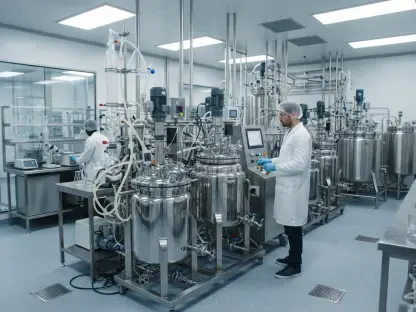
As the cell therapy industry reached higher levels of maturity, the focus shifted toward the implementation of automated systems and robust data management to ensure consistency across localized manufacturing sites. The transition from manual, labor-intensive processes to closed, automated systems was a critical step in reducing the risk of human error and contamination, which are particularly dangerous when dealing with living medicines. By standardizing these automated protocols, developers were able to ensure that a therapy produced in one facility was identical in quality and potency to a therapy produced in another. This technological consistency is the backbone of decentralized manufacturing, allowing for the rapid scaling of production without the need for massive, single-site expansions. Automated platforms also provided the benefit of real-time monitoring, where sensors could track the health and metabolic activity of cells throughout the entire engineering process, providing developers with a wealth of data that was previously inaccessible.
The integration of advanced data analytics allowed manufacturing teams to move from reactive troubleshooting to predictive process control. By analyzing vast datasets generated during the manufacturing of various patient cohorts, researchers identified the precise biological markers that correlate with therapeutic success. This data-driven approach enabled the refinement of manufacturing protocols in real-time, ensuring that the final product met the highest possible standards for each individual patient. Moreover, the use of blockchain and other secure digital ledgers improved the transparency of the chain of identity, providing an immutable record of a cell’s journey from the patient to the lab and back again. These digital innovations were not just administrative additions but were fundamental to the safety and reliability of the personalized medicine model. As these systems became more sophisticated, the industry moved closer to a “smart factory” concept, where AI-driven insights optimized every stage of production, from reagent inventory management to final product release.
Operational Outcomes: Looking Back at the Success of Localized Integration
The strategic pivot toward localized manufacturing and deeply integrated clinical partnerships transformed the landscape of cell therapy delivery. Industry leaders recognized that the initial hurdles of high costs and logistical complexity were not insurmountable barriers but were instead the growing pains of a revolutionary medical paradigm. By establishing specialized centers of excellence within major medical hubs, the community successfully reduced the vein-to-vein time for many patients, ensuring that therapeutic interventions occurred within the optimal clinical window. This shift also democratized access to clinical trials, as the presence of local manufacturing infrastructure made it easier for regional hospitals to participate in cutting-edge research. The collaborative frameworks established during this period became the blueprint for other advanced modalities, such as gene editing and tissue engineering, proving that proximity to the patient is a primary driver of innovation.
Healthcare providers who invested in localized infrastructure found themselves better equipped to manage the unique demands of living medicines, leading to improved patient safety and better overall outcomes. The industry eventually moved toward a more sustainable economic model as the efficiencies gained from automation and co-localization began to offset the high initial investments in facility construction. Looking back at the progress made, it is clear that the decision to prioritize integrated, mission-aligned partnerships over traditional vendor relationships was the catalyst for the widespread adoption of cell-based cures. Future developers should focus on expanding these localized networks to underserved regions, ensuring that the benefits of personalized medicine are not confined to a few major metropolitan areas. By continuing to invest in the “how” of manufacturing and the “where” of delivery, the sector will maintain its momentum in turning once-terminal diagnoses into manageable or curable conditions through the power of engineered living cells.