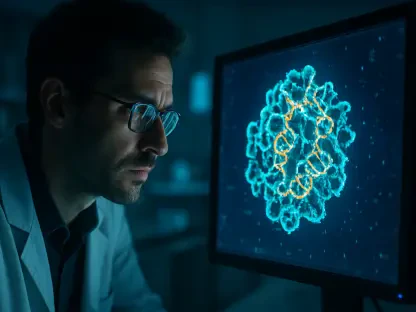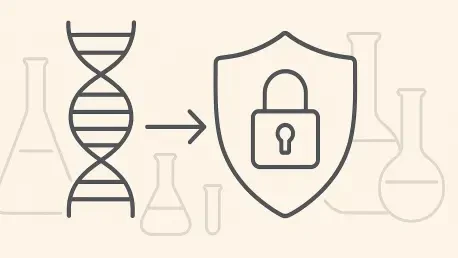

The process of turning a digital DNA sequence into a physical threat creates a measurable trail of purchase orders, shipping data, and grant charges. This reality sits at the center of a profound shift in global biosecurity, where the boundary between beneficial scientific research and potential existential risk has become increasingly blurred by the arrival of sophisticated generative models. While the world has celebrated the rapid development of mRNA vaccines and novel therapies made possible by synthetic biology, the very same technologies significantly lowered the technical threshold required to engineer dangerous pathogens. By the middle of this decade, it became clear that the oversight mechanisms of the previous generation, designed for a time when genomic data was scarce and synthesis was expensive, were no longer capable of securing a decentralized, high-velocity biological economy. The convergence of artificial intelligence and biotechnology has created a unique set of challenges that demand a departure from antiquated screening protocols in favor of a dynamic, multi-layered defense strategy. This modernization effort is not merely about identifying harmful sequences but about understanding the entire lifecycle of a biological design, from its algorithmic conception to its physical manifestation in a laboratory setting. The global community now faces the urgent task of building an infrastructure that can detect intent and function with the same precision that AI uses to design new proteins, ensuring that the bio-revolution remains a safe and productive endeavor.
Redefining the Defensive Architecture
Addressing the Failures: The Inadequacy of Static Lists
The original foundations of modern biosecurity were established nearly twenty years ago, focusing on a voluntary framework where commercial gene synthesis providers screened orders against databases of known high-risk pathogens. This “list-based” approach relied on identifying specific genetic sequences from organisms like avian influenza or Ebola to flag suspicious activity before it could reach a laboratory. While this was an effective hurdle for monitoring established threats during the early 2000s, the method is inherently retrospective and struggles to address the fluid nature of modern genomic engineering. It cannot account for emerging diseases that have not yet been categorized, nor can it anticipate the subtle modifications that can turn a benign sequence into a virulent one. In a world where viral evolution is accelerated by both nature and human intervention, waiting for a pathogen to be “listed” before it is screened creates a dangerous window of vulnerability that malicious actors can exploit with increasing ease.
Furthermore, the rise of generative AI has introduced a significant loophole in traditional sequence matching that renders static databases increasingly obsolete. Advanced machine learning models can now design biological components that perform a harmful function while possessing a genetic structure that looks nothing like the sequences found on a “bad actor” list. This ability to “camouflage” biological threats allows synthetic designs to bypass existing filters by mimicking the genomic signatures of harmless organisms. Beyond the traditional concerns of bioterrorism, the democratization of biotechnology has also facilitated the rise of illicit markets for counterfeit drugs and performance enhancers, many of which bypass existing regulatory filters because they do not fit the narrow definition of a known biothreat. As the cost of DNA synthesis continues to drop, the volume of orders is overwhelming the capacity of manual review, necessitating a shift toward automated, intelligent screening systems that look beyond the surface level of genetic code.
Expanding the Intelligence Network: Incorporating Non-Traditional Expertise
A critical oversight in the development of early biosecurity guidelines was the relative lack of diversity in professional perspectives at the decision-making table. The original frameworks were shaped almost exclusively by biologists, public health officials, and national security experts who focused on the scientific and medical aspects of the threat. While their expertise was indispensable, they often lacked the practical experience required to manage massive, high-speed transactional environments or to detect sophisticated fraud within complex global supply chains. To build a modern defense, the biosecurity community must actively recruit experts from the worlds of finance, logistics, and digital commerce. These individuals bring a wealth of knowledge regarding the verification of identity and intent across millions of daily transactions, a skill set that is directly applicable to the challenges of monitoring the international trade in genetic materials and laboratory equipment.
Professionals from major logistics and financial technology firms like Amazon, PayPal, and FedEx have spent years perfecting the art of identifying anomalies within vast datasets. By applying the same techniques used to detect financial crimes and logistical fraud, the biosecurity field can better answer the essential questions of what is being ordered and why a specific individual or entity is ordering it. For instance, financial crime investigators at the Treasury Department are adept at spotting patterns of procurement that signal the bypass of international sanctions or the movement of illicit goods. Integrating these non-traditional experts into biosecurity planning allows for the creation of a more comprehensive surveillance net that tracks the movement of specialized precursors and hardware. This approach moves the focus away from the biology itself and toward the behavioral patterns that accompany the misuse of technology, providing a much-needed layer of defense that complements traditional scientific oversight.
Mapping the Biological and Behavioral Landscape
Functional Analysis: Transitioning to Biological Terrain Mapping
To solve the problem of AI-generated biological threats that evade simple sequence-matching, the scientific community is moving toward a concept known as “biological terrain mapping.” Instead of asking if a specific DNA “key” matches a known “bad key” in a database, this method focuses on the “lock”—the biological system or pathway the sequence is intended to target. This approach leverages the ability of AI to predict how a novel, synthetic protein will fold and interact with human or animal biology. By simulating the functional impact of a sequence in a virtual environment, security systems can identify designs that are intended to disrupt vital cellular processes or enhance the virulence of a pathogen, even if the genetic code of that design is entirely original and has never been seen in nature. This shift from sequence-based to function-based screening allows for the detection of threats based on their potential for harm rather than their resemblance to existing organisms.
While predicting the exact function of every synthetic protein remains a significant computational challenge, current AI models are already capable of identifying the general “terrain” of a design’s impact. Recent experimental data has shown that machine learning can generate functional viruses with entirely novel sequences that do not exist in any known genomic database. By monitoring the potential functional impact of a sequence, biosecurity frameworks can move toward a more proactive posture. If a sequence is flagged as having the potential to bind to a specific human receptor or interfere with the immune response, it can be subjected to higher levels of scrutiny regardless of its origin. This method essentially creates a map of “forbidden” biological functions, allowing the global community to maintain a defensive perimeter around the most sensitive aspects of human and animal health while still allowing for the free flow of legitimate scientific innovation.
Contextual Verification: Assessing Intent Through Digital Handshakes
The second pillar of a modernized biosecurity framework involves the assessment of the human element through what is being called a “digital handshake.” A DNA sequence that is perfectly legitimate and safe in the hands of a certified, high-containment university laboratory becomes a significant red flag when ordered by an anonymous individual with no verifiable institutional affiliation or history of biological research. Because the translation of a digital design into a physical threat requires significant infrastructure—including specialized hardware, reagents, and growth media—every biological project leaves a logistical trail. The digital handshake system uses privacy-preserving, automated checks to verify that a specific order is consistent with a customer’s authorized research projects and their institutional role. This creates a verification loop that connects the digital order to a physical person and a legitimate purpose without requiring the total disclosure of proprietary or sensitive research data.
This system relies on the convergence of multiple signals to identify potential risks rather than relying on a single data point. For example, the combination of an ambiguous genetic sequence, an atypical payment method, and a residential delivery address would generate a signal for human review, effectively separating legitimate scientific inquiry from suspicious, clandestine activity. By integrating the data from DNA synthesis providers with the procurement records of laboratory equipment suppliers, a clearer picture of intent begins to emerge. This “logistical biosecurity” ensures that the materials required to cause harm do not fall into the hands of those who lack the oversight and safety protocols of the established scientific community. By building this ecosystem of trust, the global biosecurity framework can scale to meet the demands of a rapidly expanding biotechnology sector without becoming a bottleneck for legitimate breakthroughs that improve human health.
Building an Ecosystem of Scalable Trust
Algorithmic Foundations: Training AI to Recognize Normalcy
A significant challenge in biosecurity is that “bad actors” are rare and their methods are constantly changing, making them difficult to identify through traditional pattern matching. Instead of attempting to train AI to recognize the ever-shifting profile of a potential threat, the industry is increasingly focused on training systems to recognize “normalcy” within the biological marketplace. By establishing a baseline of what legitimate research looks like across different scientific disciplines—from agricultural genomics to vaccine development—AI can more efficiently highlight meaningful aberrations that require manual investigation. This shift allows limited security resources to be concentrated on the outliers that deviate significantly from the established patterns of the global scientific community. When an algorithm understands the standard procurement needs of a legitimate virology lab, it can easily spot an order that doesn’t fit the lab’s stated research goals or historical behavior.
As the laboratory environment moves toward total automation and the use of “self-driving labs,” biosecurity protocols must be integrated directly into the software that manages these facilities. If a laboratory AI is tasked with designing and executing an experiment, a corresponding security AI should be monitoring the process in real-time to ensure that the activity remains within safe and authorized parameters. This creates a safety net that scales alongside the rapid expansion of biotechnology, ensuring that the speed of innovation does not come at the expense of public safety. This integration also provides a level of protection against the accidental creation of dangerous organisms, as the security AI can flag experiments that might lead to unintended and hazardous outcomes. By embedding these safeguards into the foundational tools of the trade, the biosecurity community can foster an environment where researchers can innovate with confidence, knowing that the system itself is designed to prevent the misuse of powerful biological tools.
Operational Continuity: Strengthening Enforcement and Response
The most sophisticated digital detection system is ultimately ineffective if there is no specialized mechanism to respond to the signals it generates. There has been a growing concern that the dissolution of specialized law enforcement units, such as those previously focused on weapons of mass destruction, into broader counterterrorism departments has diluted the specialized expertise required to handle biological risks. Modern biosecurity requires investigators who are specifically trained to navigate the complexities of genomic data and to engage effectively with the scientific community. These professionals must be able to distinguish between a legitimate, high-risk scientific breakthrough and a genuine security threat, a task that requires a deep understanding of both biotechnology and criminal intent. Without this specialized human element, the leads generated by AI-enabled systems risk being ignored or misinterpreted, leading to either missed threats or the unnecessary disruption of vital research.
Effective enforcement must be viewed as a partnership between the digital systems that flag anomalies and the human experts who interpret them. When a “digital handshake” or a “terrain map” identifies a suspicious convergence of events, the resulting investigation must be handled by personnel who can communicate with scientists in their own language and understand the nuances of the data provided. This collaborative approach ensures that biosecurity measures are seen not as an intrusion by law enforcement, but as a necessary component of a safe and responsible scientific ecosystem. By maintaining these specialized units and fostering a culture of cooperation between the security and scientific communities, the global response to biological threats becomes more precise and effective. Strengthening these human networks is essential for ensuring that the technological advances in detection lead to real-world security, providing a robust defense that can adapt to the challenges of the AI age.
Advancing Toward a Unified Global Response
The evolution of biosecurity frameworks throughout the early 2020s marked a significant transition from the reactive, list-based strategies of the past toward a more proactive and integrated defensive posture. The international community recognized that the rapid convergence of artificial intelligence and synthetic biology required a new paradigm—one that synthesized biological function, digital identity, and logistical data into a single, cohesive narrative. By 2026, the implementation of biological terrain mapping and intent-based verification systems had begun to bridge the gaps that previously allowed synthetic threats to develop in the shadows. This shift ensured that the oversight of biotechnology was no longer a static process but a dynamic ecosystem of trust that could scale alongside the pace of global innovation. The integration of non-traditional expertise from the finance and logistics sectors provided the critical missing links in understanding the movement of materials and the behavior of actors within the biological marketplace.
The successful modernization of these frameworks demonstrated that while artificial intelligence introduced new risks, it also provided the most powerful tools ever devised for ensuring the safety of the life sciences. The transition to functional screening and digital handshakes allowed for a more nuanced approach to risk management, one that protected the “legitimate biological terrain” while providing a reliable mechanism for detecting those with ill intent. These efforts created a resilient global infrastructure that balanced the necessity of scientific openness with the absolute requirement for public security. As the biotechnology sector continued to expand, the biosecurity community maintained its commitment to cross-sector collaboration and the continuous refinement of its algorithmic defenses. Ultimately, the progress made during this period proved that the risks of the AI age could be managed through a combination of technical innovation, multidisciplinary expertise, and a unified global commitment to the safe advancement of science.