
The long-standing exodus of Australian medical breakthroughs to international production lines has finally met a formidable domestic rival with the official unveiling of the ENTRI facility in Brisbane. For decades, the local biotechnology sector struggled with a critical infrastructure deficit that forced promising research to seek manufacturing partners in North America or Europe. This shift often resulted in the loss of intellectual property and high-value scientific jobs while delaying access to new treatments for the local population. However, the completion of this $100 million biomanufacturing hub at the Boggo Road Innovation Junction signals a decisive pivot toward national self-reliance. As the first purpose-built site in the country certified under the Therapeutic Goods Administration’s current Good Manufacturing Practice standards, it provides a high-security environment for translating laboratory discoveries into clinical-grade products. This facility serves as a foundational pillar for a new era of healthcare.
Advanced Infrastructure: Scaling Medical Innovation Locally
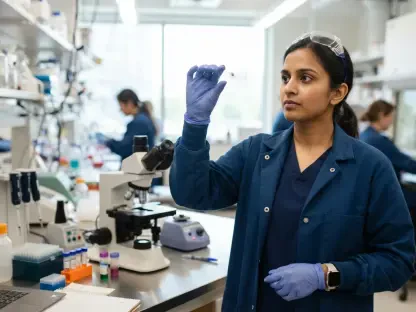
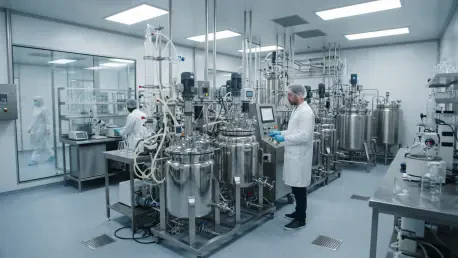
Spanning seven thousand square meters across four floors, the technical layout of the facility prioritizes the rigorous demands of modern medicine. The site incorporates five specialized clean rooms and nineteen advanced wet laboratories, each engineered to meet the strictest regulatory requirements for biological safety. These resources allow medical technology companies to conduct complex procedures such as gene editing and protein synthesis within a controlled, local ecosystem. By centralizing these assets within the Translational Research Institute’s Alexandra Hospital campus, the hub creates a physical link between clinical researchers and industrial-scale production. This proximity accelerates the iteration process for new therapies, reducing the time required to move from the experimental phase to human trials. Such concentrated technical capacity ensures that emerging startups have the sophisticated tools needed to compete on a global stage without leaving Australia.
The financial architecture supporting this initiative reflects a significant investment strategy involving both state and federal authorities to bolster the regional economy. With more than $83 million provided by the Queensland Government and a further $3.4 million from the Federal Government, the project underscores a commitment to high-tech industrial growth. This capital injection is expected to support approximately 500 specialized scientific positions, drawing talent from across the globe to the Brisbane area. Beyond construction, additional resources from the SEQ Innovation Economy Fund have been utilized to install advanced digital infrastructure and high-end equipment. These technological upgrades ensure that the hub remains compatible with the latest data-driven manufacturing processes, including real-time monitoring and automated quality control. This investment establishes a sustainable economic engine designed to fuel the biomedical sector for the duration of the current decade.
Sovereign Capability: Securing the Future of Global Health
One of the most significant advantages of this new hub is the autonomy it grants to small and medium-sized enterprises over their intellectual property and production timelines. Previously, local innovators often found themselves at the mercy of international manufacturing schedules, which could lead to significant delays and increased costs for developing niche therapies. By providing a domestic pathway to commercialization, the facility allows these companies to maintain direct oversight of their manufacturing protocols and technical support systems. This level of control is essential for protecting trade secrets and ensuring that the specific nuances of a new treatment are not lost during transfer to a third-party contractor. Moreover, the presence of a localized supply chain reduces the risks associated with global logistics disruptions, ensuring that critical medical supplies can be produced regardless of international market volatility. This shift reinforces a sovereign industrial capability.
The inaugural operations at the hub demonstrated the immediate practical application of this sovereign strategy through the work of early tenants like BioOra. These teams successfully utilized the state’s Sovereign Industry Development Fund to establish an automated clinical-scale CAR T-cell manufacturing suite, showcasing the facility’s ability to handle complex immunotherapy production. This milestone shifted the regional focus toward actionable solutions for cancer treatment, moving beyond theoretical research into tangible patient outcomes. Moving forward, the site established a blueprint for subsequent biomanufacturing nodes by integrating automated platforms that minimized human error and maximized yield. Stakeholders identified the expansion of digital twin technology and the integration of artificial intelligence in bioreactor management as the next steps. By securing this technological lead, Brisbane positioned itself as a permanent fixture in the global pharmaceutical supply chain for years ahead.