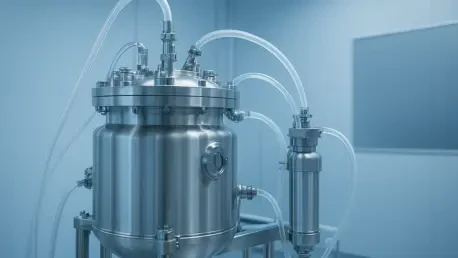

Starting with downstream process connectivity allows manufacturers to resolve purification bottlenecks without needing to alter fundamental process chemistry or regulatory filings. In the current production landscape of 2026, the biopharmaceutical sector is undergoing a necessary transformation as companies move away from the rigid ideals of fully continuous manufacturing. While the vision of a constant, uninterrupted stream of product was once a long-standing goal, the reality of high capital costs and complex regulatory re-validations has slowed its adoption across the industry. Pharmaceutical leaders like AstraZeneca are instead championing a move toward integrated dynamic bioprocessing, a model that focuses on the practical benefits of linking specific unit operations. This approach recognizes that biological processes are inherently variable, with product quality and titers changing naturally throughout a standard cycle. By prioritizing connectivity over continuity, manufacturers can implement flexible systems that are easier to validate and more responsive to the nuances of modern production.
Redefining Operational Efficiency Through Connectivity
Prioritizing Practical Integration Over Theoretical Continuity
The transition toward integrated systems is largely driven by a desire to capture significant operational value without the risk of overhauling entire facilities. Industry data suggests that roughly 80% of the efficiency gains in modern bioprocessing come from automating routine logistical tasks. These tasks, often described as boring yet essential, include the management of buffer concentrates and the automation of cleaning cycles. By linking these processes, manufacturers can reduce downtime and minimize the risk of human error in high-stakes environments.
Furthermore, dynamic bioprocessing allows for a more nuanced management of resources, as the system can adjust to fluctuations in titer levels in real-time. This level of responsiveness ensures that the downstream purification train is never overwhelmed by high-yield batches, maintaining a steady and predictable output. Such connectivity provides the backbone for a more resilient and scalable manufacturing infrastructure. This shift highlights a broader trend where the industry prioritizes efficiency gains that can be achieved without fundamentally changing the underlying biological process.
Navigating Regulatory Frameworks and Infrastructure Inertia
Regulatory hurdles and the massive scale of existing investments have played a significant role in shaping the industry’s cautious approach to new technologies. Many global organizations currently maintain a vast network of stainless-steel batch facilities that represent billions of dollars in sunk costs. Transitioning these sites to fully continuous systems would require not only immense capital but also a series of complex regulatory comparability protocols that can delay market supply. While guidelines like ICH Q13 established a framework for continuous production, financial incentives have not always aligned.
Consequently, the move toward integrated downstream connectivity is seen as a more viable path, as it often requires only a 30-day notice to regulatory bodies. This allows companies to resolve throughput issues and enhance purification efficiency without the need for a total process redesign. This pragmatic strategy enables a faster modernization of the global supply chain while maintaining strict compliance. By navigating these regulatory nuances strategically, organizations can enhance their competitive edge while maintaining the high standards of quality and safety that the public expects.
Strategic Implementation and Future Infrastructure
Scaling Capacity with Flexible Facility Designs
To support this technological evolution, industry leaders are committing significant capital to expand internal manufacturing capacities. A prominent example is the ongoing $50 billion investment into the United States manufacturing sector, which is scheduled to continue through 2030. A key component of this expansion is the development of advanced facilities, such as the clinical site in Gaithersburg, Maryland. This plant is designed to run batch and continuous processes side-by-side, allowing teams to optimize workflows for different candidates.
Such dual-capability facilities are essential for addressing current capacity constraints, where internal volumes are often at their limit and substantial production must be outsourced. By bringing more of this work in-house and utilizing hybrid manufacturing models, companies can achieve greater control over their product quality and delivery timelines. These investments reflect a long-term commitment to creating an agile and responsive biopharmaceutical manufacturing network. Building flexible facilities is no longer a luxury but a strategic necessity for remaining competitive in an evolving market.
Pathways Toward Hybrid Implementation and Success
The most successful strategies for modernizing bioprocessing involved a phased implementation that started with the most restrictive bottlenecks. Manufacturers identified that focusing on downstream connectivity allowed for immediate improvements in throughput while avoiding the complexities of upstream changes. While shifting from fed-batch to perfusion offers a five-fold productivity increase, it was found that the regulatory and technical barriers were often too high for initial projects. Instead, utilizing flexible facility designs provided a more sustainable path forward.
These designs supported both traditional and modern systems, ensuring that future facilities remained adaptable to new developments. In conclusion, the industry moved toward a consensus where every new plant included the inherent capability for connected downstream processing. This strategic shift ensured that organizations remained competitive and capable of delivering vital medicines to patients around the world with greater speed and reliability. The integration of real-time monitoring and adaptive control systems provided the necessary resilience to navigate the complexities of modern drug production.