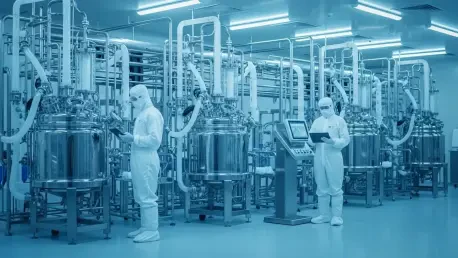

Operating a modern biopharmaceutical facility in the Asia-Pacific region feels less like solving a static puzzle and more like managing a pressurized hydraulic system where fixing a leak in one valve inevitably increases the strain on the next. Engineers and plant managers across the region are increasingly finding that the optimization of a single unit operation, such as increasing upstream titers, merely relocates the bottleneck to the downstream purification or formulation stages. This fluid nature of manufacturing constraints requires a comprehensive, holistic view of the entire facility footprint. In the high-stakes environment of 2026, where speed to market is a primary competitive advantage, improvements in protein concentration must be carefully balanced against the physical and economic capacity of secondary filters, buffer preparation areas, and even the final quality control lab. The complexity of these interdependencies means that a localized success in one department often creates a crisis in another, forcing a move toward integrated process control and data-driven scheduling.
The regional landscape faces distinct hurdles because a massive portion of its manufacturing capacity is dedicated to contract development and manufacturing organizations. These operators are frequently tasked with executing processes that they did not design, making it exceptionally difficult to implement efficiency-driven changes that would necessitate updating a client’s original regulatory filings. Furthermore, the economic reality in many APAC markets often favors clever process redesign and strict scheduling discipline over massive capital investments in high-end automation or robotics. When labor costs remain relatively competitive, the payback period for expensive, fully autonomous robotic systems can stretch beyond the life cycle of the drug itself, leading many facilities to seek middle-ground solutions that combine human oversight with targeted technical interventions. Consequently, the focus remains on identifying the most restrictive points in the production line and applying specific engineering solutions that offer the highest return on investment without triggering a global regulatory overhaul.
Phase 1: Accelerating Growth in the Seed Train
The expansion of cell cultures from a tiny, frozen vial to a production-scale volume of several thousand liters is a process that traditionally consumes nearly a full month of valuable facility time. During this intensive three-week seed train period, a plant is forced to dedicate significant labor, energy, and sterile suite space to a culture that is not yet yielding any final medicinal product. For facilities that only run a limited number of batches annually, this inherent lag represents a significant loss of operational availability and creates a dangerously long window of risk for potential microbial contamination. Every additional day that a culture spends in the expansion phase is a day that the primary bioreactor sits idle, essentially capping the total annual output of the facility regardless of how efficient the later stages might be. This temporal bottleneck has become a primary target for engineering teams looking to maximize the utilization of their existing cleanroom assets without building entirely new wings.
To effectively mitigate this downtime, many regional plants are shifting toward the adoption of N-1 perfusion, a sophisticated technique that utilizes cell retention devices to grow cultures to far higher densities before they ever enter the final production bioreactor. By inoculating the final stage at a density that was once considered unattainable, manufacturers can shave nearly a week off the overall production timeline, allowing for more batches to be processed within the same calendar year. While this method significantly improves throughput, it introduces a new set of technical challenges, most notably the risk of filter fouling in the cell retention system and a drastic increase in the consumption of specialized growth media. The cost of these nutrient-rich fluids can quickly erode the financial gains of the shortened timeline, requiring a delicate balance between the speed of growth and the economic reality of raw material expenses. Nevertheless, the ability to increase suite turnover remains a powerful incentive for facilities operating in high-demand therapeutic areas.
The Invisible Variable: Raw Material Control
Subtle variations in complex raw materials, particularly the nutrient-rich additives and chemically defined media used in cell culture, can lead to unpredictable growth stalls that are only discovered deep into the manufacturing process. Even when materials come with standard supplier certificates of analysis, these documents often fail to detect the minor biological or chemical differences that can alter a drug’s molecular structure or reduce final quality. In many cases, a manufacturer might not realize that a specific lot of media is suboptimal until a week after it has been introduced into a multi-million-dollar bioreactor run. At that point, the batch may already be trending toward failure, leading to a massive loss of both product and time. This lack of transparency in the raw material supply chain has forced many APAC facilities to move away from a “trust but verify” model toward a much more rigorous internal testing protocol that acts as a first line of defense.
To combat this unpredictability, manufacturers are increasingly installing micro-scale screening systems that allow them to test incoming material lots against established performance standards before they are cleared for use in the main suite. This proactive screening helps stabilize production yields and ensures that only the highest-quality inputs enter the sterile environment, but it does come with a significant price tag in terms of equipment and specialized analytical staff. Furthermore, adding this layer of internal validation necessarily extends the timeline for material release, forcing plants to maintain larger inventories of raw materials to avoid shortages. Despite these costs, the investment is often viewed as a form of insurance against the catastrophic expense of a failed production batch. By mastering the science of raw material variability, plants are able to create a more resilient manufacturing process that can withstand the global fluctuations in supply chain quality that have become common in the current industrial landscape.
Engineering Balance: Gas Exchange and Carbon Levels
As bioprocesses continue to intensify and cell densities reach new record highs, single-use bioreactors often struggle to maintain the efficient gas exchange required to keep the culture healthy compared to traditional stainless-steel tanks. High-density cultures generate a significant amount of dissolved carbon dioxide as a byproduct of metabolism, which can quickly reach levels that inhibit growth or alter the glycosylation patterns of the protein being produced. To neutralize this buildup, engineers typically add a base solution to the culture, but this intervention creates a secondary problem by increasing the salt concentration, or osmolality, of the fluid. If the osmolality rises too high, it becomes toxic to the cells, effectively killing the very organisms that are supposed to be producing the medicine. Managing this delicate balance between oxygen delivery, carbon dioxide removal, and chemical stability has become one of the most complex tasks for upstream engineering teams.
Technicians are currently countering these challenges by implementing dual sparger systems that effectively decouple the process of oxygen delivery from the process of carbon dioxide stripping. By using specialized large-bubble spargers or intensified air sweeps across the top of the tank, they can remove excess waste gas without needing to add excessive amounts of neutralizing base. However, this aggressive approach to gas removal can lead to the formation of thick foam on the surface of the culture, which can trap cells and interfere with sensors. To manage the foam, operators must use chemical antifoam agents, but these substances can eventually coat the surfaces of downstream filters and reduce their efficiency. This creates a classic example of a “cascading bottleneck,” where an upstream solution for gas management creates a downstream problem for filtration. Successful plants are those that have developed precise dosing strategies for these additives, ensuring that the culture remains stable without compromising the performance of the subsequent purification steps.
Physical Constraints: The Harvest Clarification Crisis
Increased upstream productivity has created a secondary crisis in the harvest stage by generating significantly higher volumes of cellular debris and metabolic waste that must be cleared from the product stream. This massive load of solids can quickly overwhelm traditional depth filtration systems, leading to frequent filter changes and making clarification one of the most expensive and time-consuming parts of the process. In many existing facilities, simply adding more filter housings is not a viable option because the physical floor space within the cleanroom is already maximized. This has led to a situation where the upstream success of high-titer processes is being held back by the physical limitations of the primary recovery equipment. When a filtration step that used to take four hours suddenly takes twelve, it disrupts the entire schedule of the facility and creates a backlog that can stall the next batch from entering the suite.
To resolve this bottleneck, many APAC facilities are turning to technologies like single-use centrifugation and chemical flocculation to manage the high solids load more efficiently. Flocculation involves adding specific chemicals to the fluid that cause small pieces of cellular debris to clump together into larger particles, which are then much easier to remove using a centrifuge or a much smaller number of filters. While these technologies allow for the processing of much larger volumes within a compact footprint, they require extensive validation to prove to regulatory authorities that the flocculating agents are entirely removed before the drug is packaged. The equipment costs for single-use centrifuges are also quite high, requiring a significant capital outlay that many contract manufacturers must weigh against the potential for increased throughput. Facilities that have successfully integrated these methods find that they can handle almost any upstream titer, effectively “future-proofing” their harvest suites against further increases in cell density.
Financial Realities: The Economics of Protein A
Protein A resin has long been considered the industry gold standard for the initial capture of monoclonal antibodies, but its extremely high price creates a persistent financial ceiling for many manufacturing operations. For high-yield batches, the sheer volume of resin required can cost millions of dollars, leading many facilities to reuse the same resin column for dozens or even hundreds of cycles to amortize the investment. However, each cycle of reuse increases the risk of cleaning failures, resin degradation, and potential carryover between different product batches. In a multi-product facility, the high cost of this material makes it difficult to justify dedicating specific resins to a single client, yet the regulatory risks of shared resins are a constant concern for quality assurance departments. This financial and regulatory tension makes the initial capture step one of the most scrutinized parts of the entire downstream process.
In response to these cost pressures, some of the more advanced plants in the region are migrating toward continuous chromatography systems and the use of newer, higher-capacity resins. Continuous systems allow for a smaller volume of resin to be used more intensively, effectively doing the work of a much larger column by cycling the material constantly during the production run. While this transition can significantly reduce resin waste and improve overall throughput, it complicates the regulatory definition of a “batch” and requires far more sophisticated control software to manage the complex switching of valves and pumps. Additionally, the development team must perform extensive lifetime studies to prove that the resin remains effective over hundreds of cycles under these high-intensity conditions. The burden of this validation often falls on the quality and development teams, who must document every aspect of resin performance to satisfy international health authorities while simultaneously trying to lower the cost of goods.
Process Flow: Shortening Viral Inactivation Hold Times
Viral inactivation is a non-negotiable safety step that typically involves holding the drug product at a low pH level for a specific period to ensure that any potential contaminants are neutralized. In many traditional manufacturing plants, this step creates a major operational bottleneck because it requires a large, dedicated holding vessel and a significant amount of time for filling, mixing, and emptying. The availability of these large tanks often dictates the entire production schedule for the downstream suite, as no other product can move forward until the inactivation hold is complete. Because this is a time-dependent process, there is very little room for error; if a pump fails or a sensor drifts during the hold, the entire batch could be put at risk. This rigid requirement has led many facility designers to look for ways to turn this batch-based operation into a more fluid, continuous process.
The implementation of in-line viral inactivation using tubular reactors offers a promising solution to this problem by allowing the product to be inactivated as it flows between different processing stages. By precisely controlling the flow rate and the length of the tubing, engineers can ensure that every milliliter of the product spends the exact required amount of time at the necessary pH level without ever needing to stop in a large hold tank. This approach effectively eliminates a major piece of stationary equipment and significantly speeds up the transition between the initial capture and the subsequent purification steps. The primary challenge with this method lies in the complex statistical validation required to prove that the flow remains consistent and that no “short-circuiting” occurs within the reactor. Regulators are more accustomed to the simplicity of a timed tank hold, so manufacturers must provide robust data to demonstrate that this continuous method is just as safe and reliable as the traditional batch approach.
Formulation Challenges: High-Viscosity Drug Delivery
The trend toward subcutaneous treatments, which patients can often administer themselves at home, requires drugs to be formulated at extremely high protein concentrations to fit into a small syringe. This high concentration results in fluids that are thick and viscous, making them exceptionally difficult to process using the standard pumps and filters found in most manufacturing suites. As the viscosity increases, the pressure required to move the fluid through final sterile filters rises exponentially, which can generate heat and mechanical stress that might cause the protein to clump or denature. This creates a significant bottleneck at the very end of the production line, where a batch that has taken weeks to produce could be ruined in the final minutes of filtration. Managing these “syrupy” formulations requires a fundamental shift in how engineers approach the final steps of drug concentration and buffer exchange.
To handle these challenging batches, facilities are increasingly employing techniques such as single-pass tangential flow filtration and the use of specific viscosity-reducing additives like certain amino acids or salts. These methods allow for higher concentrations to be reached without the excessive pressure build-up associated with traditional recirculating filtration systems. However, introducing new chemical additives into a drug formulation is considered a major regulatory event that requires a new filing with global health authorities, which can take years to approve. Manufacturers must therefore carefully weigh the immediate efficiency gains of these new processing methods against the long-term time and cost required to gain regulatory acceptance for a modified drug recipe. For many, the choice is to stick with slower, more traditional methods until the competitive pressure of high-concentration delivery formats makes the change unavoidable.
Facility Footprint: Improving Efficiency in Buffer Management
In the world of intensified bioprocessing, the demand for buffers—the various liquids used to stabilize, wash, and elute the product—can become truly overwhelming. Traditional buffer preparation involves mixing large volumes of salts and water in massive storage tanks, which can take up nearly half of the available floor space in a typical manufacturing facility. This requirement for massive storage capacity limits the room available for actual production equipment and forces the facility into a very large and expensive architectural footprint. Furthermore, the labor required to manually weigh, mix, and test hundreds of different buffer batches each month is a significant operational burden that increases the risk of human error. As plants look to increase their output without expanding their physical walls, the way buffers are managed has become a primary target for modernization.
The shift toward in-line dilution and automated buffer conditioning allows plants to mix concentrated chemical stocks with purified water in real-time as they are needed by the chromatography or filtration systems. This modern approach can reduce the required tank volume and the associated floor space by up to 90%, allowing for much more compact and efficient facility designs. Instead of storing 10,000 liters of a specific wash buffer, a plant might only need to store 500 liters of a 20x concentrate, which is then diluted on the fly by a precision pumping system. The trade-off for this space saving is a high reliance on real-time sensors and complex control loops; if a conductivity or pH sensor fails during the dilution process, the entire production line could be forced to a halt to prevent the wrong buffer from reaching the product. This makes the maintenance and calibration of these sensors a critical task for the engineering team, shifting the bottleneck from physical storage to technical reliability.
Final Stages: Navigating Regulatory Standards in Fill-Finish
The final stage of filling a drug into its commercial vials or syringes has become a significant bottleneck due to the implementation of updated global sterile manufacturing standards, such as the revised Annex 1 guidelines. These new regulations place a heavy emphasis on the use of isolators—fully enclosed sterile barriers that separate the product from human operators—to minimize the risk of contamination. While isolators significantly improve patient safety, they require long and complex decontamination cycles using hydrogen peroxide vapor between every production run. These cleaning periods now account for a substantial portion of the total production timeline, effectively reducing the annual capacity of the filling line. For many facilities, the time spent “cleaning and preparing” has started to eclipse the time spent actually “filling and finishing,” creating a major capacity constraint at the very end of the supply chain.
To maintain their throughput under these strict new rules, many regional manufacturers are adopting ready-to-use components and restricting the variety of vial sizes they handle to minimize the time needed for equipment changeovers. By using pre-sterilized glass and plastic components, plants can bypass several washing and sterilization steps, allowing the isolators to stay in production for longer periods. However, this “format locking” strategy can limit the flexibility of a contract manufacturer, as they may no longer be able to accommodate clients who require unique or non-standard packaging. By specializing in a few high-volume formats, a plant can maximize its efficiency and regulatory compliance, but it risks losing the ability to take on smaller clinical-stage jobs or specialized projects. This tension between standardization for the sake of speed and flexibility for the sake of market reach is a constant strategic challenge for facility directors across the region.
Analytical Speed: Shortening the Quality Release Timeline
A batch of medicine is not truly finished until it has been cleared by the quality control laboratory, a process that can often take longer than the actual manufacturing of the drug itself. Traditional safety tests for sterility or the presence of mycoplasma can take up to four weeks to complete, during which time the finished product must sit idle in a climate-controlled warehouse. This long delay ties up a massive amount of capital and prevents life-saving medications from reaching the market as quickly as they could. In an era where supply chains are increasingly fragile, the ability to release a product in days rather than months is a major strategic advantage. This has led to a massive push to modernize the quality lab, which has historically been one of the slowest-moving parts of the biopharmaceutical organization.
The implementation of rapid microbiological methods and fully integrated electronic batch records is finally allowing facilities to slash these wait times from several weeks to just a few days. By using DNA-based testing and automated imaging systems, labs can detect contaminants much faster than the old method of waiting for bacteria to grow in a petri dish. However, because global regulatory landscapes vary significantly, many plants find themselves in a position where they must continue to run the old, slow tests in parallel with the new rapid methods to satisfy all international markets. This redundancy increases operating costs in the short term, but it is a necessary step for facilities that export their products to multiple countries with different regulatory speeds. Over time, as these rapid methods become the global standard, the physical bottleneck of the “quarantine warehouse” is expected to shrink, allowing for a much more responsive and agile pharmaceutical supply chain.
Operational Excellence: The Strategy of Integrated Scheduling
The experience of leading manufacturers throughout the region proved that the real barrier to optimizing a bioprocessing plant was often the time required for regulatory validation rather than the actual cost of the new hardware. Many facilities found that improvements at the organizational level, such as the adoption of electronic record-keeping or more disciplined buffer management, were more practical than changing the core manufacturing process. These non-invasive fixes allowed the plants to increase their total capacity without forcing their clients to reopen complex and expensive regulatory filings with global health authorities. By focusing on the “soft” infrastructure of the facility, engineers were able to smooth out the flow of production and reduce the time lost during transitions between different product batches.
Success in the region eventually depended on a plant’s ability to balance data-driven engineering with high levels of organizational discipline. The most efficient operators were those who focused on reducing changeover times and perfecting the sequence of products on the line to minimize the impact of the most restrictive bottlenecks. They moved away from viewing each piece of equipment in isolation and instead began to manage the facility as a single, integrated organism where every pump, filter, and sensor played a role in the total throughput. By anticipating how a fix in the upstream suite would inevitably challenge the downstream purification team, these facilities maintained a steady and predictable flow of production. This holistic approach allowed them to overcome the ever-shifting nature of bioprocessing constraints and ensured that they remained competitive in an increasingly demanding global market.