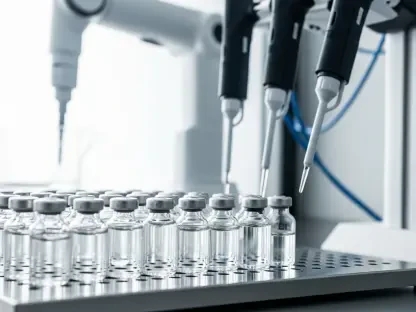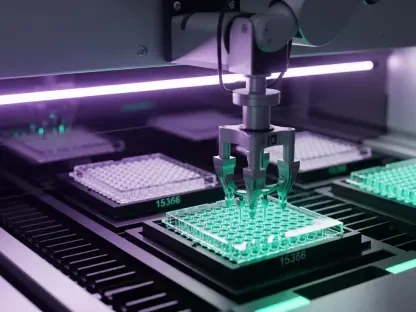

The biopharmaceutical manufacturing sector is currently grappling with a legacy of outdated, fragmented quality control methods that create significant production delays and impose a staggering financial burden on the industry. These traditional, off-line testing protocols, which often rely on manual data entry and disconnected systems, are not only inefficient but also represent a major bottleneck in delivering critical medicines to patients. This systemic inefficiency accounts for an estimated $6 to $8 billion in spending within a total addressable Process Analytical Technologies (PAT) market projected to be approximately $13 billion. As the demand for complex biologics like mRNA vaccines continues to grow, the pressure to abandon these cumbersome and costly processes in favor of a more streamlined, integrated, and intelligent approach has reached a critical tipping point, signaling an industry-wide readiness for a profound technological transformation.
A Unified Vision for Process Analytics
In response to these pervasive industry challenges, Recipharm Advanced Bio is championing a strategic vision to fundamentally overhaul biopharmaceutical production through a unified, integrated approach to Process Analytical Technologies. Spearheaded by Chief Strategy Officer Aaron Cowley, this initiative aims to create a “unified field theory” for PAT, leveraging integrated, real-time analytics to replace the slow, siloed quality control methods of the past. The core of this solution lies in its ability to streamline the entire production workflow, from development to release. The company has projected that this modernized framework will lead to a substantial reduction in process development, manufacturing, and product release timelines—initially by up to 50 percent, with a near-future goal of achieving a 70 percent reduction for certain biological products. This paradigm shift not only accelerates the delivery of new therapies but also significantly reduces the reliance on a large number of expert personnel traditionally required for extensive testing and validation, optimizing resource allocation and enhancing overall operational efficiency.
The Convergence of Key Industry Stakeholders
Recipharm’s ambitious modernization effort is not proceeding in isolation but is instead bolstered by a powerful consensus among key regulatory, academic, and philanthropic leaders. This initiative aligns perfectly with long-standing goals of the U.S. Food and Drug Administration (FDA), which first launched a major push to modernize pharmaceutical production back in 2002. This regulatory momentum has recently intensified, highlighted by the FDA’s $82 million investment to accelerate the development of a continuous manufacturing process for mRNA products, a move designed to strengthen pandemic preparedness. Recipharm is strategically positioned at the heart of this transformation, with its subsidiary, Arranta Bio, directly participating in the FDA-funded project through a contract with MIT. This collaboration is further reinforced by financial support from the Gates Foundation, which views the technology as a critical tool for establishing uniform, high-quality healthcare standards on a global scale. This convergence of support from such influential bodies provides immense credibility and validates Recipharm’s vision for a standardized, globally deployed PAT system.
Establishing a New Industry Standard
The strategic alignment with regulatory and institutional partners has successfully established a foundational proof of concept that positioned Recipharm at the epicenter of a major industry evolution. This collaboration, which built upon a successful pilot program involving MIT, the FDA, and Novartis, provided the company with unparalleled credibility and a clear mandate to advance its technological platform. By embedding its subsidiary, Arranta Bio, within a critical FDA-funded initiative, the company demonstrated the viability and importance of its integrated PAT system in a real-world, high-stakes context. In a move to capitalize on this momentum and further its vision, Recipharm initiated the formation of a new corporate structure designed to attract the necessary investment capital for scaling its operations. This strategic decision marked the culmination of its efforts, solidifying a clear path toward creating a new, globally accepted standard for biomanufacturing that promised greater efficiency, quality, and accessibility for critical medicines worldwide.