
The body’s intricate system for manufacturing blood cells is a marvel of biological engineering, but when this internal factory fails, the consequences are catastrophic, leaving patients defenseless against infection and uncontrolled bleeding. For individuals diagnosed with severe aplastic anemia (SAA), this failure has historically initiated a desperate search for a matched stem cell donor, a journey fraught with uncertainty and delay. However, the landmark U.S. Food and Drug Administration (FDA) approval of omidubicel-onlv, marketed as Omisirge, marks a profound departure from this reliance on biological lottery. It introduces an engineered cellular therapy that not only addresses a critical unmet medical need but also fundamentally redefines the standards for the development, manufacturing, and regulation of advanced treatments, signaling a new era for the entire biopharmaceutical sector.
When the Body’s Blood Cell Factory Fails The Urgent Need for a New Blueprint
Severe aplastic anemia is a rare and devastating bone marrow failure disorder where the body ceases to produce a sufficient number of new blood cells. This deficiency encompasses red blood cells, which carry oxygen; white blood cells, which fight infection; and platelets, which enable blood clotting. Patients face a constant threat of severe infections, fatigue, and life-threatening hemorrhages. The condition transforms the body’s own protective mechanisms into vulnerabilities, making everyday life a high-risk proposition and demanding urgent, effective intervention to restore hematopoietic function.
Historically, the therapeutic pathways for SAA have been limited and fraught with challenges. The gold standard, a stem cell transplant from a matched sibling or unrelated donor, offers the potential for a cure but is contingent on finding a suitable immunological match, a formidable obstacle for many. For those without a donor, immunosuppressive therapy is an alternative, but it often yields incomplete responses and carries a risk of relapse or evolution to other blood disorders. These limitations have long highlighted a significant gap in care, leaving a vulnerable patient population in dire need of more reliable and accessible options.
Umbilical cord blood has emerged over the years as a valuable source of hematopoietic stem cells, particularly for patients lacking a matched adult donor. Its use, however, has been tempered by significant drawbacks. The relatively low cell dose in a single cord blood unit often leads to delayed engraftment—the time it takes for the transplanted cells to begin producing new blood cells. This extended period of vulnerability dramatically increases the risk of severe, often fatal, infections, creating a difficult trade-off for clinicians and patients alike and underscoring the necessity for an improved cellular product.
From Raw Material to Engineered Solution The Science Behind Omisirge
Omisirge (omidubicel-onlv) enters this landscape as a transformative solution and the first FDA-approved, chemically modified cell therapy for SAA. Cleared on December 8, 2025, for patients aged six and older without a suitable matched donor, this therapy builds upon its initial 2023 approval for blood cancers. Developed by Gamida Cell, it directly confronts the historical limitations of conventional cord blood transplantation by enhancing the raw biological material to create a more potent and faster-acting therapeutic product.
The innovation behind Omisirge lies in its proprietary manufacturing process. Donated umbilical cord blood undergoes an ex-vivo enhancement with nicotinamide, a form of vitamin B3. This chemical modification is not merely a preparative step; it actively modulates the cells, preserving their stem-like qualities while promoting their rapid proliferation and improving their ability to migrate to the bone marrow and engraft. This controlled, purposeful manipulation fundamentally alters the cellular product, turning a limited resource into a standardized, high-performance therapy.
This sophisticated process establishes a new therapeutic category: “chemically modified hematopoietic stem cell products.” The distinction is critical, as it signifies a leap from minimally processed biologics to highly engineered cellular solutions. Unlike traditional cord blood units, which are largely used as they are collected, Omisirge is the result of a complex biopharmaceutical manufacturing process. This shift places greater emphasis on process control, product characterization, and consistency, setting a new precedent for how advanced cell therapies are developed and regulated.
A Pivotal Shift in Patient Outcomes and Manufacturing Priorities
The clinical efficacy of Omisirge was demonstrated in a single-arm study that underscored its potential to dramatically alter patient recovery trajectories. In the trial, 12 of the 14 SAA patients achieved sustained neutrophil engraftment. Critically, the median time to neutrophil recovery was just 11 days—a significant acceleration compared to the weeks often required with unprocessed cord blood. This rapid recovery shortens the high-risk period of neutropenia, potentially reducing the incidence of severe infections and the need for prolonged hospitalization.
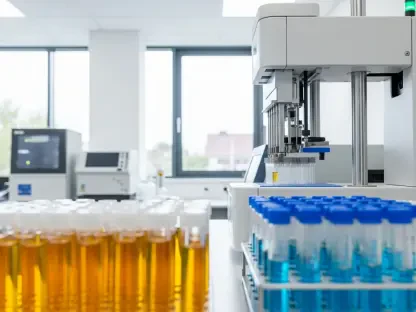
This clinical success sends ripples through the biopharmaceutical manufacturing industry. The approval of a chemically modified cell product necessitates an evolution in production infrastructure and philosophy. The focus must shift from simple cryopreservation and logistics to the establishment of robust, scalable, and compliant platforms capable of performing complex chemical modifications on living cells. This change requires significant investment in controlled environments, advanced analytical methods, and stringent quality control systems to ensure that each dose is safe, potent, and consistent.
While the benefits are clear, a comprehensive clinical picture includes the associated risks. The most common adverse events reported in the study included febrile neutropenia, various infections, hyperglycemia, and pneumonia. Notably, autoimmune cytopenias, a condition where the immune system attacks blood cells, occurred in a quarter of the patients. This balanced view highlights that while Omisirge represents a major advance, its administration requires careful patient monitoring and management of potential complications, a standard practice for all cellular transplantation procedures.
The Regulatory Verdict An FDA Endorsed Revolution
The FDA’s response to Omisirge has been unequivocally positive, with officials labeling the approval a “revolutionary” advance. This strong endorsement reflects the therapy’s capacity to fundamentally change the treatment approach for SAA. By providing a reliable, off-the-shelf option that promotes rapid hematopoietic recovery, Omisirge offers new hope to patients who previously faced a grim prognosis due to the lack of a suitable donor. The agency’s language signals that this is not an incremental improvement but a genuine breakthrough.
The therapy’s path to market was accelerated through the use of key regulatory mechanisms designed for critical unmet needs. Omidubicel-onlv received both Orphan Drug and Priority Review designations from the FDA. These designations are reserved for treatments for rare diseases and those that offer significant improvements over existing options. Their application in this case underscores the agency’s recognition of the severe, life-threatening nature of SAA and its commitment to expediting patient access to transformative medical innovations.
Across the biopharmaceutical industry, the consensus is that the approval of Omisirge is a watershed event. It moves the goalposts for the entire cell therapy sector, demonstrating the viability and clinical superiority of chemically engineered cellular products. This success establishes a higher bar for future therapies in development, pushing researchers and manufacturers to move beyond minimal manipulation and embrace more sophisticated engineering strategies to enhance therapeutic efficacy. The approval serves as both a proof-of-concept and a call to action for the next generation of cellular medicines.
Building the Future of Cell Therapy The New Operational Roadmap
The era of chemically modified cells necessitates a redefinition of current Good Manufacturing Practice (cGMP). The complexity of introducing a chemical agent like nicotinamide into the cell manufacturing process elevates the importance of controlled processing environments to prevent contamination and ensure batch-to-batch consistency. There is now a premium on closed-system manufacturing, which isolates the cellular product from the external environment, and advanced in-process analytics to monitor critical quality attributes in real-time, ensuring the final product meets stringent safety and potency specifications.
This new therapeutic paradigm will inevitably drive strategic investments in next-generation biomanufacturing technologies. Maintaining cell potency and viability throughout the additional chemical enhancement and culture steps is a significant challenge. To overcome it, the industry is moving toward greater automation to reduce human error, single-use processing technologies to enhance flexibility and reduce cross-contamination risk, and real-time release testing to accelerate the delivery of these critical therapies to patients. These technologies are no longer optional but essential for success in this evolving landscape.
The economic equation for advanced cellular treatments is also being reshaped. The accelerated patient recovery times demonstrated by Omisirge have significant financial implications. By reducing the duration of post-transplant hospitalization and the need for intensive supportive care, the therapy could substantially lower the overall cost of treatment and lessen the burden on healthcare resources. This potential for cost savings helps build a stronger value proposition for advanced therapies, reshaping the financial and reimbursement models that govern their access and adoption.
The approval of Omisirge did more than introduce a new therapeutic option; it validated a new philosophy of cell therapy. It confirmed that hematopoietic stem cells could be successfully engineered ex-vivo to produce a superior clinical outcome, marking a definitive transition from relying on donated biology to designing it. This achievement established a new regulatory and manufacturing blueprint, one that champions precision, control, and innovation. The legacy of this milestone was not just its impact on patients with severe aplastic anemia but its role in forcing the entire biopharmaceutical industry to adapt to a future where the most powerful medicines would be living, engineered cells.