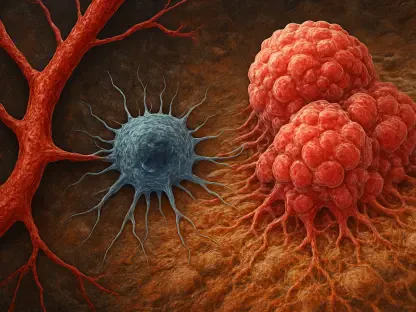

The clinical landscape for treating metastatic castration-resistant prostate cancer is undergoing a fundamental transformation as researchers pivot from conventional hormonal therapies toward high-precision immunotherapy. While androgen receptor pathway inhibitors have long served as the backbone of care, the emergence of bispecific antibodies represents a sophisticated shift in how the medical community approaches refractory disease. By engineering molecules that can simultaneously engage the immune system and target specific cancer proteins, developers are opening new doors for patients who have exhausted traditional options.
Central to this evolution is the identification of human kallikrein 2, or KLK2, as a highly specific biomarker and therapeutic target within prostate tissue. Unlike broader antigens, KLK2 offers a localized objective that allows for more aggressive treatment with potentially fewer systemic consequences. Major industry players like Johnson & Johnson are currently leveraging advanced T-cell engaging technologies to bridge the gap between laboratory innovation and bedside application, signaling a new era where solid tumors are treated with the same immunological rigor once reserved for hematologic malignancies.
Advancements in the Metastatic Castration-Resistant Prostate Cancer Landscape
Current treatment strategies for advanced prostate cancer are moving rapidly beyond the limitations of standard chemical castration and broad-spectrum chemotherapy. This transition is fueled by a growing understanding of how tumors evade the immune system, leading to a surge in therapies that physically link T cells to malignant cells. As genomic profiling becomes more routine, the industry is witnessing a decline in the dominance of one-size-fits-all inhibitors in favor of tailored biologics that can navigate the complex microenvironment of metastatic lesions.
Technological progress in antibody engineering has enabled the development of bispecific platforms that act as a functional bridge, bringing cytotoxic T cells into direct contact with the tumor. This mechanism of action is particularly significant for patients with castration-resistant profiles, where the cancer has adapted to survive in low-androgen environments. The industry’s focus on KLK2 illustrates a commitment to specificity, aiming to maximize antitumor pressure while minimizing the collateral damage typically associated with older generations of systemic therapy.
Analyzing the Clinical Impact and Market Trajectory of Pasritamig
Breakthrough Trends in Bispecific T-Cell Engagers and KLK2 Targeting
The emergence of pasritamig as a first-in-class bispecific T-cell engager highlights a significant trend in oncology where immune-redirection strategies are becoming the primary drivers of research and development. By targeting CD3 on the surface of T cells and binding to KLK2 on cancer cells, this therapy creates an artificial synapse that triggers a localized immune response. This targeted mechanism of action aligns with shifting clinician behaviors, as specialists increasingly seek therapies that offer a clear biological rationale for overcoming treatment resistance.
Market dynamics suggest that the success of such innovative biologics depends on their ability to integrate into existing treatment paradigms without causing excessive disruption. The focus on KLK2 is a strategic choice, as this protein is expressed almost exclusively in prostate cells, providing a narrow window of activity that reduces the risk of off-target effects. This specificity is a major selling point for healthcare providers who are weary of the broad toxicity profiles common in late-stage oncology interventions.
Evaluating Trial Performance and Projections for Pasritamig Adoption
Recent Phase 1b data involving pasritamig combined with docetaxel revealed impressive clinical activity, especially concerning reductions in prostate-specific antigen levels. In a cohort of fifty-one patients, nearly two-thirds achieved a PSA50 response, and a significant portion reached the more stringent PSA90 threshold. These performance indicators are particularly striking among taxane-naïve patients, suggesting that earlier intervention with bispecific antibodies could yield even more robust results as the drug moves through the developmental pipeline.
Projecting forward, the transition of pasritamig into Phase III clinical programs like KLK2-comPAS and KLK2-PASenger marks a critical milestone for market adoption. The data specifically highlighted exceptional efficacy in patients with bone-only disease, a group that often faces significant challenges with standard radiopharmaceuticals or chemotherapy. As these large-scale trials progress, the potential for pasritamig to become a foundational component of mCRPC treatment continues to grow, attracting substantial interest from the global investment community.
Navigating the Obstacles in Developing Next-Generation Immunotherapies
One of the most persistent hurdles in the development of T-cell engaging treatments has been the management of cytokine release syndrome. This systemic inflammatory response can be life-threatening and has historically limited the utility of similar drugs in solid tumor settings. However, the latest trial data for pasritamig indicated a remarkably manageable safety profile, with zero reported cases of CRS. This absence of severe immune-related toxicity suggests that the dosing and administration protocols have been optimized to allow for safe delivery even when combined with traditional chemotherapy.
Furthermore, drug developers must balance the efficacy of combination therapies with the inherent toxicities of agents like docetaxel. While some adverse events were noted in recent trials, such as fatigue and peripheral neuropathy, they were largely attributed to the chemotherapy component rather than the bispecific antibody itself. Managing these interactions is vital for maintaining patient eligibility and ensuring that the sequencing of advanced treatments remains logical and beneficial for long-term survival.
The Regulatory Environment and Accelerated Approval Pathways
The role of regulatory agencies like the FDA has been pivotal in expediting the availability of breakthrough oncology treatments through programs such as Fast Track designation. Such status allows for more frequent interactions between drug developers and regulators, ensuring that safety and compliance standards are met without unnecessary delays. Pasritamig has already benefited from these frameworks, which emphasize the urgent need for new solutions in the metastatic prostate cancer space where mortality rates remain a concern.
International regulatory cooperation is also playing an increasingly important role, as evidenced by the Breakthrough Therapy status granted to pasritamig in China. This global alignment suggests that the therapy’s potential is recognized across different healthcare systems, potentially streamlining its introduction to international markets. As global oncology practices converge around standardized bispecific platforms, the influence of these regulatory pathways will likely dictate the speed at which innovative biologics reach the broader patient population.
The Future of Prostate Cancer Treatment and Innovative Care Models
As the medical community looks toward the routine integration of bispecific antibodies, the potential for trials like KLK2-comPAS to disrupt current standards of care becomes increasingly evident. Future care models will likely involve the subcutaneous or intravenous administration of these biologics in outpatient settings, supported by emerging technologies that monitor real-time patient responses. This shift toward immune-mediated oncology solutions reflects a broader trend in healthcare where biological precision replaces the blunt force of traditional cytotoxic drugs.
Economic factors and the ongoing evolution of global healthcare innovation will continue to shape the commercialization of specialized biologics. While the cost of developing such advanced therapies is high, the potential for improved outcomes and reduced long-term hospitalization costs offers a compelling value proposition. As the industry matures, the focus will likely expand toward identifying the optimal timing for immunotherapy, potentially moving it into earlier stages of the disease to prevent the onset of metastatic resistance altogether.
Summarizing Pasritamig’s Potential to Redefine Prostate Cancer Outcomes
The clinical evidence gathered so far suggested that pasritamig effectively bridged the gap between potent antitumor activity and a tolerable safety profile. Stakeholders looked toward the expansion of KLK2-targeted research as a primary area for future investment, recognizing the therapy’s ability to engage the immune system against a highly specific target. The absence of cytokine release syndrome in early trials established a new benchmark for safety in the bispecific category, encouraging further exploration of combination regimens. Moving forward, the industry prioritized the refinement of patient selection criteria to ensure that those most likely to benefit, such as those with bone-predominant disease, received early access. Analysts recommended that future efforts focus on the logistical integration of these biologics into community oncology clinics to maximize their global impact. Ultimately, the successful development of pasritamig provided a clear roadmap for how targeted immune redirection could finally overcome the most stubborn obstacles in metastatic prostate cancer care.