
A multi-billion dollar investment in a single location can signal many things, but when a global healthcare leader repeatedly commits to the same state, it transforms from a business decision into a powerful statement about the future of American manufacturing. The recent groundbreaking for Johnson & Johnson’s new $2 billion biologics facility in Wilson, North Carolina, represents the latest chapter in a strategic partnership that is reshaping the nation’s pharmaceutical landscape and solidifying the state’s role as a preeminent hub for life sciences innovation.
This move is far more than a simple expansion; it is a calculated element in a broader national strategy to onshore critical manufacturing capabilities. The central question that emerges is not just about the new jobs or the advanced medicines that will be produced, but how one state has become the indispensable cornerstone of a global giant’s domestic resurgence. The answer lies in a confluence of corporate strategy, national policy, and a meticulously cultivated local ecosystem prepared to meet the demands of a high-tech industry.
More Than Mortar and Steel Why This Bet on a Single State Matters
The Wilson facility should not be viewed in isolation. It is a critical component of Johnson & Johnson’s overarching commitment to bolster its American manufacturing footprint, a strategy backed by a staggering $55 billion investment plan slated to run from 2025 through 2029. This substantial financial allocation is directed toward enhancing manufacturing capacity, pioneering new research and development, and upgrading technological infrastructure across the United States.
This domestic investment push aligns closely with national policy objectives aimed at strengthening the U.S. pharmaceutical supply chain and ensuring medication affordability for Americans. The timing of these investments follows a significant agreement between the corporation and the Trump administration, which focused on lowering healthcare costs and securing access to essential medicines. Consequently, the decision to build in North Carolina is framed within a much larger corporate initiative focused on reshoring vital operations, reducing reliance on foreign supply chains, and reinforcing the nation’s health security through domestic production.
A Pattern of Escalating Investment in North Carolina
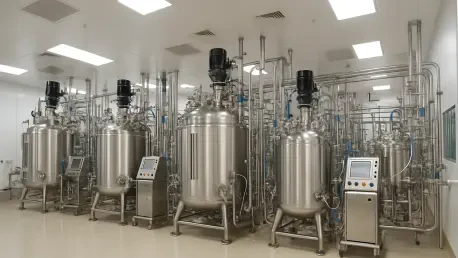
Johnson & Johnson’s latest project in Wilson extends a clear and consistent pattern of high-value investments in the Tar Heel State. The new $2 billion biologics plant, which is already under construction, is designed to produce advanced medicines for complex and critical therapeutic areas, including oncology and neurological diseases. The project is projected to create 500 new permanent skilled positions, with an additional 5,000 temporary manufacturing and construction jobs generated during its development phase, delivering a profound economic impact to the region.
This facility joins a growing list of billion-dollar commitments. In October 2024, the company announced a different $2 billion pharmaceutical manufacturing campus, also in Wilson, set to create over 420 jobs and fortify its global supply network. This was followed in August 2025 by the securing of another $2 billion manufacturing site in Holly Springs. This repeated selection of North Carolina for multibillion-dollar projects signals a decisive corporate consensus on the state’s strategic value, highlighting its capacity to support complex, large-scale operations for the long term.
The Official View Why North Carolina Attracts Billions
State leaders attribute this sustained interest to a combination of a world-class business climate and a deeply skilled workforce. Governor Josh Stein acknowledged the investment as a testament to Johnson & Johnson’s confidence in the state’s ability to support high-quality job growth, reinforcing its reputation as an attractive destination for industry leaders. This sentiment underscores the state’s proactive approach to creating an environment where advanced manufacturing can flourish.
This confidence is built upon a solid foundation of human capital. North Carolina Commerce Secretary Machelle Baker Sanders emphasized that the state is home to one of the largest biologics manufacturing workforces in the nation, a critical asset for any company in the life sciences sector. The existing ecosystem, comprising over 800 companies and more than 75,000 employees, provides a ready-made talent pool. Christopher Chung, CEO of the Economic Development Partnership of North Carolina (EDPNC), further noted that this investment serves as a powerful vote of confidence, cementing the state’s leadership position and highlighting Wilson County’s specific emergence as a vital manufacturing hub.
Deconstructing the Public Private Partnership Model
Securing an investment of this magnitude was not the result of a single entity’s efforts but the product of a sophisticated and wide-ranging public-private partnership. This collaborative model is the key facilitator, creating a supportive and stable business climate that innovators like Johnson & Johnson find essential for long-term success. The coordinated effort involved numerous state, regional, and local organizations working in synergy.
At the state level, the North Carolina General Assembly, the Department of Commerce, the Biotechnology Center, and the Community College System played crucial roles in developing the incentives and infrastructure needed to attract the project. Locally, the partnership extended to Wilson Community College, The BioPharma Crescent, Wilson County, and the City of Wilson, all of which contributed to creating a tailored environment ready to meet the company’s specific needs. This integrated approach, which aligns educational resources, economic development initiatives, and governmental support, stands as a replicable blueprint for how regions can successfully attract and sustain large-scale industrial innovation.
The decision by Johnson & Johnson to anchor another major facility in North Carolina was a landmark event, a culmination of strategic corporate planning and deliberate state-level cultivation of a premier life sciences ecosystem. The intricate collaboration between public and private entities provided the fertile ground necessary for such a monumental investment to take root. Ultimately, the series of multi-billion dollar projects established a new benchmark for economic development and solidified a partnership that promised to yield benefits for the state, the company, and the nation’s health security for decades to come.