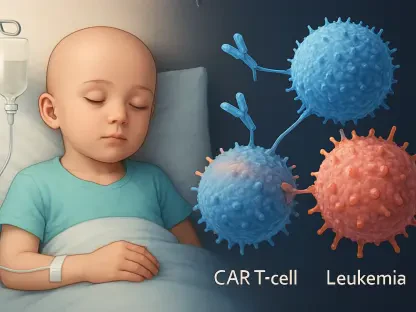

What if a single batch of cells could save thousands of lives without the wait and expense of custom-made treatments? This isn’t a distant dream but a tangible reality unfolding in the realm of allogeneic cell therapy, where “off-the-shelf” solutions derived from donor cells are poised to revolutionize medicine. At the heart of this seismic shift lies automation—a powerful force redefining how these therapies are produced, scaled, and delivered to patients in desperate need. The promise of accessible, life-changing treatments is no longer just a hope; it’s becoming a scalable truth, thanks to cutting-edge technology tackling age-old challenges in healthcare.
The significance of this transformation cannot be overstated. Allogeneic therapies bypass the logistical nightmares and high costs of autologous treatments, which rely on a patient’s own cells. Instead, they offer standardized products ready for immediate use, potentially slashing wait times for critically ill individuals. Automation is the linchpin making this scalability possible, ensuring consistency, reducing risks, and paving the way for therapies that can reach a global audience. This narrative dives deep into how automated systems are reshaping the landscape, spotlighting expert insights and real-world breakthroughs that signal a new era in medical innovation.
Unlocking a New Frontier: The Power of Automation
Automation isn’t merely a buzzword in the world of allogeneic cell therapy; it’s a catalyst for unprecedented progress. By streamlining complex manufacturing processes, automated systems are dismantling barriers that once made large-scale production a daunting prospect. Tasks that previously demanded painstaking manual oversight are now executed with precision by machines, ensuring that therapies derived from donor cells or induced pluripotent stem cells (iPSCs) meet rigorous standards every time.
Moreover, this technological leap addresses a pressing need for accessibility. Patients battling life-threatening conditions often lack the luxury of time, and automation slashes delays by enabling batches of cells to be produced efficiently for multiple recipients. The ripple effect is profound—hospitals can stockpile ready-to-use treatments, and healthcare systems can redirect resources toward broader patient care rather than bespoke manufacturing. It’s a shift that promises to democratize advanced medicine.
This isn’t just about efficiency; it’s about equity. As automation takes hold, the vision of delivering cutting-edge therapies to underserved populations moves closer to reality. The following sections unpack how this technology is tackling specific challenges in manufacturing while amplifying the potential of allogeneic approaches to transform lives on a global scale.
Allogeneic Therapies: Scaling Hope for Millions
Allogeneic cell therapies stand in stark contrast to their autologous counterparts by sourcing cells from healthy donors, creating a ready-made inventory that sidesteps the need for patient-specific production. This “off-the-shelf” model tackles some of the most persistent hurdles in healthcare, such as exorbitant costs and intricate supply chains. For individuals facing acute illnesses, the ability to access treatment without weeks of waiting could mean the difference between life and death.
Beyond immediacy, the scalability of allogeneic solutions offers a pathway to affordability. Producing a single batch for thousands of patients dilutes expenses significantly compared to crafting individualized doses. This approach also simplifies logistics, as therapies can be distributed like traditional pharmaceuticals rather than custom orders. The result is a framework where advanced care isn’t a privilege reserved for a few but a resource within reach for many.
However, realizing this potential demands more than innovative science—it requires manufacturing muscle. Automation emerges as the critical enabler, bridging the gap between groundbreaking research and practical deployment. By optimizing production, it ensures that the hope embedded in allogeneic therapies translates into tangible outcomes for patients worldwide.
Transforming Production: Automation’s Multifaceted Impact
The manufacturing of allogeneic cell therapies is a complex dance of precision and consistency, where even minor missteps can derail progress. Automation steps in as a choreographer, orchestrating processes to eliminate variability. Systems designed to handle intricate tasks, such as cell expansion and quality checks, reduce human error dramatically, ensuring each batch meets the exacting standards required for clinical use. Experts note that this reliability is non-negotiable when a single production run must serve a diverse patient pool.
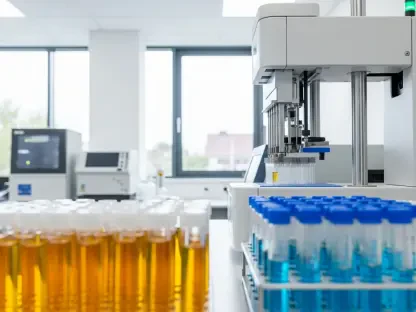
Scalability, a cornerstone of allogeneic therapy’s promise, also hinges on automated platforms. As demand surges from clinical trials to full commercialization, the ability to ramp up production without sacrificing quality becomes paramount. Integrated bioreactors and robotic systems streamline high-throughput operations, allowing manufacturers to meet market needs efficiently. This capability isn’t just a technical triumph; it’s a lifeline for expanding access to therapies that were once considered niche.
Risk mitigation further underscores automation’s value. Contamination, a perennial threat in cell therapy production, is curtailed through closed systems that limit human intervention. In-line analytics embedded in these setups monitor quality in real time, aligning with strict Good Manufacturing Practices (GMP) and safeguarding patient safety. The impact is clear—automation not only boosts output but also fortifies trust in the therapies being developed.
Expert Perspectives: Voices Driving the Revolution
The transformative power of automation resonates through the insights of industry leaders who are shaping this field. Ellyn Torosian from Charles River Laboratories highlights a pivotal shift: “Automation allows manufacturing to break free from individual patient constraints, slashing costs and boosting access through scalable solutions.” This perspective captures the essence of how technology is rewriting the rules of therapy production.
Bruce Thompson of Kincell Bio adds another layer, focusing on operational ease. “Automated systems simplify the most complex processes, especially as we scale up, making it easier to train new staff without compromising quality,” he explains. Meanwhile, Nicholas Dolman from Thermo Fisher Scientific emphasizes precision: “Automating quality control ensures therapies hit high standards consistently, balancing quantity with unyielding quality.” Together, these viewpoints paint a picture of a field propelled forward by strategic innovation, where automation serves as both a shield against errors and a springboard for growth.
The conversation isn’t without nuance. Melanie Mansbach from Catalent raises a critical point about timing, noting that early automation can stifle flexibility during clinical trials when processes are still evolving. This balanced debate reveals the strategic depth required to integrate technology effectively, ensuring it enhances rather than hinders progress. Real-world applications, such as robotics in contamination-free environments, further cement automation’s indispensable role in this evolving landscape.
Real-World Breakthroughs: Automation in Action
The impact of automation isn’t confined to theory—it’s evident in pioneering projects that are redefining what’s possible. Take Bayer’s subsidiary BlueRock Therapeutics, which is advancing bemdaneprocel, an allogeneic therapy for Parkinson’s disease, now in Phase III trials. Supported by a state-of-the-art facility in Berkeley, California, tailored for late-stage and commercial production, this initiative exemplifies how automated systems underpin the leap from experimental research to widespread patient access.
Such examples illuminate the broader trend of automation enabling therapies to scale rapidly. Facilities equipped with cutting-edge bioreactors and robotic workflows can produce consistent, high-quality batches, addressing the urgent needs of diverse populations. This isn’t just about meeting regulatory benchmarks; it’s about ensuring that groundbreaking treatments don’t remain out of reach for those who need them most.
Furthermore, partnerships with Contract Development and Manufacturing Organizations (CDMOs) amplify these efforts. By leveraging specialized expertise and automated platforms, innovators can navigate the lack of standardization in allogeneic processes, accelerating their journey to market. These collaborations highlight how automation, when paired with strategic alliances, becomes a catalyst for turning scientific promise into clinical reality.
Strategic Steps: Harnessing Automation for Success
For companies venturing into allogeneic cell therapy, adopting automation demands a calculated approach tailored to specific stages of development. Early on, during clinical trials, semi-automated systems offer the flexibility to tweak processes as needed, avoiding the rigidity of full automation too soon. As therapies near commercialization, transitioning to comprehensive automated platforms locks in consistency and supports larger-scale production, aligning with industry recommendations for phased implementation.
Mitigating risks remains a priority at every step. Closed bioreactor systems equipped with real-time analytics minimize contamination threats while maintaining GMP compliance. Additionally, aligning with regulatory guidance from bodies like the FDA ensures that automated processes meet stringent requirements, paving the way for smoother biologics license applications. These deliberate strategies de-risk manufacturing and bolster confidence in the therapies being developed.
Training also plays a pivotal role. Even as automation reduces operational barriers, investing in targeted programs for staff ensures seamless integration of new systems. Partnering with CDMOs can further enhance capabilities, providing access to diverse technologies and expertise. Collectively, these steps form a roadmap for leveraging automation to not only meet current demands but also anticipate future challenges in this dynamic field.
Reflecting on this journey, the strides made through automation in allogeneic cell therapy marked a turning point in medical history. The ability to produce scalable, accessible treatments had reshaped the landscape, offering hope where delays and costs once dominated. Looking ahead, the focus shifted toward refining these technologies, fostering deeper collaborations, and ensuring regulatory frameworks kept pace with innovation. The next chapter promised to build on these foundations, driving toward a future where life-saving therapies became a universal standard, not an exception.