
The human liver stands as a masterpiece of biological engineering, performing hundreds of vital functions that range from metabolic regulation and detoxification to the synthesis of essential proteins. This organ’s incredible functional complexity is matched by its unique mechanical profile, which combines flexibility, non-linear elasticity, and viscoelasticity in a way that is profoundly difficult to replicate artificially. For decades, this has created a significant hurdle for biomedical researchers and pharmaceutical developers, as conventional laboratory models like two-dimensional cell cultures or even animal studies often fall short of capturing the intricate responses of native liver tissue. This disparity between preclinical models and clinical reality has slowed the development of effective treatments for liver diseases and created an urgent need for more sophisticated, lifelike alternatives that can bridge this critical gap. The convergence of advanced material science and sophisticated computational modeling now offers a promising path forward.
The Engineering Blueprint for Biomimicry
At the heart of creating a more realistic liver model is the strategic selection of materials that can accurately mimic the physical characteristics of biological tissue. The solution lies in the application of hyperelastic materials, a class of polymers capable of withstanding large, reversible deformations without sustaining permanent damage, much like the liver itself. This property is paramount because it allows the engineered simulant to replicate the crucial non-linear elastic response observed in living tissue when subjected to various physical stresses, such as blood flow or the pressure of surrounding organs. Unlike rigid or overly simplistic materials used in past models, which often yield misleading data, hyperelastic composites provide a dynamic and mechanically faithful platform for experimentation. This foundational ability to bend, stretch, and deform realistically is the essential first step in constructing a high-fidelity organ analog that can generate clinically relevant insights.
However, having the right material is only part of the equation; a precise blueprint is required to assemble it into a structure that behaves like a real liver. To achieve this, researchers are now leveraging the Mori–Tanaka method, a powerful micromechanical modeling technique originally developed for designing advanced composite materials in fields like aerospace engineering. This computational framework serves as a sophisticated recipe, enabling scientists to strategically integrate different material phases within a host medium to achieve a desired set of overall properties. By applying this method, engineers can meticulously tailor the simulant’s mechanical profile—including its stiffness, elasticity, and response to strain—to match that of native liver tissue with unprecedented accuracy. The true innovation emerges from this synergy, where the ideal physical properties of hyperelastic materials are guided and organized by the precise computational instructions of the Mori–Tanaka method, transforming raw components into a functionally biomimetic structure.
From Theoretical Design to Tangible Validation
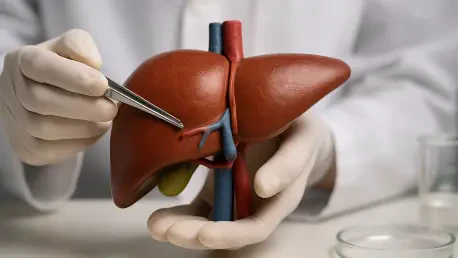
The primary achievement stemming from this integrated approach is the successful creation of liver simulants that not only look the part but also behave mechanically like the real organ. By leveraging the Mori–Tanaka method to inform the composition of hyperelastic materials, engineers have developed highly customizable models that can be adapted for a wide array of research needs. This level of customization marks a significant departure from the one-size-fits-all models of the past, allowing for the creation of versatile platforms tailored to specific applications. For instance, a model designed to study the progression of fibrosis can be engineered with different stiffness properties than one intended for testing the hepatotoxicity of a new drug candidate. This adaptability makes these simulants invaluable tools for everything from fundamental biological inquiry to late-stage pharmaceutical development, promising more accurate and reliable preclinical data.
A theoretical model, no matter how sophisticated, is only as valuable as its real-world performance. Recognizing this, the newly engineered liver simulants were subjected to a battery of rigorous validation protocols to confirm that their behavior aligns with computational predictions. This crucial phase involved extensive mechanical testing to measure properties like stress-strain response and viscoelasticity, ensuring they mirrored the known characteristics of living liver tissue. Furthermore, the materials were tested within simulated biological environments to verify their stability and appropriate response under physiologically relevant conditions. This empirical validation process is what elevates the simulants from a promising concept to a dependable scientific instrument. By demonstrating their reliability and accuracy, this work builds the necessary confidence for their adoption in translational studies, where the goal is to convert laboratory findings into tangible clinical benefits for patients with liver disease.
Reshaping Medical Research and Patient Care
The development of such high-fidelity liver models carries profound implications that extend far beyond the laboratory bench, fostering a new era of interdisciplinary collaboration. These platforms create a common ground where biomedical engineers, cell biologists, pharmacologists, and clinicians can converge to tackle complex questions about liver function and disease. The simulants serve as ideal environments for advanced applications such as co-culture systems, where different liver cell types can be grown together in a more realistic three-dimensional arrangement. They also enable more accurate studies of drug absorption, metabolism, and toxicity, providing a clearer picture of how a therapeutic compound will behave in the human body. By facilitating the modeling of complex pathological processes like cirrhosis or the growth of liver tumors, these engineered tissues are poised to dramatically accelerate our understanding of devastating liver conditions and unlock new avenues for treatment.
Moreover, this technology is a powerful catalyst for the advancement of personalized medicine. The inherent customizability of the simulants lays the groundwork for creating patient-specific organ models. It is now conceivable to design a liver simulant based on the unique tissue characteristics—such as stiffness and density—of an individual patient, perhaps derived from medical imaging data. Such a personalized model would allow clinicians to test various drug regimens in vitro, identifying the most effective therapeutic strategy with the lowest risk of adverse effects for that specific person before treatment even begins. On an ethical front, the availability of these reliable, non-living models offers a compelling alternative to animal testing. By reducing the scientific community’s dependence on animal subjects for preclinical research, this innovation aligns with the global movement toward more humane and ethically responsible scientific practices without compromising the pace of medical progress.
A New Standard for Biomedical Innovation
The successful integration of the hyperelastic micromechanical Mori–Tanaka method established a significant breakthrough in the field of biomedical engineering. This pioneering work provided a sophisticated and validated approach to designing liver simulants that accurately replicated the complex behaviors of native biological tissue. More than just solving a specific problem, this research supplied a robust and adaptable framework that laid the groundwork for future innovations across tissue engineering. The ultimate impact of these effective simulants was transformative, creating a clear path toward accelerated advancements in drug discovery, personalized medicine, and novel therapeutic strategies. This achievement held immense promise for improving patient outcomes and fundamentally reshaping the landscape of modern healthcare. The work underscored the profound potential that emerged when advanced engineering principles were seamlessly integrated with a deep understanding of biological systems to confront the most pressing challenges in human health.