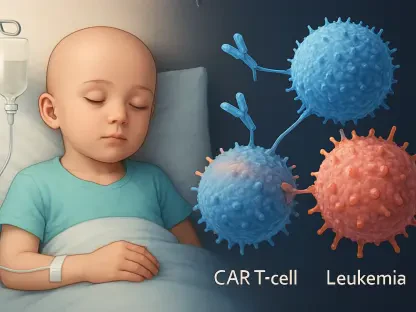
Imagine a landscape where a rare cancer, often resistant to repeated treatments, finally meets a game-changing solution. On December 4, this became reality as the U.S. Food and Drug Administration (FDA) approved lisocabtagene maraleucel, marketed as Breyanzi by Juno Therapeutics, as the first chimeric antigen receptor T-cell (CAR-T) therapy for adults with marginal zone lymphoma (MZL). This subtype of B-cell non-Hodgkin lymphoma, affecting roughly 7% of cases with about 7,460 new diagnoses annually in the U.S., has long posed challenges for patients after initial therapies fail. This analysis dives into the market implications of this historic approval, exploring how it reshapes treatment paradigms, influences biopharmaceutical strategies, and signals broader trends in precision medicine. The focus here is on dissecting current market dynamics, clinical data driving this shift, and projections for the future of cell therapies in rare cancer segments.
Unpacking Market Trends and Clinical Foundations
A Niche Market with Growing Demand
Marginal zone lymphoma, though a smaller slice of the lymphoma market, represents a critical area of unmet need. As a slow-growing cancer, it initially responds to treatments like chemotherapy or immunotherapy, but relapsed or refractory cases often leave patients with dwindling options. The approval of lisocabtagene maraleucel targets this precise gap, catering to adults who have exhausted at least two prior lines of therapy. Market data suggests that with an estimated annual incidence of over 7,000 cases in the U.S., the demand for durable, innovative solutions in this segment is significant. This approval not only addresses a clinical void but also positions CAR-T therapy as a potential cornerstone for rare lymphoma treatments, likely spurring interest among healthcare providers and investors alike.
Clinical Data as a Market Catalyst
The backbone of this market shift lies in the robust clinical evidence supporting the therapy. A multicenter, open-label trial involving 77 patients who underwent leukapheresis saw 66 receive the single-dose infusion after preparatory chemotherapy. The outcomes were remarkable: a 95.5% response rate, with 62.1% achieving complete remission, as evidenced by no detectable disease on imaging. With a median follow-up of 21.6 months, the durability of these responses hints at a transformative potential. From a market perspective, such high efficacy rates could drive adoption among oncologists, despite challenges like cytokine release syndrome or complex delivery logistics. This data sets a benchmark for future CAR-T therapies, potentially influencing pricing models and reimbursement discussions in the oncology space.
Competitive Landscape and Industry Shifts
In the broader biopharmaceutical market, this approval intensifies competition within the cell therapy arena. CAR-T therapies, initially dominant in more common lymphomas like diffuse large B-cell lymphoma, are now branching into rarer indications, expanding the addressable market. Companies beyond Juno Therapeutics may accelerate their pipelines for similar indications, recognizing the FDA’s supportive stance toward precision medicine for niche cancers. However, barriers such as high manufacturing costs and the need for specialized clinical infrastructure could limit short-term market penetration. Over the next few years, from 2025 to 2027, expect a surge in strategic partnerships and investments aimed at streamlining production and enhancing accessibility, reshaping how cell therapies compete in the oncology sector.
Projecting the Future of CAR-T in Rare Cancer Markets
Looking ahead, the trajectory for CAR-T therapies in markets like MZL appears promising yet complex. Emerging trends point to a focus on scalability, with biopharmaceutical firms likely to invest heavily in optimizing manufacturing processes to reduce costs—currently a significant hurdle given the personalized nature of these treatments. Technological innovations, such as off-the-shelf CAR-T products, could further democratize access, broadening market reach beyond specialized centers. Economically, the upfront cost remains a sticking point, but evolving reimbursement frameworks, potentially incorporating value-based pricing, may ease adoption by payers over the coming years.
Moreover, regulatory support, as demonstrated by this approval, is expected to fuel market growth. The FDA’s enthusiasm for cell therapies in rare diseases could shorten approval timelines for similar treatments targeting other lymphoma subtypes or even solid tumors. Market analysts predict a ripple effect, with increased R&D funding directed toward niche indications from 2025 onward. Yet, regional disparities in healthcare infrastructure may create uneven market expansion, particularly in areas lacking the capacity for CAR-T administration. Balancing innovation with equitable access will likely define strategic priorities for industry players in this evolving landscape.
Reflecting on Market Impact and Strategic Pathways
In looking back at this landmark approval, the impact on the oncology market was profound, marking a pivotal moment for rare cancer treatments. The clinical success of lisocabtagene maraleucel, with its near-universal response rate and durable outcomes, validated the potential of CAR-T therapies to fill critical gaps where traditional options faltered. For biopharmaceutical companies, the event underscored the value of targeting niche markets, even amidst high costs and logistical challenges. It also highlighted a supportive regulatory environment that encouraged innovation in precision medicine.
Strategically, the path forward demanded collaboration across stakeholders. Industry leaders needed to prioritize investments in scalable manufacturing to lower barriers to entry. Healthcare providers had to adapt by building expertise and infrastructure for CAR-T delivery, ensuring patients in diverse regions could benefit. Payers, meanwhile, were urged to explore innovative reimbursement models to support access without stifling market growth. As the sector moved ahead, this approval served as a catalyst, prompting a collective push toward making groundbreaking therapies not just available, but truly transformative for those in greatest need.