
In the high-stakes world of biopharmaceutical manufacturing, where a single production run can be valued in the millions of dollars, the quiet disposal of a failed batch represents a catastrophic loss of resources, time, and patient trust. While the industry strives for perfection, the reality is that not all facilities operate at the same level of process maturity. Some sites experience nearly four times as many batch failures as their peers, a disparity that highlights an urgent need to understand and address the root causes of these costly events. A batch failure, defined as a production run that does not meet critical quality or regulatory standards, renders the product unusable and triggers a cascade of financial and logistical consequences that can ripple through the entire supply chain.
Why Some Multi Million Dollar Drug Batches End Up in The Bin
The integrity of every batch is the bedrock of cost-effective and reliable biopharmaceutical production, particularly as the industry continues to scale to meet global demand. A failure at any stage can halt operations, delay clinical trials, or create shortages of life-saving medicines. The immediate financial loss is significant, but the secondary impacts, including the cost of investigation, remediation, and potential damage to a company’s reputation, can be even more substantial. These events underscore the fragility of complex manufacturing processes and the immense pressure on teams to maintain consistency and quality control around the clock.
To manage these incidents, the industry relies on a structured and rigorous process known as Corrective and Preventive Action (CAPA). This systematic approach begins with a deep-dive root cause analysis to pinpoint the exact source of the failure, whether it was a contaminated medium, an equipment calibration error, or a deviation in a filtration step. Following this, an impact assessment determines if other batches were affected. The process also involves extensive documentation and potential reporting to regulatory bodies, culminating in process improvements—such as revised operating procedures or enhanced staff training—designed to prevent a recurrence.
Unpacking The Data on Primary Production Culprits
Despite sophisticated systems and controls, the data consistently points to the human element as the most persistent cause of batch failures. Operator error remains a leading factor, a testament to the complexity of biomanufacturing tasks and the critical need for skilled, experienced personnel. However, this is often a symptom of deeper, underlying systemic issues, including inadequate planning, suboptimal working conditions, or flaws in facility design that create opportunities for mistakes to occur. Addressing human factors requires a holistic approach that goes beyond individual performance to examine the environment in which operators work.
Interestingly, the specific drivers of failure often differ depending on the scale of production. According to recent industry analysis, clinical-scale facilities report a higher incidence of equipment-related failures. This may be attributed to processes that are still under development and the use of less standardized or single-use equipment. In contrast, commercial-scale facilities, which operate more established processes, grapple more frequently with contamination-related issues, such as bacterial growth. This divergence highlights how risks evolve as a product moves from development to large-scale manufacturing, requiring different mitigation strategies at each stage.
A Data Driven Look at Batch Failure Trends
Insights from the BioPlan Associates 22nd Annual Report provide a quantitative lens on these challenges. The report’s findings confirm that operator error is a significant contributor across the board, associated with 3.8% of failures in clinical-scale manufacturing and 3.5% in commercial manufacturing. These figures have remained stubbornly consistent over the years, underscoring the persistent difficulty in eliminating human-induced deviations. For instance, in 2022, operator errors were responsible for a nearly identical percentage of failures, signaling an ongoing industry-wide challenge rather than a fleeting trend.
This data reinforces one of the most significant hurdles facing the biopharma industry today: the shortage of a highly skilled and experienced workforce. As manufacturing processes become more advanced, the demand for personnel who can manage complex equipment, adhere to stringent protocols, and troubleshoot in real-time has intensified. The statistics on operator error are not merely numbers; they represent a call to action for the industry to invest more heavily in recruitment, training, and retention programs to build the human capital needed to safeguard production and avoid preventable setbacks in manufacturing.
Shifting from Reactive to Proactive Mitigation Strategies
To combat these failure rates, facilities are implementing a mix of short-term interventions and long-term structural changes. Immediate, high-impact actions focus on the most controllable factors. These include enhancing operator training programs with more hands-on simulations, bolstering routine equipment maintenance and calibration schedules to ensure reliability, and implementing standardized, rigorous failure investigation protocols that yield actionable insights. Such measures provide a crucial first line of defense, helping to stabilize operations and reduce the frequency of common errors.
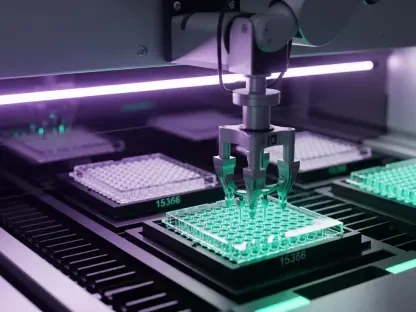
For a more resilient future, however, the industry is looking toward foundational, long-term solutions. Automation stands out as one of the most promising avenues, as it can significantly improve consistency and reduce the potential for operational errors in repetitive or complex tasks. Furthermore, the adoption of advanced data analytics and predictive maintenance platforms is enabling facilities to identify failure-prone equipment before it breaks down. Ultimately, the most robust strategy involves designing processes with resilience in mind from the very beginning, creating manufacturing systems that are inherently less susceptible to deviation and failure.
The biopharmaceutical industry’s journey toward operational excellence was marked by a critical recognition of its most persistent vulnerabilities. By dissecting the root causes of batch failures, from human factors to systemic process flaws, manufacturers began to build a more resilient foundation. The shift toward predictive analytics and intelligent automation represented not just a technological upgrade, but a fundamental change in philosophy—moving from reactive problem-solving to proactive prevention, ultimately securing the supply chain for the patients who depend on it.