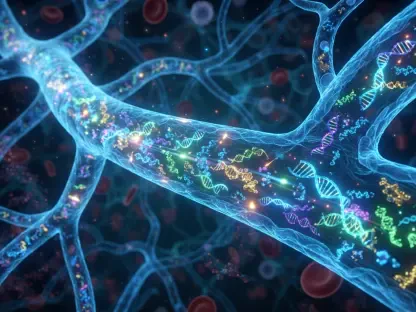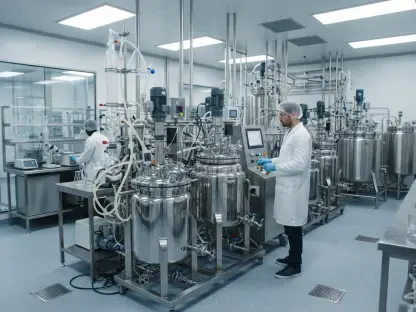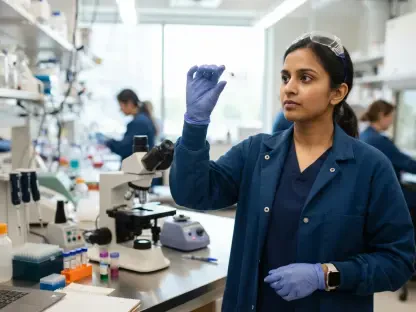

The boundaries between organic existence and laboratory-engineered chemistry have blurred significantly following a landmark achievement where researchers successfully assembled a functional cell from a collection of entirely non-living molecules. Led by Kate Adamala at the University of Minnesota, this project represents a fundamental shift in the field of synthetic biology, moving beyond the well-trodden path of genetic engineering which relies on modifying existing organisms. This newly constructed entity, known as Spodcell, signifies the dawn of a bottom-up approach where biological systems are meticulously built from the ground up, molecule by molecule. By stripping away the inherent unpredictability of natural life, scientists have unlocked a method to create biological machines with absolute precision. This advancement effectively laid the groundwork for a future bioeconomy where cellular systems are not just discovered or edited, but custom-designed for highly specialized industrial and medical tasks.
Engineering the Architecture of Synthetic Biology
Technical Composition and Molecular Definitions
Modeled after simple bacteria rather than the significantly more complex architecture found in animal cells, Spodcell is what scientists define as a fully defined biological entity. This classification is vital because it implies that every single molecule, chemical interaction, and concentration level within the system is documented and controlled with mathematical precision. In nature, even the simplest biological cell contains millions or billions of molecules interacting in ways that current science cannot always predict or even observe in real-time. In contrast, the Minnesota team constructed their synthetic version using a minimal toolkit consisting of roughly 150 to 200 different molecules. This radical reduction in complexity allows researchers to maintain an unprecedented level of control over the internal cellular environment, effectively removing the biological noise that often hinders experimentation in natural organisms or traditional genetically modified microbes.
Internal Mechanics and Cellular Division
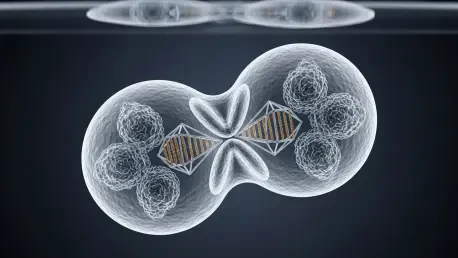
The genomic structure of Spodcell further reflects this streamlined design philosophy, featuring a genome of only 90,000 base pairs, which is a massive simplification compared to the 4.6 million base pairs found in common bacteria like E. coli. Lacking the internal structural scaffolds that natural cells use for replication, Spodcell utilizes a unique physical mechanism to achieve division. Specific proteins are engineered to accumulate on the cell’s outer membrane until the resulting physical tension forces the entity to split into two daughter cells. While this process successfully allows for reproduction across approximately five generations, it operates at a much slower pace than biological counterparts. A natural cell might complete its division cycle in about 30 minutes, whereas Spodcell requires a full 12 hours under extremely specific and strictly maintained temperature conditions to perform the same feat, demonstrating the current gap between artificial and natural efficiency.
Defining the Boundaries of Lab-Grown Life
Biological Dependencies and External Resources
Despite its remarkable ability to grow and replicate, Spodcell remains a fragile construct with deep biological limitations that prevent it from achieving true self-sufficiency. Its most significant drawback is an inability to manufacture its own ribosomes, which are the essential cellular machines responsible for translating genetic information into functional proteins. To overcome this, the synthetic cell must be manually supplied with these natural components through its feeding process, serving as a reminder that the project has not yet achieved the creation of an entirely independent life form. Without this external assistance from existing biological materials, the synthetic system would be unable to sustain its internal functions or synthesize the proteins required for its membrane-splitting division. This dependency highlights the current frontier of the research, where the goal is to bridge the gap between a managed chemical reaction and a fully autonomous, self-replicating organism.
Philosophical Questions and Directed Evolution
This breakthrough has ignited a sophisticated debate within the scientific community regarding the very definition of life and whether Spodcell truly qualifies as a living being or remains a masterpiece of bio-engineering. Although the researchers have observed that these synthetic cells are subject to natural selection—where certain genetic variations allow some cells to outcompete others for resources—this evolution is largely human-directed. Experts often look back at the early history of physics to provide context for this current stage of biology, noting that engineers were capable of building massive, stable bridges long before the fundamental laws of gravity were fully articulated. In a similar vein, modern researchers are now building functional, dividing cells before humanity has reached a consensus on the spark or secret that separates complex chemistry from true biological life, representing a shift from descriptive to constructive science.
The Practical Future of Programmable Biology
Safety Standards and Industrial Applications
The long-term objectives of this research extend far beyond the confines of basic laboratory curiosity, aiming instead for practical applications that could revolutionize global healthcare and environmental sustainability. Programmable synthetic cells offer the potential to create hyper-targeted cancer therapies that operate with molecular precision or to manufacture complex materials that are currently impossible to synthesize using traditional chemistry. Furthermore, these specialized biological machines could be engineered for large-scale carbon capture, providing a new tool in the global effort to mitigate the effects of climate change through atmospheric remediation. To ensure these technologies reach their full potential, the research team focused on establishing collaborative organizations and open-access standards. These initiatives were designed to make synthetic cell technology available to the global community, fostering an environment where innovation in the bioeconomy is driven by transparency.
Global Oversight and the Emerging Bioeconomy
Safety remained a central pillar throughout the development and publication phases of the Spodcell project, ensuring that the technology posed no risk to public health or ecological systems. Because of their extreme fragility and reliance on highly specific laboratory conditions, these synthetic cells lacked any capacity to survive or function in the outside world. This inherent limitation allowed the findings to move through the standard process of academic peer review without the concerns often associated with more robust or infectious biological agents. Stakeholders across the industry recognized that the project established a controllable and predictable platform for high-precision research. The focus eventually shifted toward implementing international oversight frameworks that governed the ethical use of programmable biology. These steps provided a clear roadmap for future scientists to follow, ensuring that as synthetic life grew more complex, the methods for managing and securing it remained several steps ahead.