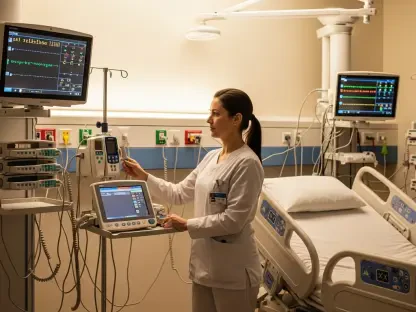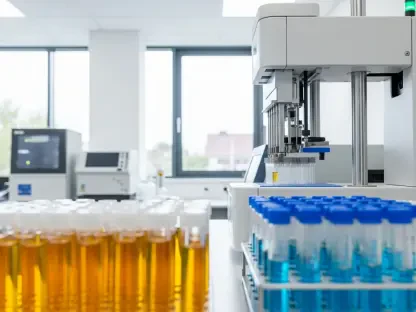
The successful journey of a life-saving gene therapy from a state-of-the-art laboratory to a patient’s bedside now hinges less on its scientific brilliance and more on the sheer resilience of the global network tasked with its production. In a world defined by volatility, the biopharmaceutical sector is undergoing a fundamental re-engineering of its operational backbone. This transformation is not merely an upgrade but a complete paradigm shift, driven by the hard-learned lessons of recent global disruptions and the exacting demands of next-generation medicines. Companies are moving decisively away from the fragile, monolithic manufacturing models of the past and toward a future defined by fortitude, agility, and digital intelligence.
The New Imperative: From Fragility to Fortitude in Biomanufacturing
The industry’s evolution toward resilient, digitized networks represents a critical response to a new operational reality. Traditional manufacturing frameworks, often characterized by single-source dependencies and geographically concentrated facilities, were exposed as profoundly vulnerable when subjected to the stress test of recent global events. The intricate and often opaque supply chains that once offered cost efficiencies suddenly became sources of significant risk, threatening the continuity of clinical trials and the supply of approved medicines. This period of intense pressure served as a powerful catalyst, accelerating a necessary industry-wide transition toward more robust and transparent operational models.
This shift is further compelled by the unique nature of advanced therapies. Unlike the blockbuster drugs of the past, which were produced in massive quantities, today’s cell and gene therapies, personalized vaccines, and complex biologics require small-batch, high-precision manufacturing. This new therapeutic landscape demands an infrastructure that is not only secure but also inherently flexible and scalable. Consequently, the industry is adopting a multi-faceted approach to building resilience, focusing on three core strategies: a complete overhaul of its physical infrastructure, the implementation of agile facility design, and a deep-seated digital transformation that promises to turn reactive processes into predictive ones.
Confronting Systemic Risk: The Case for a Resilient Biopharma Network
Building robust biomanufacturing networks is no longer a matter of competitive advantage; it is an ethical and commercial imperative. The ultimate measure of success for any new therapy is its ability to reach the patient. A supply chain breakdown or a manufacturing delay is not just a logistical problem—it represents a failure to deliver on the promise of a medical breakthrough. For patients with rare diseases or aggressive cancers, a delay of weeks or months can have devastating consequences. Therefore, resilience is fundamental to the industry’s mission, ensuring that scientific innovation translates into tangible patient outcomes without interruption.
The benefits of a resilient network extend far beyond ensuring patient access, creating a virtuous cycle of security, efficiency, and confidence. First and foremost, a diversified and localized supply chain enhances security by mitigating the impact of geopolitical risks, such as trade disputes, tariffs, and regional instability. This operational stability directly translates into improved efficiency, preventing the costly program delays that arise from material shortages or site shutdowns. Moreover, this preparedness has become a key indicator of an organization’s long-term viability. Investors and partners increasingly favor companies that can demonstrate a clear strategy for risk mitigation, leading to higher valuations and stronger strategic alliances for those who have fortified their manufacturing and supply ecosystems.
Strategic Pillars for Building a Robust Manufacturing Ecosystem
In response to these systemic risks, biopharmaceutical companies are actively implementing a set of actionable best practices designed to create a manufacturing ecosystem that is resilient by design. These strategies are not isolated tactics but interconnected pillars that support the entire therapeutic lifecycle, from early-stage development to commercial supply. By reinforcing the physical foundation, designing facilities for future needs, and leveraging the power of digital tools, the industry is constructing a network capable of withstanding shocks and adapting to the dynamic demands of modern medicine. The following approaches provide a clear roadmap for this transformation.
Reinforcing the Foundation: Geographic Diversification and Localized Sourcing
A cornerstone of modern resilience strategy is the deliberate move away from single-site manufacturing frameworks. By distributing operations across multiple geographies, companies create inherent redundancy that acts as a powerful insurance policy against regional disruptions. This multi-site approach ensures that a natural disaster, political upheaval, or localized supply shock in one part of the world does not cripple an entire manufacturing program. Tactics such as establishing dual-region sourcing for critical raw materials and reserving capacity at partner facilities in different continents are becoming standard practice, allowing for seamless pivots when unforeseen challenges arise.
Parallel to this geographic diversification is a strategic pivot toward domestic and regional sourcing for the most critical components. The overreliance on distant, single-source suppliers for materials like plasmid DNA created significant bottlenecks that delayed countless development programs. To regain control and enhance supply security, there is a strong industry trend toward building up local manufacturing capabilities. This localization shortens lead times, improves oversight of material quality and consistency, and insulates programs from the volatility of international shipping and trade policies, ultimately creating a more predictable and secure supply chain from the ground up.
Case in Point: A CDMO’s Global Footprint as a Resilience Asset
A leading Contract Development and Manufacturing Organization (CDMO) with a robust presence in both North America and Europe provided a clear example of this strategy in action. When a sudden trade policy imposed significant tariffs and shipping delays on materials originating from one region, its biotech partner, whose pivotal clinical trial depended on a steady supply of its cell therapy product, faced a potential crisis. However, because the CDMO operated equivalent, validated manufacturing suites on both continents, it was able to seamlessly transfer production to its unaffected site, ensuring an uninterrupted supply chain and keeping the critical trial on schedule without compromising quality or regulatory standing.
Designing for the Future: Agile Facilities for Small-Batch Therapies
The biopharmaceutical landscape is rapidly shifting from the mass production of a few blockbuster drugs to the highly specialized manufacturing of numerous high-value, small-batch biologics. This new reality demands a departure from the large-scale, single-product plants of the past. In their place, the industry is embracing modular, multi-product facilities that are purpose-built for flexibility and precision. These next-generation sites are designed to accommodate the unique requirements of therapies for rare diseases and personalized medicine, where every drop of the product is immensely valuable and production runs are significantly smaller.
Key to the success of these agile facilities are advanced design features that prioritize efficiency and sterility. For instance, sophisticated filling lines equipped with precision robotics are being implemented to minimize product loss during the final fill/finish stage—a critical consideration for biologics that can cost thousands of dollars per milliliter. Furthermore, these facilities integrate advanced contamination controls, such as single-use technologies and fully enclosed isolator systems. This not only ensures the highest levels of product safety but also allows for rapid and thorough product changeovers, enabling the facility to pivot from manufacturing one therapy to another in a fraction of the time required by traditional plants.
Real-World Application: Minimizing Waste in High-Value Biologics Production
A clear demonstration of this principle was seen in a newly commissioned facility dedicated to gene therapy production. Faced with manufacturing a therapy where the final product was valued at over one million dollars per batch, the company invested in a state-of-the-art, low-volume filling line. This system was engineered to reduce hold-up volume—the amount of product left behind in the machinery—to mere microliters. By implementing this precision-focused technology, the facility significantly reduced product loss, increasing the overall yield of each batch. This efficiency gain not only improved the therapy’s commercial viability but also meant that more doses were available to treat patients from the same amount of starting material.
Leveraging Digital Transformation: From Reactive to Predictive Operations
Beyond physical infrastructure, the most profound shift toward resilience is occurring in the digital realm. Biomanufacturing is moving from a reactive operational model, where problems are addressed after they occur, to a predictive one powered by digital tools. Technologies like artificial intelligence (AI) and “digital twins”—virtual replicas of physical assets and processes—are being integrated to create a new layer of intelligence over manufacturing operations. These digital models allow companies to simulate production runs, test process changes, and anticipate potential failures before they ever happen in the real world.
This infusion of real-time data and advanced analytics is transforming every aspect of biomanufacturing. For example, AI-driven algorithms can monitor equipment performance continuously, enabling predictive maintenance that schedules repairs before a component fails and causes a costly shutdown. In quality control, automated systems analyze vast datasets to detect subtle deviations from quality standards, ensuring batch consistency and reducing the risk of product rejection. By digitizing workflows and automating data capture, companies also reduce the burden of manual documentation and lower overall operational overhead, freeing up expert personnel to focus on innovation rather than administration.
Success Story: Using Digital Twins to De-Risk Process Scale-Up
A biopharma company preparing to advance its lead candidate from clinical to commercial scale-up effectively demonstrated the power of this approach. Before committing millions of dollars to new equipment and facility modifications, the team built a comprehensive digital twin of the proposed manufacturing process. Running simulations on this virtual model, they identified a potential bottleneck in a bioreactor mixing step that would have led to inconsistent cell growth and batch failure at a larger scale. By diagnosing and resolving this issue in the digital environment, they refined the process parameters and equipment specifications, proceeding with the physical scale-up with confidence. This proactive de-risking saved an estimated six months of development time and prevented the loss of several multi-million-dollar production runs.
The Path Forward: Integrating Innovation for Patient-Centric Supply Chains
The biopharmaceutical industry recognized that resilience was no longer a strategic option but a foundational business asset essential for navigating the complexities of modern medicine. The period of intense global pressure had served its purpose, exposing long-standing vulnerabilities and compelling organizations to fundamentally rethink how therapies were developed, manufactured, and delivered. This reflection catalyzed a decisive move away from outdated, fragile models toward an ecosystem defined by redundancy, agility, and intelligence.
The most successful drug sponsors, CDMOs, and investors were those who adopted a holistic strategy that seamlessly combined physical infrastructure improvements with a forward-thinking digital transformation. They understood that a global network of modular facilities was only as strong as the data-driven insights that governed its operations. This integrated approach resulted in the creation of a truly patient-centric supply chain, where innovation in the laboratory was matched by an equal commitment to innovation in manufacturing and logistics.
Ultimately, the goal of these concerted efforts was realized: the construction of a robust global ecosystem capable of withstanding future shocks and guaranteeing reliable patient access to life-changing therapies. By building fortitude into every link of the supply chain, the industry fortified its ability to deliver on its core promise. It ensured that the journey from scientific breakthrough to patient bedside was not left to chance but was instead underpinned by a network designed for unwavering reliability.