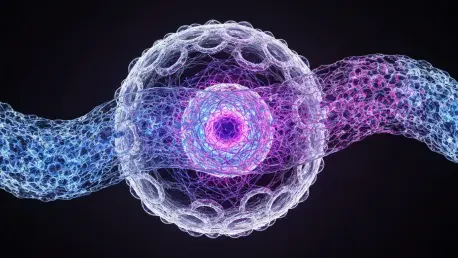

For decades, the intricate inner workings of biological tissues have remained largely hidden, with traditional microscopy methods only able to offer two-dimensional glimpses or superficial views of complex three-dimensional structures. This limitation has created a significant bottleneck in understanding disease progression, developmental biology, and the true effects of therapeutic compounds. Now, the rapidly expanding global market for 3D cell clearing reagents is revolutionizing biological imaging, offering researchers an unprecedented ability to render entire organs and complex cell cultures optically transparent. This technological leap is unlocking a new dimension of scientific inquiry, fueling a sector that is not only growing financially but is also fundamentally changing the landscape of biomedical research and drug discovery. A detailed market analysis reveals the powerful forces propelling this expansion, highlighting a dynamic interplay of technological innovation, intense competition, and an insatiable demand for more accurate, physiologically relevant biological models.
Unlocking the Third Dimension What is 3D Cell Clearing
At its most fundamental level, a 3D cell culture clearing reagent is a highly engineered chemical solution designed to overcome one of the most persistent challenges in microscopy: the natural opacity of biological tissue. Advanced biological models, such as organoids grown from stem cells or tumor spheroids that mimic cancerous growths, are dense, complex structures that inherently scatter light. This scattering is caused by the different refractive indices of various cellular components, like lipids and proteins, which effectively turns the sample into a cloudy, impenetrable mass for conventional imaging systems. The primary function of a clearing reagent is to homogenize these refractive indices, creating a uniform optical medium that allows photons from microscopes—whether confocal, light-sheet, or two-photon systems—to penetrate deep into the sample with minimal distortion. This process essentially makes the tissue invisible, leaving only the fluorescently labeled molecules or structures of interest visible to the scientist, enabling the visualization of cellular architecture and molecular pathways in their native, undisturbed three-dimensional context.
The formulation of these reagents is a delicate balancing act of chemistry and biology, typically involving a mixture of detergents to solubilize light-scattering lipids, hydration agents to prevent tissue shrinkage or distortion, and a high-refractive-index medium to match the optical properties of the remaining cellular proteins. The ultimate goal is to achieve this transparency without damaging the sample’s crucial structural elements or quenching the signals from fluorescent proteins and dyes that researchers rely on. When successful, this technique allows for the high-resolution, three-dimensional mapping of everything from neuronal networks in brain organoids to the infiltration of immune cells into a tumor spheroid. This capability represents a monumental step forward, providing insights that are simply impossible to obtain from sliced, two-dimensional tissue sections. This shift from 2D to 3D analysis is driving profound advancements in our understanding of disease mechanisms and is becoming an indispensable tool for preclinical drug screening and developmental biology research.
A Market on the Rise Financial Outlook
The financial trajectory of the 3D cell clearing reagent market provides a clear and compelling narrative of its increasing importance within the life sciences industry. In 2024, the global market was valued at a significant US$ 99 million, a testament to the technology’s already widespread adoption in leading research laboratories. However, this figure represents just the beginning of a powerful growth phase. Propelled by persistent and strengthening demand from both academia and the pharmaceutical sector, the market is projected to expand dramatically, reaching a readjusted size of US$ 171 million by the year 2031. This expansion corresponds to a robust Compound Annual Growth Rate (CAGR) of 8.7% over the forecast period, a rate that significantly outpaces many other segments of the life sciences tools market. This steady and impressive upward trend is not merely a reflection of increased sales but is indicative of a fundamental paradigm shift in biological research, where complex 3D imaging is transitioning from a niche, specialized technique to a mainstream, essential methodology for generating high-impact data.
The market’s structure is characterized by a fascinating and dynamic interplay between established life sciences conglomerates and nimble, highly specialized biotechnology firms, creating an environment ripe with both competition and innovation. According to a detailed analysis of the competitive landscape, the top four global manufacturers—Thermo Fisher Scientific, Miltenyi Biotec, R&D Systems, and Abcam—collectively command a dominant share of the market, accounting for approximately 53.0% of the total revenue as of 2024. This concentration highlights the power of brand recognition, extensive global distribution networks, and the ability to offer integrated product ecosystems. However, a key insight from the analysis is that technology, rather than scale, remains the core competitive barrier. Smaller, innovation-driven companies like LifeCanvas and Visikol have successfully carved out significant market positions by developing proprietary, patented chemical formulations, optimizing protocols for specific and challenging applications, and providing a level of expert technical support that larger corporations often cannot match. This technological “moat” ensures their continued relevance and pushes the entire industry forward. Furthermore, with over 14% of the market share still held by a fragmented group of “other manufacturers,” the sector is clearly in an emerging phase, fostering a vibrant ecosystem where new entrants and novel approaches can continuously challenge the status quo, preventing market stagnation and driving the next wave of clearing innovations.
Profiles of Market Leaders
As a dominant force in the life sciences sector, Thermo Fisher Scientific strategically leverages its powerful and trusted brands, including Invitrogen and Gibco, to offer one of the most comprehensive portfolios of tissue clearing solutions available. Its offerings, which include well-regarded reagents like ScaleS, CUBIC, and SeeDB, cater to a wide range of research needs. A standout product in its arsenal is the patented ScaleA2 reagent, which boasts the remarkable ability to deeply clear biological samples up to 1.5 cm thick while critically retaining over 95% of the original fluorescent protein signals—a crucial feature for preserving data integrity. The versatility and reliability of this technology have led to its successful application in high-profile research projects, including a landmark Harvard University study focused on mapping the intricate neural connectivity of the entire mouse brain. Thermo Fisher’s overarching strategy extends beyond simply selling reagents; it focuses on providing complete, end-to-end solutions. By seamlessly integrating its clearing agents with its advanced Electron Microscopy sample preparation systems and the powerful CellInsight high-content screening platform, the company targets top-tier research institutions and major pharmaceutical companies with a holistic workflow that simplifies complex experiments and accelerates discovery.
Another key player, Miltenyi Biotec, has skillfully carved out its market position by building its clearing reagent offerings around its proprietary MACS® Tissue Optics technology platform. This biotechnology firm, renowned for its expertise in cell separation and analysis, has developed a tissue clearing kit featuring a unique aqueous formulation capable of achieving deep transparency in a challenging sample like an adult mouse brain within a mere seven days, all while maintaining over 92% integrity of vital cell nuclear antigens. A significant competitive advantage of Miltenyi’s technology is its inherent compatibility with sophisticated downstream molecular techniques, such as RNAscope multiplex fluorescence in situ hybridization, allowing for the spatial analysis of gene expression within the cleared tissue. This capability is central to the company’s strategy of providing a complete workflow solution that bridges the gap from sample pretreatment to advanced spatial biology analysis. By combining its clearing technology with single-cell sequencing sample preparation protocols, Miltenyi Biotec offers a powerful, integrated platform particularly suited for cutting-edge applications in cancer immunotherapy and neurodegenerative disease research, where understanding the spatial context of cellular interactions is paramount.
Shaping the Future Market Drivers and Challenges
The remarkable growth of the 3D cell clearing market is propelled by a confluence of powerful drivers and evolving industry trends that are fundamentally reshaping biological research. One of the most significant drivers is the widespread scientific shift away from traditional two-dimensional cell cultures, whose poor clinical translatability is well-documented—over 70% of preclinical data from 2D models fails to replicate in vivo. In their place, 3D models like organoids and spheroids are being rapidly adopted, with the market for these more physiologically relevant systems growing at an astonishing rate of over 25% annually. Clearing technology is essential for unlocking the full potential of these complex models, allowing researchers to precisely quantify internal cell arrangements, vascular network formation, and drug penetration. This is complemented by rapid advances in imaging hardware, particularly the adoption of light-sheet microscopy, whose installation base is growing by 40% each year. This technology requires optically transparent samples to leverage its high-speed, gentle 3D imaging capabilities. Simultaneously, the rise of sophisticated, AI-driven image analysis platforms that can automatically segment cells and extract hundreds of morphological parameters from the massive datasets generated by these systems creates a strong technological “pull” for high-quality cleared samples.
Despite the strong tailwinds, the industry must navigate several significant restraints and challenges that could temper its growth trajectory. A primary hurdle is the inherent technical complexity and lack of standardization across different clearing protocols. Currently, over 20 distinct variations of clearing techniques are used across different laboratories, each with its own nuances and requirements. This methodological fragmentation makes it exceedingly difficult to directly compare results between studies, hindering the overall reproducibility and reliability of research findings—a critical issue in modern science. Another major challenge lies in sample compatibility and the potential for information loss during the clearing process itself. Existing reagents exhibit variable performance across different tissue types, with lipid-rich tissues like the brain and dense tissues like bone being particularly difficult to clear effectively. Moreover, the chemical treatments involved can lead to a significant loss of biological information, with an average fluorescence signal attenuation of 15%-30% and a preservation efficiency for crucial biomolecules like RNA and proteins that is often below 50%. This degradation limits the potential for valuable downstream multi-omics analysis, which is a key goal for many researchers. Finally, the high cost associated with establishing a complete clearing and imaging workflow creates a substantial barrier to entry. A single light-sheet microscope can cost anywhere from $500,000 to $2 million, and the initial investment for a laboratory to set up the necessary equipment can easily exceed $300,000. The clearing reagents themselves represent a significant recurring expense, often accounting for 25%-40% of a project’s annual budget, which restricts wider adoption, especially among smaller research institutions and labs with more limited funding.
A Clearer Path Forward
The journey of the 3D cell clearing market to its current valuation was driven by a foundational scientific need: to see deeper and more clearly into the complex architecture of life. The development and refinement of these sophisticated chemical reagents effectively solved the age-old problem of tissue opacity, transforming what were once cloudy, impenetrable biological samples into transparent windows for discovery. This technological breakthrough did not merely represent an incremental improvement in imaging; it enabled an entirely new dimension of biological inquiry, allowing researchers to observe cellular interactions and systemic processes within their native, intact environments. The financial growth of this sector was a direct consequence of the immense scientific value it unlocked, empowering breakthroughs in neuroscience, oncology, and regenerative medicine. The market’s expansion was fueled by a symbiotic relationship between hardware innovation in microscopy and software advancements in AI-powered data analysis, creating a complete ecosystem that turned vast, complex visual data into quantifiable, actionable insights.
Looking ahead, the path from a $99 million market to a projected $171 million enterprise will be defined not by the novelty of the core technology, but by the industry’s ability to address its current limitations. The successful resolution of challenges related to protocol standardization, biomolecular preservation, and cost-effectiveness will be the primary determinant of whether 3D clearing evolves from a powerful but specialized tool for elite laboratories into a ubiquitous and indispensable standard in biological research worldwide. The future of the market hinged on making these powerful solutions more accessible, reliable, and seamlessly integrated into broader multi-omics workflows. The companies that succeeded in this next phase were those that not only innovated in chemistry but also focused on creating user-friendly, robust, and economically viable platforms. This evolution was essential for democratizing the technology, ensuring that its profound capabilities could be leveraged by the widest possible community of scientists to accelerate the pace of biomedical discovery and improve human health.