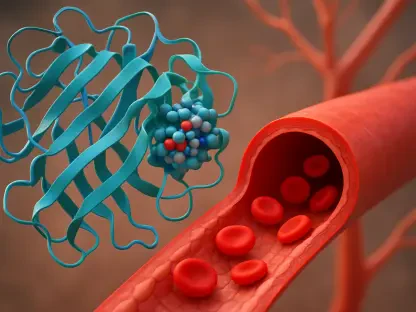

The therapeutic landscape for multiple myeloma has long been defined by a relentless cycle of remission and relapse, leaving many patients with few options once primary defenses fail. Teclistamab, marketed as Tecvayli, has emerged as a transformative solution to this exhaustion, functioning as a first-in-class bispecific T-cell–redirecting antibody. By engineering a molecular bridge between the immune system and the tumor, this therapy has moved beyond traditional chemotherapy, offering a sophisticated mechanism that targets B-cell maturation antigen (BCMA) while simultaneously engaging CD3 receptors on T cells.
Introduction to Teclistamab and Bispecific Antibody Technology
Bispecific antibodies (bsAbs) represent a sophisticated leap in oncology, moving away from simple monoclonal antibodies that only flag cells for destruction. Teclistamab acts as a specialized mediator, essentially “grabbing” a T cell and a myeloma cell to force an encounter. This proximity-induced activation bypasses the usual complex signaling pathways that cancer cells often exploit to remain invisible. The relevance of this technology is particularly sharp for patients who are triple-class refractory, meaning their cancer has already outsmarted proteasome inhibitors, immunomodulatory drugs, and anti-CD38 antibodies.
In the broader context of T-cell-redirecting therapies, Teclistamab serves as an off-the-shelf alternative to CAR-T cell therapy. While CAR-T requires a long, patient-specific manufacturing process, this bispecific antibody is readily available for immediate administration. This accessibility is a critical advantage in a disease where progression can be rapid, and waiting weeks for a customized product is often not a luxury patients can afford.
Technical Mechanisms and Clinical Performance Metrics
Dual-Targeting Mechanism and T-Cell Activation
The engineering behind Teclistamab is centered on its ability to function independently of the Major Histocompatibility Complex (MHC), a feat that traditional T-cell responses cannot achieve. By binding directly to CD3, the drug triggers a cytotoxic response from the T cell regardless of whether the cancer cell is presenting antigens in a typical fashion. This mechanism effectively turns any available T cell into a targeted killer of malignant plasma cells, creating a potent and localized immune reaction.
This bridging effect is not just about proximity; it involves the creation of a synthetic immunological synapse. This direct contact induces the release of perforins and granzymes, which puncture the cancer cell membrane and induce apoptosis. Because BCMA is highly and almost exclusively expressed on plasma cells, the precision of this “search and destroy” mission minimizes collateral damage to other healthy tissues, though it does inevitably impact healthy plasma cells.
Efficacy DatThe MajesTEC-9 Trial
Data from the MajesTEC-9 trial has redefined expectations for efficacy in relapsed populations. In patients who had previously undergone one to three lines of therapy, Teclistamab demonstrated a staggering 71% reduction in the risk of progression-free survival (PFS) compared to standard-of-care regimens. This statistic is particularly impressive given that the control groups were treated with established combinations like Pomalidomide-Bortezomib-Dexamethasone, which were until recently considered the gold standard for early relapse.
Furthermore, the trial revealed a 40% reduction in the risk of death, suggesting that the benefits of bispecific engagement translate into long-term overall survival (OS). The durability of these responses indicates that once the immune system is successfully redirected, it can maintain pressure on the malignancy for extended periods. This level of performance in a population where 85% of participants were already refractory to anti-CD38 treatments highlights the drug’s ability to overcome established resistance mechanisms.
Recent Developments and Regulatory Evolution
The trajectory of Teclistamab has shifted from a late-line “salvage” therapy to a primary contender for earlier intervention. A Type II variation application submitted to the European Medicines Agency (EMA) seeks to codify this shift, moving the drug into the second-line setting. This evolution is driven by the clinical logic that T cells are generally more robust and functional earlier in the disease course, meaning the “engine” of the therapy—the patient’s own immune system—is at its peak performance before being exhausted by multiple rounds of toxic chemotherapy.
Innovative dosing schedules have also improved the technology’s profile. For patients who achieve a sustained complete response, the frequency of administration can now be reduced. This change does more than just alleviate the burden of frequent hospital visits; it potentially reduces the cumulative risk of immune exhaustion and infection, making the therapy more sustainable for long-term management of what is becoming a chronic, rather than terminal, condition.
Real-World Applications and Industry Implementation
In practical clinical settings, Teclistamab is being deployed as a tactical weapon against aggressive relapses. It has proven especially effective for patients who have failed lenalidomide, a common frontline maintenance drug. Compared to traditional regimens like PVd, which rely on the synergistic effects of several drugs with varying toxicity profiles, Teclistamab offers a more streamlined, targeted biological approach. This transition requires a shift in hospital infrastructure, moving away from the infusion-chair model toward specialized monitoring for immune-related side effects.
Implementation also involves a heavy reliance on supportive care protocols. To manage the profound B-cell depletion caused by BCMA targeting, clinicians have standardized the use of intravenous immunoglobulin (IVIG) and antimicrobial prophylaxis. These measures are essential for protecting patients from opportunistic infections, ensuring that the clinical gains made in oncology are not lost to preventable complications. This holistic management style reflects the reality of modern immunotherapy: the drug is only as effective as the support system surrounding it.
Challenges, Safety Management, and Market Obstacles
Despite its efficacy, Teclistamab faces significant technical hurdles, most notably Cytokine Release Syndrome (CRS) and Immune Effector Cell-Associated Neurotoxicity Syndrome (ICANS). These conditions arise when the T-cell activation is too robust, leading to systemic inflammation. While these events are usually manageable with tocilizumab or steroids, they necessitate inpatient monitoring during the initial “step-up” dosing phase. This requirement creates a bottleneck, as not all community oncology centers are equipped to handle such specialized acute care.
Market obstacles also persist in the form of high costs and the need for a sophisticated supply chain. The specialized nature of bispecific antibodies makes them expensive to produce and administer, raising questions about global equity and access. Additionally, the high rate of infections associated with long-term BCMA inhibition requires vigilant, ongoing monitoring. While optimized dosing schedules aim to mitigate these risks, the therapeutic window between efficacy and toxicity remains a delicate balance that requires expert handling.
Future Outlook and Longitudinal Impact
The future of Teclistamab lies in its potential as a backbone for combination therapies. Researchers are already exploring how combining bispecifics with other immune-modulators or even generic chemotherapy might produce synergistic effects that prevent the emergence of resistant clones. As the therapy moves into earlier lines of treatment, there is a legitimate possibility that it could change the natural history of multiple myeloma, extending the period of first or second remission by years rather than months.
As global adoption increases following the release of more Phase III data, the oncology community expects a shift in the standard-of-care protocols. The goal is to move toward a “fixed-duration” immunotherapy model where patients receive intensive T-cell redirection to achieve deep molecular remission, followed by observation or less intensive maintenance. This would represent a departure from the “treat until progression” philosophy that has dominated the field for decades, potentially offering patients significant treatment-free intervals.
Summary and Final Assessment
The evaluation of Teclistamab confirmed its status as a high-performance tool that successfully bridged the gap between complex cellular therapies and accessible biologics. The data from the MajesTEC-9 trial provided a clear mandate for moving this intervention earlier in the treatment sequence, where it significantly outperformed traditional chemotherapy combinations. By effectively harnessing the patient’s own immune system, the technology offered a sophisticated alternative to the diminishing returns of conventional drug regimens.
The medical community must now focus on expanding the infrastructure required to support bispecific administration in a broader range of clinical settings. Future efforts will likely prioritize the refinement of prophylactic strategies to further reduce infection rates and the exploration of biomarkers to identify which patients benefit most from early T-cell redirection. As these protocols mature, the emphasis will shift toward integrating these potent antibodies into multi-modality strategies that aim for a functional cure rather than just temporary disease control.